Saturday, May 19, 2007

A Great Start for Peter Gelb

Peter Gelb's first year at The Metropolitan Opera was a fantastic beginning to what will apparently be an exciting, productive tenure for this general manager. Hopefully, his years at the MET will also bring to the house the kind of intelligent innovation that is seldom found on today's opera stages. One need only to think of last year's Salzburg Festival to realize that not every production was a hit. Of course, with so many operas and so many artistic decisions to be considered, Salzburg should be commended for the Herculean task of attempting to present all of W.A. Mozart's works in time for an important anniversary year. However, the DVD's of these productions reveal many lapses of taste throughout the presentation of the twenty-two operas. The Don Giovanni production, for instance, was such a mixed bag, that although one wanted to applaud its innovative approach to this seminal work, the end result was a collection of half-baked ideas.

So far this year, I am happy to report that intelligent innovation has been at the forefront at the MET, especially with the new productions of Madama Butterfly and Orfeo ed Euridice. The Anthony Minghella production of Butterfly that began this season, and the Mark Morris production of Orfeo that ended it (I caught its last performance at the matinée of May 12) were highlights in a year that also brought us new productions of Il Trittico and The Barber of Seville among others, as well as exciting revivals of Giulio Cesare, I Puritani, and four memorable performances of Die Meistersinger, these being the only Richard Wagner heard at the house this year.

Next year will be very busy when it comes to new productions. We will see a new Lucia di Lammermoor (badly needed, I'm sure you'll agree) as well as another import from the English National Opera, this time Philip Glass's Satyagraha. I saw this production a few weeks ago in London, and, as I reported in an earlier post, we are in for a treat next year. The staging is quite extraordinary, and I am sure that both the critics and audiences will be very impressed. I also look forward to a new staging of Benjamin Britten's Peter Grimes. The old production of Grimes, like the MET's former production of Otello by Franco Zeffirelli, is irreplaceable, I feel, but if truth be told, it has given us decades of memories, and it is time to take a look at that great 2oth Century English opera with a new set of eyes.

The MET feels important once again after one year of having Peter Gelb at the helm. He is the new seat of eyes (and ears) that the institution needed. Let us hope that this forward drive continues into his second year and beyond.

Friday, May 04, 2007

"The Tristan Project" arrives in New York

The Tristan Project has finally arrived in New York three years after its premiere in Los Angeles. Although it is presented here differently than in L.A., it is still a rare Wagnerian event. Below you will find what The New York Times had to say about the first of the two scheduled performances.

For more information about the original performances of The Tristan Project in Los Angeles and its performances in Paris, go to my website by clicking here.

"In a New Space and Time, a Classic Story of Tragic Love" by Allan Kozinn

When “The Tristan Project” was first presented in Los Angeles, at the end of 2004, it was clear that it would be one of the highlights of Esa-Pekka Salonen’s tenure as music director of the Los Angeles Philharmonic. At heart, it was a concert opera, but in a multimedia conception that promised to be so ingenious that listeners traveled long distances to catch it, and talked about it for months. The buzz started again when Lincoln Center announced that it would bring the production to New York, and now that it’s here — the first of two performances was on Wednesday evening at Avery Fisher Hall — it is a hot topic again, and a hot ticket as well: the performance was sold out, with the best seats priced at $500.

In its original version “The Tristan Project” offered Wagner’s “Tristan und Isolde” over three nights, each devoted to a single act, performed along with works by 20th-century composers whom Wagner influenced. “Tristan” itself was presented in two simultaneous versions: Mr. Salonen’s, in the world of sound, with stage movement directed by Peter Sellars; and Bill Viola’s on video, in symbol-heavy imagery that parallels the opera’s action and pulls its philosophical underpinnings into view. A mute (and sometimes nude) Tristan and Isolde move through water (purification) and fire (passion), or melt into a single image within a grainy video haze.

That was the original, as opposed to a high-tech concert performance of “Tristan,” which is what came to New York. Here, the auxiliary works were dropped, and the opera was played at a single sitting. For the occasion the Avery Fisher Hall stage was extended to accommodate the large orchestra and the singers, although the chorus (the Concert Chorale of New York) was in the top balcony, and soloists occasionally sang from the balconies as well. A large screen was suspended over the orchestra for Mr. Viola’s video, and monitors carried the English supertitles.

Mr. Salonen provided a hint of how his part of the performance would unfold in a sumptuous, dramatically paced and dynamically fluid account of the Prelude, in which the Los Angeles orchestra produced a magnificent sound that it maintained throughout the five-and-a-half-hour opera. Illness took at least a theoretical toll on the cast: As Tristan, Alan Woodrow was replaced by Christian Franz, and a program note said that Christine Brewer, the Isolde, “wishes the audience to know that she is still recuperating from a stomach flu.”

The caveat was unnecessary: apart from a few strident high notes, Ms. Brewer gave a regal portrayal of Isolde, and sang with a power and solidity that built toward a transfixing “Liebestod.” Mr. Franz’s deep-hued Tristan largely matched Ms. Brewer’s performance in heft, flexibility and emotional range.

The mezzo-soprano Anne Sofie von Otter, also in radiant voice, conveyed the weight of Brangäne’s sense of responsibility for the lovers’ sufferings. Jukka Rasilainen’s compassionate account of Kurwenal, Thomas Rolf Truhitte’s rich-hued Melot, and John Relyea’s sepulchral-voiced König Marke contributed to the production’s emotional temperature as well.

The “Tristan Project” in New York might have been more modest than its Los Angeles counterpart, but it was an innovative conception of a core work, and we’ll take what we can get. The New York Philharmonic’s nearest efforts have been frothy musical-theater evenings, like “My Fair Lady” and “Candide.” That getting a production like this into Avery Fisher Hall requires importing it from across the continent is truly outrageous. But that’s the state of things, and it’s emblematic of the difference between these two orchestras.

Saturday, April 21, 2007

Equus at the John Gielgud Theatre, London

Peter Shaffer's magnificent play Equus, the troubling story of a boy who undergoes therapy after blinding a stable of race horses, has returned to the West End once more in a high caliber production featuring Richard Griffiths as Martin Dysart, the psychiatrist who treats the boy, Alan Strang, played here by Daniel Radcliffe, best known to the world as Harry Potter.

The play was first produced in London and New York in the late 1970's. I caught the end of the run of the original Broadway production (directed by John Dexter) when I was a freshman at Fordham University. By that time, Leonard Nimoy was playing the psychiatrist, and I sat on the stage seats. It was so exciting to be on the stage of The Helen Hayes Theater somehow being a part of the performance. But that was long ago. John Dexter died of AIDS years later, and the Helen Hayes was demolished to make room for the Marriott Marquis hotel.

This run of the play in London is the first revival in the West End of this work since its original run, and it is a gold mine for its producers thanks to its stroke-of-genius casting.

Richard Griffiths comes to Equus after his incredible performance in The History Boys, a play that not only played at The National Theatre, but also went on tour around the world. It played in New York last year where it was showered with Tony nominations. It was one of the rare times when Actor's Equity allowed an entire British cast to come to Broadway. Griffiths picked up the Tony for Best Actor in a play. Boy, did he deserve it! The work allowed him to show off his talents in a way that his usual small roles do not (he has played Uncle Vernon in all of the Harry Potter films and plays one of Peter O'Toole's cronies in Venus). The History Boys was turned into a film last year, again with the cast intact.

Casting Daniel Radcliffe as Alan Strang was a monetary stroke of genius, indeed! The play is selling out in London night after night, not just because the British (and the world) want to experience Peter Shaffer's powerful play again, but because they want to see Harry Potter live and in the flesh. By now, most theater-goers know that the role of Alan Strang requires the actor to shed all his clothing during the climactic blinding scene in the second act.

What are the chances that the reason why audiences are flocking to the Gielgud Theatre is to see Harry Potter magic wand sans his Hogwarts robes? I imagine you would have to poll individual members of the audience for an answer to that question.

I sat next to one of the cello players of The Royal Opera House, Covent Garden, and he and his wife were very curious to know what Americans thought of their Harry Potter performing in this play. I answered them that, save for knowledgeable theater goers, most Americans didn't know what Harry Potter was up up these days, and that the New York Post referred to his participation in this play as Harry Potter doing porn!

Now, what about the production? John Napier has gone back to his original sets and has tweaked his initial concept a bit. We still have the Greek-style performing area complete with on-stage seating. This time the stage seats have the appearance of a hospital, rather than a Greek amphitheater. The horses' masks are remarkably similar to those in the original production, but the eye's light up at certain moments. Also, there is smoke which billows out from the stage floor. The horses' costumes are the familiar tight fitting body suits, but they are now brown rather than the black that I remember from the original Broadway production.

The acting is overall strong. Mr. Griffiths gives a credibly performance as an overworked psychiatrist. His costume consists of black shirt and black pants, thus achieving a more contemporary look than the dark suit and tie worn by the original Dysarts. His performance is imaginative, but surprisingly not strong. In the back of my mind, I am still wondering if Mr. Griffiths has been miscast in this role, although I am coming to the conclusion that it might not be the best of roles for him, but he does a credible job with it.

Daniel Radcliffe is a work in progress. His performances in the Harry Potter movies have been adequate, and he has been coming into his own particularly in the last two films. In this, his first major West End play, he manages to successfully convey the pain and madness of his character, making us forget his Harry Potter. This is his strongest accomplishment. I certainly hope that Mr. Radcliffe has gone around during his acting career with eyes wide opened and has absorbed and learned from the amazing list of talent with whom he has been has been very lucky to have performed in the Harry Potter films. How many teenagers can boast that they have been privileged to have acted with the likes of Richard Harris, Maggie Smith, Michael Gambon and Alan Rickman, among others? An incredible roster of educators the likes of which not even Hogwarts could rival.

If you get a chance get over to Shaftesbury Avenue to see Equus. It is a once-in-a-lifetime chance to experience a cultural phenomenon the likes of which you might not get a chance to see in any other city, unless they decide to bring it to Broadway -- here's hoping!

Sunday, April 08, 2007

Satyagraha at the English National Opera

The new Production of Philip Glass's opera Satyagraha is now playing at the English National Opera where I saw it last night. This production is a joint effort of the ENO and the Metropolitan Opera, and it is scheduled to be performed at the MET this forthcoming season. The nearly sold-out crowd at the London Coliseum was remarkably receptive to this work written many years ago by one of the leading American minimalists, and one of the few works that the ENO has presented in a language other than English. At the request of the directors, the ENO also chose to present this work, sung in Sanskrit, without the use of super-titles.

At the helm was the creative team Improbable made up of director Phelim McDermott and set designer Julian Crouch. Theirs is a captivating and challenging production which makes extensive use of newspapers and puppetry in order to tell the story of the spiritual conversion of Mohandas K. Gandhi. They have rethought Glass's work using projections and a vast array of giant papier-maché figures of impressive size and complexity, some of which are assembled right on the stage by the cast. This aspect of the production, although quite remarkable in its stage-craft, manages to take our mind away from the music. Puppetry seems to be the order of the day at the ENO these days, with this production following on the heels of Anthony Minghella's remarkable Madama Butterfly which used several Japanese bunrako puppets.

I am quite interested in the metamorphosis that this production will undergo when it comes to these shores. The London Coliseum is a a rather large theater, as far as London venues go, but it is small compared to the vast Metropolitan Opera stage. As with Minghella's production of Butterfly there is a great danger that the dimensions of the MET will totally swallow Improbable's visual effects. We are in for a treat, I can tell you that, and I can't wait to see this production when it gets to New York. Satyagraha premieres at the MET on April 11, 2008.

Friday, February 23, 2007

Lorin Maazel to conduct at the MET

The following bit of news appeared in The New York Times on February 22. The article is by Daniel J. Wakin.

It took only 45 years, but Lorin Maazel is returning to conduct at the Metropolitan Opera.

Mr. Maazel, the music director of The New York Philharmonic will lead five performances of Wagner’s Die Walküre in a run from Jan. 7 to Feb. 9, 2008, the Met said yesterday.

Peter Gelb, the Met’s general manager, said the appointment — which was announced a week before next season’s unveiling — was part of a long-held plan.

“It’s been my intention from the beginning of my appointment to populate the Met with the world’s greatest conductors,” Mr. Gelb, who took over this season, said in a telephone interview. “To have Lorin Maazel conducting ‘Walküre’ next season is a great coup.”

Asked why it had taken so long for him to return to the Met, Mr. Maazel said there was no particular reason. “Once in a while they would contact me about some project, which somehow didn’t work out because I was busy elsewhere, or about a revival of something I was not interested in being involved in,” he said. “That’s the way the cookie crumbles. It happens to many artists.” He also said he was busy over the years with other opera projects.

Mr. Maazel said he was particularly attracted to the tenderness of “Walküre.” “There’s that kind of warmth and passion that appeals to me greatly,” he said. The choice was a surprise because, as Mr. Gelb put it, Wagner is the “musical territory” of James Levine, the Met’s music director and one of the world’s leading Wagner interpreters.

But Mr. Gelb said that Mr. Levine decided to step back from the production because of scheduling conflicts. Mr. Gelb said he approached Mr. Maazel after a Philharmonic concert last month to congratulate him and raised the idea, pointing out how long it had been since Mr. Maazel had conducted at the Met: the 1962-63 season, when he led performances of Mozart’s Don Giovanni and Strauss’s “Der Rosenkavalier.”

“He seemed pleased,” Mr. Gelb said. Remarkably, for a profession famous for dates being booked years in advance, Mr. Maazel had time free for the “Walküre” run, Mr. Gelb said.

Mr. Maazel, who has extensive experience conducting opera and running opera houses, said that at one point he had sworn off the art form.

“I was getting tired of wrestling with stage directors, and all the problems that opera houses have, organizational ones,” he said. “I’ve never been able to stand by that. I have stage dust in my nostrils.”

Thursday, February 22, 2007

New Production of Tannhäuser in Frankfurt

It is good to be able to report some Wagner news. A new production of Tannhäuser is playing in Frankfurt. Here is a review from Bloomberg News:

Wagner Hero Is Aging Rocker in Frankfurt Tannhäuser

By Catherine Hickley

Tannhäuser is an aging rocker forced to choose either social respectability or degenerate exile with the bewitching and vampish Venus in Vera Nemirova's Frankfurt production of Wagner's 1845 opera.

It's the 34-year-old Sofia-born director's way of dramatizing Wagner's conflict between profane and sacred love, which has lost relevance in an age when sex is used to sell everything from tires to insurance. More typically, Tannhäuser is a medieval troubadour whose fling with Venus brings exile and misery, but also forgiveness from the saintly burg-dwelling Elizabeth.

Nemirova starts the show during the overture, bringing up the curtain on a group of young pilgrims strewing mats and backpacks on a near-empty stage. Clad in unstylish camping gear, they clamor around a large wooden crucifix, arms outstretched in ecstasy.

They then toss aside their clothes to bathe, before morphing, trance-like, into a group of writhing, heaving bodies. Remorse and more crucifix-worshipping follow.

Enter Venus (Elena Zhidkova), with a bottle of red wine and her boyfriend Tannhäuser (Ian Storey). Zhidkova looks great, with a mane of honey-blonde hair that she tosses and preens to show- stopping effect. She is beautiful and yet verges on the sluttish in her frilled spotted skirt, red fishnet stockings and cowboy boots. No aging rocker would resist.

When Tannhäuser finally escapes from Venus to find his way back to the Wartburg, the first people he meets are his former singing friends. In Nemirova's version, the Minnesänger are a bunch of middle-aged crooners of the type often invited to sing at weddings. Johannes Leiacker's inspired costumes include purple frilled shirts under black suits for the singers.

Nemirova's satirical Act Two transforms the singing contest into a modern-day provincial German fest, complete with live coverage by regional television, ribbon-cutting by a local politician, hostesses in black top hats and an advertisement for the beer company sponsoring the event beamed onto a screen at the back of a stage. It's perfect and drew a chuckle from the opening- night audience.

The third act is sparser and focuses on the emotions of the players. The singing at the premiere was wonderful, with Danielle Halbwachs giving a memorable performance as the unfortunate Elisabeth. Her voice is rich and expressive. Zhidkova skulks broodingly in the background, the light creating a halo of smoke from her cigarette, while Tannhäuser wrestles with his conscience.

Christian Gerhaher, singing Wolfram, won the loudest bravos from a largely appreciative audience. Paolo Carignani, the house music director, also earned warm applause. Nemirova, whose Dresden Euryanthe was highly acclaimed last February, had to field some boos for her lively, humorous and highly watchable take on this old tale.

Wednesday, February 21, 2007

Simon Boccanegra at the MET

Giuseppe Verdi found inspiration time after time in the history and literature of Spain. Some of his best works, such as that perennial favorite, Il Trovatore, not only take place in Spain, but were adapted from the work of Spanish playwright Antonio García Gutiérrez. This is also the case with that most Italian of all Verdi operas Simon Boccanegra, which was adapted from the 1843 capa y espada García Gutiérrez play Simón Bocanegra. Verdi completed the first version of this opera in 1857. It was revised many years later, and many improvements were made especially in the orchestration. It is this revised version that The Metropolitan Opera is currently presenting.

It is quite surprising that Verdi, the most nationalistic of all Italian opera composers, would find inspiration in a work from a Spanish author, given that the events of the drama take place about a 100 miles from his native Parma, and that the spirit of the great Italian humanist poet Petrarch resonates through the work. This could very well be the reason why the work's libretto (by two of Verdi's greatest collaborators, Francesco Maria Piave and Arrigo Boito) does not always seem to hang together, and oftentimes feels removed from the action it is trying to portray and the historical epoch which is trying to revive. Verdi's music is also not the most inspired. The score, many times, fails to ignite the spark of some of his best-known works, although it serves as a workshop for some musical ideas that he would later develop in some of his late works, primarily Otello, whose musical landscape is already apparent in Simon Boccanegra.

The MET has assembled a stellar cast for this production, headed by Thomas Hampson singing his first Doge of Genoa at the house. Hampson has always been an artist who carefully selects his roles, and he is at the point in his career when opera houses will mount works as vehicles for him. In turn, he always offers a studied, lyrical interpretation of the role, although his expressive singing is not always a favorite by everyone in the house, especially those that can remember the thunder and lightning approach of singers from previous generations. Angela Gheorghiu sounded somewhat small as Amelia, by comparison with the ample-voiced Jacopo Fiesco of basso Ferrucio Furlanetto. I am also very happy to report that Marcello Giordani sounded magnificent in the role of Gabrielle Adorno (isn't that the prettiest character name for a tenor?) his ringing top assuring us that he is the real deal.

The production by Giancarlo del Monaco holds up quite nicely. The elaborate council chamber of the Doge's palace set never fails to impress, although Monday night's audience was applause-happy throughout the evening, supporting the singers and the settings during times when silence would have been more in order. Conductor Fabio Luisi kept things running smoothly, and he relished the fleeting moments of tone-painting that make this one of the most unique Verdi scores.

Sunday, February 18, 2007

The Last King of Scotland

I finally got around to watching Kevin MacDonald's The Last King of Scotland, the powerful film about the relationship between Ugandan dictator Idi Amin and Scottish doctor Nicholas Garrigan. The film offers a powerhouse performance by Forest Whitaker as the Ugandan dictator, and James McAvoy as the young doctor who befriends the dictator. Recognizing that the young doctor is an extremely capable physician, Amin handpicks him to be his personal doctor. The film details Amin's descent into madness as he orders the death of 300,000 of his countrymen in one of the bloodiest reigns of terror in history. For Dr. Garrigan, it was supposed to be a wild adventure in a far-off country, but when the naive young doctor arrives in 1970’s Uganda hoping for fun, sun and the chance to lend a helping hand, he finds himself instead on a shocking ride into the darkest realm of the human heart.

It is one of the most enjoyable films that I have seen this year and, historically, Hollywood has been very quick to give its Academy Award to an actor who offers an outsized performance. Therefore, I definitely see an Oscar in Forest Whitaker's future. He gives a memorable portrayal of the feared dictator in a performance that combines sudden outbursts and quiet, tender moments: both extremes being equally memorable and very scary, as Whitaker crafts a performance that one does not easily forget.

I hope you get an opportunity to see this film either before or after Forest Whitaker picks up his Academy Award for Best Actor.

Monday, February 12, 2007

Of Oscars, Mexican Directors, and the Bible

With the Oscars ceremony a mere twelve days away, and the nomination of Children of Men, Pan's Labyrinth, and Babel for major awards, the American public is realizing that the world of cinema is experiencing a Mexican Renaissance. The directors of these three movies were all born in the country that in the 1940's and '50's gave us Emilio Fernández, María Félix, Gabriel Figueroa; and, of course, the country which harbored Luis Buñuel after the Spanish Civil War, and allowed him the artistic freedom to grow as an artist.

The present "Nueva Ola" started when the New York Film Festival premiered Guillermo del Toro's Cronos in 1993, and it continued in 2000 when the French and American public discovered Alejandro González Iñárritu's Amores Perros at Cannes and, later in the same year, again in New York City. Alfonso Cuarón's Y Tu Mamá También soon followed a year later. Since the press and the public likes these things in threes, the stage was set. These three film directors are the new "Los Tres Grandes," to borrow the phrase that was often used to describe the three great muralists of Mexico's Revolution (Diego Rivera, José Clemente Orozco and David Alfaro Siqueiros).

And now, since religion and Latin America cannot really be separated, allow me to present to you a really interesting coincidence. The following excerpt is from the eleventh chapter of the book of Genesis in the Old Testament.

"And the whole earth was of one language, and of one speech. And it came to pass, as they journeyed from the east, that they found a plain in the land of Shinar; and they dwelt there. And they said one to another, Go to, let us make brick, and burn them throughly. And they had brick for stone, and slime had they for morter. And they said, Go to, let us build us a city and a tower, whose top may reach unto heaven; and let us make us a name, lest we be scattered abroad upon the face of the whole earth. And the LORD came down to see the city and the tower, which the Children of Men builded. And the LORD said, Behold, the people is one, and they have all one language; and this they begin to do: and now nothing will be restrained from them, which they have imagined to do. Go to, let us go down, and there confound their language, that they may not understand one another's speech. So the LORD scattered them abroad from thence upon the face of all the earth: and they left off to build the city. Therefore is the name of it called Babel; because the LORD did there confound the language of all the earth: and from thence did the LORD scatter them abroad upon the face of all the earth."

The last time that two titles of movies were taken from the same portion of the Bible it was in the 1960's when Ingmar Bergman consciously decided to use a verse from the book of Corinthians as inspiration for two of his masterpieces: "For now we see Through a Glass, Darkly; but then Face to Face."

I hope that you get to enjoy these new masterpieces from the New Wave of Mexican Cinema.

Sunday, February 11, 2007

A New Ring for the MET is announced

The following exciting news was reported on Playbill arts:

Peter Gelb, the new general manager of The Metropolitan Opera, revealed some juicy casting information to New York Times chief classical music critic Anthony Tommasini during a TimesTalks event on Saturday January 5.

The Times reported that, during the panel discussion, Gelb revealed that soprano Deborah Voigt will sing her first (and eagerly anticipated) complete Brünnhildes, tenor Ben Heppner will sing Siegfried and bass-baritone Bryn Terfel will sing Wotan. (The Associated Press subsequently reported that tenor Jonas Kaufmann would take the role of Siegmund in Die Walküre.) Canadian theater director Robert Lepage will direct the new staging of Wagner's four-part epic, which begins in the 2010-11 season. A full cycle will be performed in the 2011-12 season (the third that Gelb will have overseen in its entirety). Company music director James Levine is scheduled to conduct.

The Met will present its current Ring production, by Otto Schenk and Gunther Schneider-Siemssen, once more, during the 2008-09 season, before retiring it.

Saturday's TimesTalks event was presented at CUNY Graduate Center as part of the Times's annual Arts & Leisure Weekend.

Saturday, February 10, 2007

American Songbook: Jason Robert Brown

Last night I was very fortunate to be a part of the American Songbook series at the Allen Room inside the AOL-Time Warner Building. As a member of the Juilliard Choral Union, directed by Judith Clurman, we sang back-up to Jason Robert Brown. If you've never heard of Jason, you should know that he is the Tony award winning composer and lyricist of the musical Parade, and one of the handful of young post-Sondheim composers who are instilling new life to what has often been called a moribund art form. Playing with Gary Sieger on guitars and Randy Landau on bass (Jason provided his own percussion via his busy stomping left foot), the evening also included two amazingly talented singers: Laura Benanti and Rozz Morehead.

The men and women of the chorus sang the stirring "The Old Red Hills of Home" from the musical Parade, the touching anthem "Music of Heaven," and "Hear My Song" from his show Songs for a New World. Regretfully, at the very last minute, Jason decided to cut one number: his poignant "Coming Together," a song which he wrote six days after the events of September 11.

The men of the chorus were fortunate to be featured in a really cute number called "Being a Geek," in which we paraded up to the stage in über-geeky fashion and served as a kind of Geek (or is that Greek?) chorus to Jason's autobiographical 1950's-style confession of what it's like to be uncool. The sold-out audience at the Allen Room ate it all up, and the number got one of the biggest hands of the evening.

It was a great way to spend a Friday evening, and if you were at the concert, let me know what you thought of it.

Friday, January 26, 2007

Wagner Limericks

Here are four limericks on Wagner’s Ring Cycle

DAS RHINEGOLD
When swimming along in the Rhine
With maidens who rarely said “nein”,
A dwarf filled with passion
A gold ring would fashion,
And really annoy the Divine.

DIE WALKÜRE
It’s no wonder your heart fills with hate,
When your wife and her brother do date;
Still, Wotan didn’t oughta
Abandon his daughter
On a hillside at regulo eight.

SIEGFRIED
The eponymous hero, strong-willed,
Takes the ring from the dragon he killed.
He follows a bird
To a tune we’ve all heard,
And runs off with his Aunty, Brunnhild.

GÖTTERDÄMMERUNG
When asked the designer said “no,
I can’t make the Rhine overflow,
Nor make horses to fly
Across fire-stained sky
For a five-hour long tale of woe”.

Friday, January 19, 2007

My MET Debut

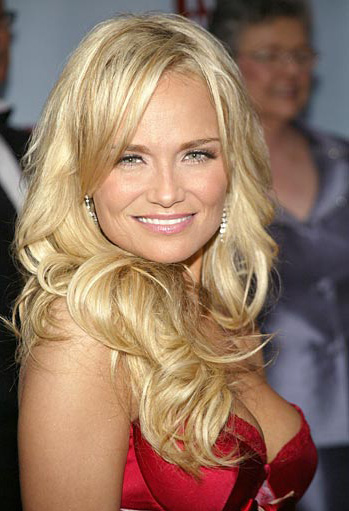
Now it can be said that I have played all three major houses at Lincoln Center. Tonight, I made my Metropolitan Opera debut in the chorus of Kristin Chenoweth's one-woman show at the Opera House. Ms. Chenoweth took the night off from her current Broadway hit The Apple Tree and sold out the MET, offering the audience a smattering of Broadway, operetta, and pop songs, which delighted everyone in the house, especially those of us sharing the stage with her.

If truth be told, Kristin was not technically on the stage of the MET: she played on the space atop the covered orchestra pit. She will step on the actual stage on March, 2010, when she will make her official Metropolitan Opera debut as Samira in John Corigliano's opera The Ghosts of Versailles. The chorus, The Juilliard Choral Union, under the direction of Judith Clurman, was placed on a narrow riser just behind the MET's gold curtain.

Backed up by an eleven-piece band, conducted by the dynamic Andrew Lippa, Ms. Chenoweth took the stage by storm offering an Act I which included songs by Irving Berlin ("You're Easy to Deal With"), Jules Styne ("If You Hadn't but You Did"), and Stephen Schwartz ("Popular"). The entire evening was directed by the talented Kathleen Marshall, last season's Tony Award winner for choreography for The Pajama Game.

I sang in the second part of the program, offering backup vocals on Kristin's rendition of Victor Herbert's "Italian Street Song," and Dennis DeYoung's "Show Me the Way," a song made popular by the heavy metal band Styx. The women of the chorus sang with Kristin in a delicious rendition of Gilbert and Sullivan's "Poor Wandering One" from The Pirates of Penzance.

What makes these kind of events exciting is the anticipation of going on stage, together with the sheer delight of being a part of an event. Hanging out backstage at the MET, and looking at the world from the other side of the footlights was also a one-of-a-kind experience, not to mention standing a few feet from Peter Gelb, and leaving the MET via the stage entrance, elbowing my way through the crowd of adoring fans waiting outside in the cold for Kristin's autograph.

It was truly a magical night.

Monday, January 15, 2007

A December DON CARLO to remember

In the middle of a busy Christmas season, it was good to take a break from all the running around that the Yuletide usually brings and attend a performance of Verdi's Don Carlo, an opera which I have always classified as one of the composer's greatest achievements, and also one of my personal favorites. I attended the Saturday matinée broadcast of this work, and if you listened in, I think you will agree with me that it was a very solid performance of this work.

When everybody is in top form and the looming microphones of the broadcast that will carry the voices to millions of listeners worldwide have been turned on, all artists try to get to a higher level, and on December 23, they did. Johan Botha, the South African tenor, sang the title role. I have always liked him a lot since I heard his Walther von Stolzing at the MET a few years ago, the last time the house presented Die Meistersinger. Although he does not possess the most mellifluous voice, his instrument is quite secure. And although, there is a noticeable vibrato in his voice, and his acting is, at times, worthy of a silent film, his characterization of the Infante was quite memorable.

Everything that René Pape touches turns to gold these days. He is one of our great basses, and his Philip II was majestic and touching. He turned Philip's great aria "Ella giammai m'amo" into an internal monologue, complete with sotto voce phrasing. I must say that when I heard it at the house, I was a bit disappointed with this approach, but later on, I remembered that in all facets of art less is more, and pretty soon came to the conclusion that it was a valid interpretation of this monologue.

Patricia Racette and Olga Borodina were superb in the roles of Elisabeth and Eboli. I was very pleased with their characterizations and with their ability to handle the difficult Verdian melody line. Likewise, Samuel Ramey offered an imposing Grand Inquisitor. Not too many basses nowadays can muster such threatening power, and although the voice continues to descend into the throes of an ever-widening tremolo, his scene with Pape brought down the house.

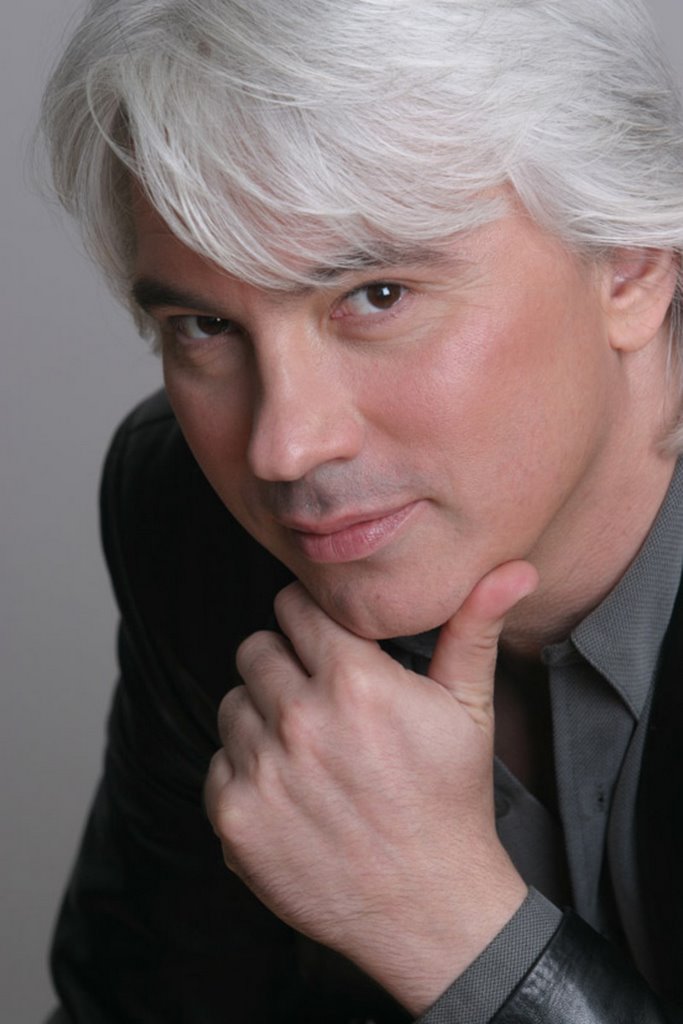
Dmitri Hvorostovsky sang with such splendor that he clearly was the most memorable artist on that stage. His voice no longer feels small in the house as it once did, and his audible breathing is no longer an issue as it once was. The role of Posa, perhaps the most noble of all Verdi characters, fits him like a glove, and although I have heard this role sung with greater flexibility and wealth of voice (Robert Merrill was awesome in this role), Dmitri was amazing in his final aria. When he is on, he can be quite a memorable artist, and one of our current best.

Final kudos must go to James Levine who led such an intelligent reading of this massive score that he inspired everyone around. The ovations were simply thrilling and well-deserved.

This Don Carlo was one of the best performances in a year that is proving to be a very memorable one for the new Metropolitan Opera.

Friday, December 01, 2006

Deborah Voigt's Year of Birth

Online searches come up empty if you want to know when Deborah Voigt was born. I found this a little unusual because, being a highly respected public figure, that kind of information should be readily available to everyone online. Recently, the year of her birth has been made known to me by very reliable sources, and it is now published on the sopranos section of my Wagner website. I am sure that Ms. Voigt would not mind a bit if we find out when she came into this world. At one point, she might have had a problem with us knowing her age, but now that she is looking (and sounding) better than ever, that should not be a concern.

Saturday, November 25, 2006

New BARBER OF SEVILLE at the MET

I am not sure if The Metropolitan Opera needed a new production of Il Barbiere di Siviglia, but the new Peter Gelb administration has brought a new one in via Bartlett Sher, the director of last year's Tony award-winning musical The Light in the Piazza. The cast of this new production of Rossini's sunny comedy features Juan Diego Flórez as Count Almaviva, and by the manner by which it is being advertised, with the young Peruvian tenor's handsome likeness all over the place, this popular young artist is the reason why this production is being mounted. Also in the cast are John Del Carlo as Dr. Bartolo, veteran Samuel Ramey as Don Basilio, the fabulous Diana Damrau as Rosina, and Swedish sensation Peter Mattei as Figaro. In the pit, conductor Maurizio Benini keeps things moving briskly, and makes the pint-sized orchestra sound bigger than it really is.

It is almost impossible these days for a new production of a favorite opera to avoid the throes of controversy. Wagner fans have dealt with, and also delighted in this trend for decades. In the past few years the age of the director has arrived in the Italian repertory, and in the recent past unusual productions of Italian warhorses (The Ana Netrebko, Rolando Villazón La Traviata in Salzburg, and the Robert Wilson's Aida ) have stretched the boundaries of Italian opera staging. This new MET production is certainly the most abstract that New York audiences have seen. The set consists mostly of multiple doors which are wielded about on stage to form geometrically pleasing patterns, and to convey the sense of claustrophobia and imprisonment. Orange trees, a staple of Seville's landscape, are also everywhere, adding a genuine touch to the setting.

The most controversial aspect of Mr. Sher's production is an extension to the stage built past the orchestra -- a passerelle, if you will -- which thrusts the entire action forward, and also manages to do some tricky unexpected turns with the sound of the human voice and the orchestra. Acoustically, the MET was designed for voices to be contained within the proscenium of the theater, and making unmiked singers perform well beyond the safe confines of the stage (and behind the conductor) reduces the sound of their voices. When they step around the orchestra to the passerelle they might be closer to the audience, but they sound miles away. The orchestra also ends up sounding muffled and confined. These directorial tricks are fine on a Broadway stage where both performers and orchestra are miked, but it does not help the natural sounds of an opera house.

Also, can anybody tell me why at the end of Act I a gigantic anvil (the kind that the Coyote would purchase from Acme to catch the Roadrunner) comes down and crushes a wagon full of pumpkins?

I would say that if Mr. Sher does away with Warner Brother's cartoon tricks and liberates the MET's acoustics once again, we might have a production of Barber worthy of Mr. Gelb's vision of the new Metropolitan.

Sunday, October 22, 2006

The New Butterfly at the MET

Madama Butterfly is the one opera that never fails to please, even when the cast is not ideal, the production questionable, and the orchestra not playing up to par. Last night at Peter Gelb's new Met Opera (from here on in this article, and in every one of my articles called the MET) none of the above was in order. The new production by Anthony Minghella, which opened the new Met season, and had already been seen recently at the English National Opera, is a memorable production that successfully updates the work without changing its locale, harming its intentions, or otherwise changing the intentions of its creators. The operas of Giacomo Puccini do not lend themselves to new interpretations as easily as the works of other composers. Tosca, for instance, one of the pivotal works of this composer, has to be staged as taking place in 1800, otherwise references to socio-political events that are alluded to in the libretto would not make sense if the locale and time is changed.

Anthony Minguella's staging is successful at conveying the delicacy of the story, as well as the fragility of the title character. The setting, with its mirror-like floors and over-head covering shows us a reflection of Japanese society (which is exactly what Puccini achieved in his Western melodies with hints of Japanese sounds) seen through the eyes of a European. The setting is decidedly Western in its look, but it successfully achieves a distant world. The mirrored surfaces of the stage allow us a distant look at the events. We are looking at two sides of the same issue, so to speak, though we are distant observants, depending, of course, on your seat in the house. From my seat in the rear orchestra (Row Z) I felt a little removed. I can't imagine this production from the Family Circle. It is definitely a production that was conceived for a smaller house: the London Coliseum where the ENO performs is perfect for this version of Butterfly.

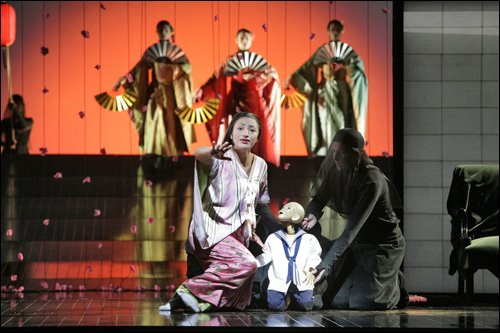
The bunraku puppets that are used in the production are quite interesting, especially Sorrow, Butterfly's child. All you've heard about it is true: one forgets that it is a puppet and begins to think of it as a real child; and yes, the puppeteers do get an incredible response out of their creation. No child actor in my memory has ever given such a heart-breaking performance as this little puppet. Of course, most of what I heard from the very conservative crowd in the orchestra was negative when it came to the puppet. The one aspect that most members of the audience object to are the very visible puppeteers. A little reading about Bunraku theater traditions, and a little suspension of disbelief might solve the problems of these audience members.

Vocally, things were not that rosy last night. I found Cristina Gallardo Domas thin and wobbly in her interpretation of the title role. Her acting is first-rate, however, and she manages to convey the fragility of this Butterfly quite well. Marcello Giordani was a credible Pinkerton, so much so, that he was booed during his curtain calls, not for his singing, which at times sounded force, but for his great interpretation of a heartless Yankee vagabond. If the leads left something to be desired, the roles of Sharpless, Suzuki, and Goro were ably sung by Dwayne Croft, Maria Zifchak, and Greg Fedderly respectively.

The orchestra played well under Ascher Fisch, although I would have liked to have heard what James Levine did with the score on Opening Night. I will have to listen to my Sirius recording of the event to compare.

This production should be experienced for its visual beauty. That alone is worth the price of admission.

Wednesday, September 27, 2006

Thomas Stewart Dies

The great American bass-baritone Thomas Stewart died this week. He passed away after making par on a golf course. He had turned 78 last month.

Here is the obituary, written by Tim Page, from The Washington Post.

Thomas Stewart died just the way many of us would choose to go -- instantly, in the company of the woman he loved, and on the golf course, immediately after making par.

The great American bass-baritone, who had turned 78 last month, was on the links near his home in Rockville late Sunday afternoon. "He had had heart surgery earlier this year and had not been feeling well for some time, but he was getting along, still active, cheerful and doing things," soprano Evelyn Lear, Stewart's wife of more than half a century, said yesterday. "We went out to the course, played for a while, he made par, and then suddenly turned around and fell backwards. I tried to resuscitate him, but he didn't respond."

Stewart was rushed to a hospital, where he was pronounced dead from a massive heart attack.

Onstage, Stewart was a booming, magisterial and frankly awe-inspiring presence (he was, for example, the first American in history to sing the Norse god Wotan in Wagner's complete "Ring" cycle at Bayreuth). Offstage, he was friendly, kind, self-effacing and absolutely unpretentious.

Will Rogers used to say that he never met a man he didn't like; in a similar spirit, I can affirm that I never knew anybody who didn't like Tom Stewart. Yesterday was a day of mourning in the music community -- hours on the telephone, shocked and saddened e-mails floating through cyberspace.

Matthew Epstein, the director of the worldwide vocal divisions at Columbia Artists Management, who knew Stewart for 40 years, called him "just about the most marvelous person in the world, and you'd get agreement with me from everybody from the legendary singers he worked with early in his career, such as Birgit Nilsson and Jon Vickers, to the young people he nurtured as part of the Evelyn Lear and Thomas Stewart Emerging Singers Program."

This last endeavor was especially dear to both Lear and Stewart. In company with the Wagner Society of Washington, the two provided musical guidance for more than 70 aspiring Wagner singers since 2000, presenting two concerts each year.

"Why were the works of Wagner so important to me as an artist?" Stewart asked in an essay he wrote to accompany a recording. "It's because of the marriage of word and music, something every composer seeks to achieve but few accomplish with such perfection. Being a singer who becomes completely absorbed in the text he is singing, I naturally felt an affinity for this aspect of Wagner's art."

Epstein called Stewart a perfect example of what an American singer should be -- "deeply musical, able to sing in many different styles and languages, a wonderful actor with a fabulous vocal technique. He could sing Wotan, and then he could turn right around and sing a comic Italian part such as Verdi's Falstaff. Every director he ever worked with thought he was a great actor. And every musician he ever worked with knew he was a great singer."

Stewart was born Aug. 29, 1928 in San Saba, Tex. After some early studies in electrical engineering in Waco, he moved to New York, where he studied with Mack Harrell at the Juilliard School. After graduation, he sang with the New York City Opera and the Lyric Opera of Chicago, where he took on the bass role of Raimondo in Maria Callas's American debut in Donizetti's "Lucia di Lammermoor."

He married Evelyn in 1955. The two moved to Berlin, where they sang at the State Opera and then throughout Europe, before returning home to the United States for long and distinguished careers with the Metropolitan Opera. For more than a decade, Lear and Stewart have divided their time between Rockville and Florida.

They made many recordings together, a number of which are available on the VAI label; a five-CD retrospective was recently issued on Deutsche Grammophon. Stewart's own favorite disc was one that he made of Wagner's complete "Die Meistersinger von Nuernburg" with the conductor Rafael Kubelik and the soprano Gundula Janowitz that was taped in the late 1960s but, for contractual reasons, never issued until the 1990s.

Tom and Evelyn came over for dinner at my home in Baltimore in early August. He was clearly tired but was grand company throughout the evening, touching on several favorite subjects -- his interest in alternative medicine, his amused skepticism toward any form of religion, news of mutual friends in New York and Washington. After considerable prodding, he favored us with an impromptu, heartfelt and achingly beautiful a cappella rendition of the old folk song "Shenandoah," which rings through my ears as I write this.

It was a performance of depth, strength, courage, love -- all qualities exemplified by Thomas Stewart. The gratitude felt by his friends and admirers is immense.

Madama Butterfly opens new MET season

The Metropolitan Opera's new season opened with a production of Giacomo Puccini's Madama Butterfly. This is the first new production of the first year under the new regime headed by Peter Gelb, who promises to bring back to the MET that long lost spark of theatrical excitement and critical praise that has been absent for many a season in America's most important opera house. I will be attending this production on October 21st and will be writing my own review of this production, directed by Anthony Minguella, at that time. For now, here are excerpts from Anthony Tommasini's review in the New York Times.

In the aisles and lobbies during the second intermission of the Metropolitan Opera's new production of Puccini’s “Madama Butterfly,” which opened the season on Monday night before a star-studded audience, patrons could be overheard heatedly debating the puppet used to portray Butterfly’s little boy.

This nonspeaking minor character is typically played by a cute child in a sailor suit. In this production the director Anthony Minguella has introduced a small puppet boy manipulated by three puppeteers cloaked in black who stand behind him. The child moves with eerily human gestures, and his baldish head has a wizened, hopeful yet anxious look.

Some people thought it was “more real than any real child they could have had,” as one patron put it. Others thought it was intriguing but very strange. Somewhere in the house, Peter Gelb, the new general manager of the Met, must have been beaming.

This is exactly what he had hoped for in bringing to the Met the “Butterfly” production that Mr. Minghella, the Oscar-winning film director, originated at the English National Opera in London. It was a major statement for Mr. Gelb to inaugurate his tenure with this production at a time of diminishing audiences at the house and great challenges to the art form. The Met, of all companies, should present innovative, risk-taking work that challenges audiences, generates interest, gets people talking and, most important, keeps people coming.

ou cannot call Mr. Minghella’s concept a modernized staging because the elaborate costumes by Han Feng, filled with stylized flourishes, are meant to evoke the opera’s setting, Nagasaki at the beginning of the 20th century. The sets by Michael Levine have an abstract look, with dull black side walls and glossy black steps, rectangular shapes of radiant reds and greens, sliding panels deftly used to make characters disappear, and a slanted overhead mirror that hauntingly reflects the action onstage.

The captivating imagery of the production is sure to be its least controversial element. At the end of Act I, for example, during the wedding-night love duet between Butterfly and Pinkerton, black-clad dancers form trellises of white lanterns to shield the couple as flower petals fall from on high, and curtains made from strings of petals descend. The use of puppets may be the production’s most debated element. But the image of this puppet child, with his fixed stare and need to know, will stay with me.

Mr. Minghella’s courageous Butterfly was the Chilean soprano Cristina Gallardo-Domâs. A slight-framed and intense woman, she had a riveting presence. She does not have a conventionally lovely voice; her sound is earthy and sometimes a touch strident. To shape supple phrases, she thins her sound and sings with impressive delicacy, though with some loss of richness. And she has a wobbly vibrato in full-voiced top notes. Yet she gave a vulnerable, utterly honest and, in its way, elegant performance.

Pinkerton was played by the Italian tenor Marcello Giordani, who looked a little beefy to play the dashing American Naval officer. Still, he sang with full-bodied Italianate passion; warm, rich tone; and clarion top notes. And I have never seen him act with more involvement and subtlety. As Sharpless, the robust baritone Dwayne Croft was powerless to stop Pinkerton from his callous courtship of the trusting geisha Butterfly. The fine mezzo-soprano Maria Zifchak was an unusually impassioned Suzuki, Butterfly’s devoted servant.

James Levine, in his first performance at the Met since having lost four months of work to a shoulder injury, received a tumultuous ovation when he arrived in the pit. If Mr. Gelb is going to take creative chances and lure directors from the film and theater to the Met, he will need more than ever the solid musical grounding Mr. Levine has long brought to the house.

Conducting his first complete “Butterfly” there, Mr. Levine had this familiar score sounding vigorous, lean and intricate. He was attuned to the modernistic touches of Puccini’s harmonies and to the arching lyricism of Puccini’s lines.

Whatever your take on this production, it is sure to be a hot ticket. Everyone will be talking about the Met. When was the last time you could say that?

Muslim Anger Halts Opera

The following appeared on the CNN website today.

BERLIN, Germany
(AP) -- A leading opera house called off a production of Mozart's "Idomeneo" that features the severed head of the Prophet Mohammed, setting off a furious debate Tuesday over Islam, freedom of speech and the role of art.

The furor is the latest in Europe over religious sensitivities -- following cartoons of the prophet first published in a Danish newspaper and recent remarks by Pope Benedict XVI decrying holy war.

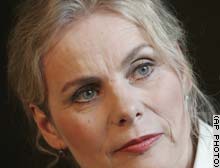
Kirsten Harms, director of Berlin's Deutsche Oper, (pictured here) announced "with great regret" that she had decided to cancel the three year old production after state security officials warned it could provoke dangerous reactions in the current politically charged climate.

After its premiere in 2003, the production by Hans Neuenfels drew widespread criticism over a scene in which King Idomeneo presents the severed heads not only of the Greek god of the sea, Poseidon, but also of Mohammed, Jesus and Buddha.

The severed heads are an addition by director Neuenfels to the 225-year-old opera, which was last performed by the company in March 2004.

Harms defended her decision, which she described as "weighing artistic freedom and freedom of a theater ... against the question of security for people's lives."

But the move immediately provoked strong reactions across Germany.

Outraged politicians called the decision to pull the production "crazy" and "a fatal signal" of caving into extremism. Response from Germany's Islamic community was mixed, with some praising the decision and others calling on Muslims to accept the role of provocation in art.

The leader of Germany's Islamic Council welcomed the move, saying a depiction of Mohammed with a severed head "could certainly offend Muslims."

But in an interview with German radio, Ali Kizilkaya added: "I think it is horrible that one has to be afraid ... That is not the right way to open dialogue."

The leader of Germany's Turkish community said it was time Muslims accepted freedom of expression in art.

"This is about art, not about politics," Kenan Kolat told Bavarian Radio. "We should not make art dependent on religion -- then we are back in the Middle Ages."

Neuenfels has insisted his staging not be altered, saying the scene where the king presents the severed heads represents his protest against "any form of organized religion or its founders."

"I stand behind my production and will not change it," Neuenfels told the Berliner Morgenpost in its Tuesday edition.

The opera house's decision comes after the German-born pope infuriated Muslims by quoting the words of a 14th-century Byzantine emperor who characterized some of the teachings of the Prophet Mohammed as "evil and inhuman," particularly "his command to spread by the sword the faith."

Earlier this year, violent protests erupted across the Muslim world after a Danish newspaper published 12 cartoons depicting Muhammad. The caricatures were reprinted by dozens of newspapers and Web sites in Europe and elsewhere, often in the name of freedom of expression.

Islamic law is interpreted to forbid any depiction of Mohammed for fear it could lead to idolatry.

"We know the consequences of the conflict over the (Mohammed) caricatures," Deutsche Oper said in a statement. "We believe that needs to be taken very seriously and hope for your support."

Berlin security officials had warned Harms that staging the opera could "in its originally produced form .... pose an incalculable security risk to the public and employees."

But Germany's interior minister condemned the cancellation.

"That is crazy," said Wolfgang Schaeuble, the country's top security official, speaking to reporters in Washington, D.C. "This is unacceptable."

It is not only Muslims who have been offended by depictions of religion in art.

Last month Madonna sparked criticism from some Roman Catholics in Germany for a show that staged a mock crucifixion. Mel Gibson's 2004 movie, "The Passion of Christ" met with disapproval from some Catholics and some Jews. In 2004, a Birmingham, England, theater canceled its run of "Behzti" after a violent protest by members of the Sikh community.

Still, many in normally open and tolerant Berlin, which has become a home for cutting edge and often contentious artistic productions, cautioned against compromising on issues of freedom of speech and art.

"Our ideas about openness, tolerance and freedom must be lived on the offensive. Voluntary self-limitation gives those who fight against our values a confirmation in advance that we will not stand behind them," said Mayor Klaus Wowereit.

Bernd Neumann, the federal government's top cultural official, said that "problems cannot be solved by keeping silent."

"When the concern over possible protests leads to self-censorship, then the democratic culture of free speech becomes endangered."