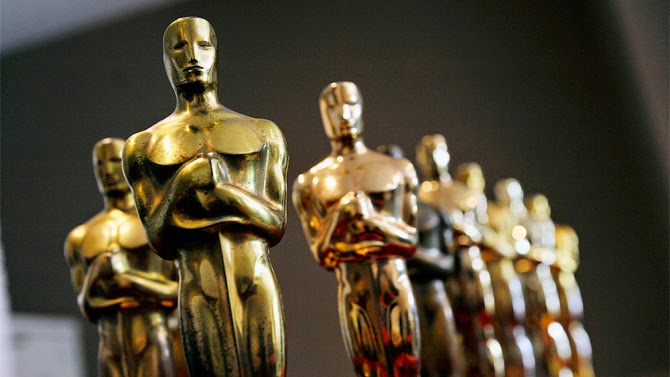
Thursday, June 04, 2015

The Walk will open the 53rd NY Film Festival

I received the following announcement from the Film Society of Lincoln Center:

The Film Society of Lincoln Center announced today that Robert Zemeckis’s The Walk will make its World Premiere as the Opening Night selection of the upcoming 53rd New York Film Festival (September 25 – October 11), which will kick off at Alice Tully Hall. A true story, the film is based on Philippe Petit’s memoir To Reach the Clouds and stars Golden Globe nominee Joseph Gordon-Levitt as Petit, the French high-wire artist who achieved the feat of walking between the Twin Towers in 1974. The Walk will be the second 3D feature selected for the Opening Night Gala since Ang Lee’s Life of Pi in 2012 and also marks Zemeckis’s return to the Festival after Flight, the 2012 Closing Night Gala selection. The film will be released in 3D and IMAX 3D on October 2, 2015.

New York Film Festival Director and Selection Committee Chair Kent Jones said: “The Walk is surprising in so many ways. First of all, it plays like a classic heist movie in the tradition of The Asphalt Jungle or Bob le flambeur—the planning, the rehearsing, the execution, the last-minute problems—but here it’s not money that’s stolen but access to the world’s tallest buildings. It’s also an astonishing re-creation of Lower Manhattan in the ’70s. And then, it becomes something quite rare, rich, mysterious… and throughout it all, you’re on the edge of your seat.”

Robert Zemeckis added: “I am extremely honored and grateful that our film has been selected to open the 53rd New York Film Festival. The Walk is a New York story, so I am delighted to be presenting the film to New York audiences first. My hope is that Festival audiences will be immersed in the spectacle, but also to be enraptured by the celebration of a passionate artist who helped give the wonderful towers a soul.”

Wednesday, June 03, 2015

Margaret Juntwait is dead at 58

Margaret Juntwait, Former WNYC Host, and the Voice of the Metropolitan Opera, died today at the age of 58. In the history of the Metropolitan Opera Radio Broadcasts she was only the third host, and the first woman to hold this position. She will be missed.

Sunday, May 24, 2015

Tomorrowland is Pure and Preachy Disney

The basic premise of Tomorrowland, the new Disney film from director Brad Bird, is that half the world tries to build up Mother Earth in the morning, while the other half tears it down overnight.  Mankind has an incredible inventive gift that has led humanity to wonderful achievements, however we are a race that is also inherently bent on destruction, and this dark aspect seems to be taking over our current civilization.

The story begins in 1965 with the young Frank Walker (who will grow up to be George Clooney) who attends the New York World's Fair and brings with him a half-baked jetpack gizmo that he has invented. While being rejected by Hugh Laurie (who turns out to be the villain in the piece, a fact that you know right from his first appearance) he meets the mysterious child Athena (Raffey Cassidy) who introduces him, via a magical pin, to the world of tomorrow: a remarkable skyscraper city, half Fritz Lang's Metropolis, half modern-day Dubai, which ultimately is reminiscent of a 1950's conception of the future.  In other words, it reminds one of the sleek "Tomorrowland," one of the theme lands of Disneyland/Disney World.

The future, according to the gospel of Disney, is a clean-cut place with the kind of architecture that brings to mind the futuristic designs of the theme parks as well as the memorable structures of Spanish architect Santiago Calatrava. His amazing City of Arts and Sciences in Valencia, Spain, for instance, seems to be the blueprint for Scott Chambliss's production designs.

But the land of tomorrow is rotten from within: it is crumbling and heading into dystopic destruction. To set things right, Athena summons Casey Newton (Britt Robinson), a teenager who has been sabotaging the dismantling of a NASA launch pad near Cape Canaveral where she lives. Obviously this is a teen who cares about space travel, and in the logic of this film one of the good guys. Her meeting with Athena, who gives her one of the magical pins, is the call to adventure that sets her on a journey where she meets the older Frank Walker, now a grizzled, discontented George Clooney living in the sticks, in a run-down house filled with interesting futuristic gadgets. The meeting of Casey and Frank, the catalyst that will bring the narrative to a climax, unfortunately takes way too long to happen. At 130 minutes the entire movie feels too overproduced and definitely too long.

Watching Tomorrowland is very much like attending the future section of EPCOT.  The sense of optimism overwhelms you. Nothing wrong with that. Frank Capra built a career based on it, and so did Walt Disney! What I find a bit troubling are the constant self-references. The entire film is a Disney infomercial. The Pirates of the Caribbean franchise was based on a park ride, but the films, especially the first of the series, was so successful artistically that you forgot the shameless plug and you concentrated on the new myth the film was developing. No such luck with Tomorrowland, which looks to the future, but deep down is just interested in first week earnings.

Saturday, May 23, 2015

Mad Men ends by Big Sur


In his own words, Mad Men creator Matt Wiener could not believe that 150 people kept the ending to the show a secret. Well, make that 151. It was hard, but somehow I did it. It amazes me that this ending was in place in Matt's head right from the start of the series, and it managed to remain intact all the way to the end. It shows total knowledge of the character and the situations surrounding him in the drama. And by the way, keeping such a big secret, knowing me, takes amazing determination and will power! Never mind that I had to keep it for about five years.

But seriously, it was the best ending, the only ending possible to the series. It dashed away any gory hopes that Don Draper would end up a suicide, falling out of a building, his body descending in slow-motion, like the Vertigo inspired logo to the show.  Don has been falling now for many seasons, there was no need to belabor the point. The series ended with us inside Don's mind, as he dreams up what is arguably the greatest ad campaign for a product ever to come out of Madison Avenue. Bravo!

Sunday, May 17, 2015

Helen Mirren as Queen Elizabeth II in The Interview

All Hail Helen Mirren!  She is not only the Toast of Broadway, she is its reigning current queen as long as she plays Queen Elizabeth II in Peter Morgan's fantasy play The Interview.

The author (who also wrote Frost/Nixon and the screenplay for The Queen, an Oscar winning performance for Dame Helen) imagines what occurs during the weekly private meetings that the monarch has had with a queue of Prime Ministers, starting with a crotchety, self-serving Sir Winston Churchill, through the controversial Sir Anthony Eden, the down-to-earth Labour PM Harold Wilson, with whom Queen Elizabeth had a very close rapport, and the mighty Margaret Thatcher, whom the Queen saw as a fellow traveler as well as a very real rival for power. The play also includes a couple of scenes with John Major, whom we learn was not wholly prepared to lead a nation when it was his turn at the dispatch box, the very angry, and very Scottish Gordon Brown, and David Cameron, the UK's current Prime Minister. There is also a very small cameo by Tony Blair, but surprisingly the author does not imagine a one-to-one interview with the well-known leader of "New Labour."

When Dame Helen is on stage she rules. Our eyes are glued to her. This is part stagecraft, part stage presence. When Churchill appears center stage for his interview, puffing on a cigar, as portrayed by the physically imposing Dakin Matthews, he is a great dinosaur of a politician. The scene has been staged by director Stephen Daldry so perfectly that our eyes cannot help but shift momentarily to him. This gives Dame Helen (and her dressers) enough time to perform one of her many lightning fast costume changes right on stage. Suddenly she is transformed into the young, uncrowned queen welcoming her first Prime Minister who carries an agenda as big as his girth. It is early magic in a production that is filled with such delightful moments.

Among the visitors to Buckingham Palace two Prime Ministers stand out: John Major (Dylan Baker), and Harold Wilson (Richard McCabe). Each of these scenes plays beautifully in contrast to the other. Mr. Baker portrays a weak, but very human John Major, a politician unable to escape from the shadow of his "Iron Lady" predecessor. Likewise, Mr. McCabe plays the droll Mr. Wilson who knows that politically he has to push his socialist agenda to a woman who was born with a silver spoon in her mouth. Despite their social class differences, the play portrays their relationship in the warmest of ways. It is the most satisfying interview of the evening, and Mr. Morgan even dramatizes a trip by Mr. Wilson to Balmoral Castle for a rainy weekend in Scotland with the Royal Family.

This is an evening of sheer artistry on Broadway.  A unique play where even the interval (or intermission, as we say in the States) has a very British atmosphere.  It is a not to be missed production, and  one of the big contenders for this year's Tony Awards.

Saturday, May 16, 2015

Balanchine and Stravinsky at the NYC Ballet

 Last Saturday afternoon I attended the New York City Ballet. They performed four of the great Igor Stravinsky, George Balanchine collaborations: Apollo, Agon, Duo Concertant, and Symphony in Three Movements. These classic works, that collectively have come to be known as the "black and white" ballets, due to the fact that the dancers are costumed in primarily these two colors, are staples of this company, and are brought back year after year to the delight of seasoned ballet aficionados and young audiences coming to these works for the first time.

Apollo is the oldest of these ballets.  Stravinsky composed the music in 1927, and the twenty-four-year-old Balanchine choreographed it a year later.  A host of great dancers have passed through this iconic role throughout the decades. It is the only Balanchine creation that puts the male dancer on the forefront. The short video below features Chase Finlay, a NYC Ballet principal dancer, explaining his approach to dancing this role.


Duo Concertant is a unique creation that features two dancers as well as a pianist and a violinist, all on stage. The short work examines the equal relationship that exist (or ought to exist) between music and dance. The piece takes the musicians out of the pit and places them side by side with the dancers. Saturday's results also included an interesting juxtaposition between the seasoned age of the musicians versus the youthful quality of the dancers. I'm not sure if this was an original intention of Mr. Balanchine.

The performance concluded with the amazing Symphony in Three Movements, a hyper-kinetic Stravinsky composition from 1945 that on the one hand looks back to his atonal beginnings back with Sergei Diaghilev and The Ballets Russes and dares to look forward toward the future of music. Listen closely with your eyes closed, and you will hear the nervous minimalism of a John Adams.  However most ballet goers will not close their eyes especially when a dancer of the caliber of Amar Ramasar is dancing in it. Mr. Ramasar has been a soloist since 2006, and he was a principal dancer in Chichester Psalms, the Leonard Bernstein, Peter Martins ballet that I performed with the NYC Ballet when I was a member of the Juilliard Choral Union.

If you missed the black and white Stravinsky, Balanchine ballets this season, I would not worry.  I am certain that they will be performed again next year to the delight of young and old.

Thursday, April 23, 2015

Calixto Bieito comes to the MET

The New York Times reported today that Calixto Bieito, the iconoclastic, Catalan opera director will be making his Metropolitan Opera debut during the 2017-2018 season.  He will be staging Giuseppe Verdi's great work La Forza del Destino, in a co-production with the English National Opera. The production will be seen in London (sung in English) the year before it comes to New York where it will be sung in the original Italian.

His productions have been called offensive by some, and brilliant by others. His Parsifal, which has been featured on this website, takes place in a post-apocalyptic world, where the old knight Gurnemanz is a defrocked priest turned drug pusher, and, at the conclusion of the production, the character of Parsifal undresses and is carted away to be cannibalized by the rest of the opera's survivors. Another of his productions, Verdi's Un Ballo in Maschera, staged for the Gran Teatre del Liceu in Barcelona, featured a scene in a public bathroom.

Peter Gelb said that he expected that the new production of Forza "would stimulate audiences, not shock them."  He also added that the production would be set during the period of the Spanish Civil War.

Wednesday, April 08, 2015

Verdi's Don Carlo at the MET

Arguably Giuseppe Verdi's greatest work, Don Carlo is a massive five act affair that started its life at the Paris Opéra in 1867 as Don Carlos, with a French libretto that was later translated into the Italian version that is often performed these days. An intense, brooding, dark work set in stern, despotic Spain during the reign of Philip II, the opera examines the conflicts between the personal and the political, and the often clashing relationship between religion and the monarchy during the time when the Inquisition tried to maintain Spain loyal to the Vatican and Holy Mother Church.

The current Nicholas Hytner production (a co-production of the Royal Opera, Covent Garden) is pretty tame when it comes to the direction and costumes by Bob Crowley.  However, the sets, also by Mr. Crowley, tend towards the minimalist in a geometric sort of way in some scenes, while in others, shafts of light, coming through windows, lend an air of expressionism. It is a production that does not offend the sensibilities of the conservative New York opera crowd, but neither does it propel the drama into an epic level.

This opera lives or dies by its principal singers, and the MET has assembled a cast of impressive soloists headed by the amazing Ferruccio Furlanetto, who these days owns the role of Philip II. His deep bass has matured into the kind of instrument that is able to express the anguish of a character who has married a woman who has never loved him, and raised a son who threatens his power. His failure as a husband is now compounded with the thought that in order to save his kingdom he might have to sacrifice his son. Mr. Furlanetto beautifully conveys the character's agony as he realizes the church might not be able to absolve him of the murder of his first born. His is one of the great opera characterizations of our times.


Rounding out the cast is a splendid Yonghoon Lee in the title role. The young Korean tenor was in amazing voice on Monday night, and delivered a memorable performance. Dmitri Hvorostovsky was also in good voice as the faithful Rodrigo, although I have always found his intake of air before launching into a phrase to be, at times, as loud as his singing. On Monday night it was louder than I can remember in a while. Ekaterina Gubanova was a sonorous, memorable Eboli, while Barbara Frittoli took longer than I wanted for her to settle into the role of Elisabeth. Finally, it's great to see James Morris still singing these days. In the autumn of his years the bass-baritone has settled into the comprimario world effortlessly. But I don't think that the Grand Inquisitor is the role for him. His voice always had a light timbre and this character requires a threatening cavernous voice. When the Philip is darker than the Inquisitor then there's something wrong.

But that might be a little too much to protest about. The orchestra, under the direction of the great Yannick Nézet-Séguin, played beautifully, offering a sonorous cushion for the cast. It is great to have him as the music director of the Philadelphia Orchestra, which means that he is only two hours away from New York City. In the unlikely event that he were to become the new music director of the New York Philharmonic in 2017, after Alan Gilbert leaves, he would only be steps away.  But that just might be way too much to ask.

Monday, April 06, 2015

Gigi is back on Broadway

The MGM motion picture Gigi is perhaps the studio's last great musical before the genre became a dinosaur. This original musical for the screen, directed by Vincente Minelli and produced by Arthur Freed, proved to be a box office bonanza, and, as in the team's previous hit an American in Paris, Gigi won the Oscar for Best Film of 1958, as well as eight others.  As a matter of fact, it won an Academy Award for every category in which it was nominated, a record at that time. With its irresistible French cast headed by Maurice Chevalier, and co-starring Louis Jourdan and Leslie Caron, the movie was pure champagne, and the Alan Jay Lerner and Frederick Loewe score was a delightful recreation of fin de siècle Paris.  For the composer and the lyricist/screenwriter it was a fitting followup to their Broadway smash hit My Fair Lady two years earlier.

In 1973, Gigi opened on Broadway with additional songs written by Lerner & Loewe. It boasted an all-star cast headed by legends Alfred Drake and Agnes Moorehead, and featuring Maria Karnilova and Daniel Massey. A newcomer, Karin Wolfe, played the title role. It was the second Broadway show I ever saw as a kid, and I loved it, but it proved to be a disappointing flop. The frequent absences of many of its stars and the fact that Ms. Moorehead was diagnosed with cancer during its run did not help matters. It played for only 103 performances at the Uris Theatre (now called the Gershwin.) Thankfully, RCA Victor recorded an Original Broadway cast album which is still available on CDs.

A new production of this property is set to open at the Neil Simon Theatre, and I caught one of its previews last week. The original concept, adapted by Heidi Thomas, consists of taking scissors and shuffling songs around. The original musical opener, for instance,  "Thank Heaven for Little Girls," originally sung by Honoré Lachaille, has now been transformed as a duet for Mamita and Aunt Alicia, and moved to the middle of the first act. It works, but it settles the show into a somewhat safe zone, as if Ms. Thomas thought that a middle aged man singing about little girls could only spell pedophilia for today's audiences. Howard McGillin, who plays Honoré, gets very little to do as a result.  He is still the narrator of the story, but in name only. Since he is not given the chance to profess to the audience his credo, his character quickly develops a hollow center. His second big number "I'm Glad I'm Not Young Anymore" is also turned into a duet, this time with the great Victoria Clark who plays Mamita. One begins to ask oneself if Honoré's presence is even required. Mr. McGillin tries to bring him to life, but when you remove the character's guts there's very little that any actor can do to animate him once again. Mr. McGillin may not have the genuine Gallic charm of Chevalier, it is true, but at least give the guy a chance to do something important with his role. Interestingly, when the songs are left to the original characters, the thing works. "I Remember it Well," sung by Honoré and Mamita, this time sung in a street of Paris, and not by the beach of Trouville, maintains the raison d'être of the original film and its gentle charms stops the show. Likewise, Corey Cott as Gaston sings a winning version of the title song.

The show's director, Eric Schaeffer, and his choreographer Joshua Bergasse believe that bigger is better. They have taken the film's grand moment, for instance, when Gigi, Mamita and Gaston celebrate in their house with a bit of the bubbly, and they have turned it into a giant production number. "The Night they Invented Champagne" is now a wild, drunken romp through nighttime Paris, free of absinthe drinkers, of course: after all, it is a family show. The same technique is applied to "She is Not Thinking of Me" and "The Contract," a jewel of a number that was written for the 1973 show.  In each case Mr. Bergasse's choreography seems forced and overblown to giant proportions. It gives one the feeling that the cast is really trying hard, but it ends up being too much artifice for my taste.

With the name above the title, Vanessa Hudgens, a pop star graduate of the Disney High School Musical franchise, plays the title role with believable results. Her best moments are when she's being sassy, trying to cheat Gaston at cards. Her voice is adequate for the role, more pop than Broadway, but she gets away with it. In any event, her youthful zeal carries her performance, and I'm sure that she will settle into the part nicely, provided that the show runs for a while.  I'm afraid that the New York critics will be merciless towards it, however, and as in 1973 you're going to have to act fast if you want to catch it.

Sunday, March 29, 2015

Holy Week Starts in Seville, Spain

 It's that time of the year once again, when masked men and women, wearing the garb of medieval penitents, carrying candles, walk alongside ancient statues transported in baroque platforms around the old, windy streets of Seville. It's Holy Week. And if you happen to be in this fabled city, you experience it in a very special way. For seven days the faithful remember with solemn resignation the passion and death of Jesus Christ with elaborate processions, some even having a curious, almost out-of-place, festive atmosphere, while others are gloomy and silent as the grave. This should all lead to a kind of rejoicing since Christ rises from the dead on the seventh day.
 It might seem odd to most of the world to see thousands of masked figures walking alongside their treasured images of Christ and Mary, his mother. To outsiders, these life-sized representations of the Virgin all look the same, and for Americans, in particular, the sight of hooded men in white robes can only bring to mind bigoted times south of the Mason-Dixon line. You're going to have to forget all of that if you want to get to the bone marrow of what goes on in the streets of Seville, and "live" Holy Week, as the locals say. These are age-old customs that can trace their lineage back to the times of the Inquisition when Spain was fighting to remain staunchly Catholic while the rest of Europe was trying on for size the Protestant experiment.

During the time of the Franco dictatorship, these processions seemed a natural outcropping of the conservative, reactionary times of the dictatorship. However, forty years after the demise of Fascist Spain, Seville and its Holy Week processions are more popular than ever, and the role of women is stronger these days than it was ever thought possible in the long history of this event.

Those knowledgeable of Scripture understand that the mystical trajectory of the week from darkness to light is a very special time for believers.  For the majority of people crowding the streets of Seville, it is a week of cultural tradition rather than religious fervor, and it is marked by seven days of little sleep. At its conclusion most "Sevillanos" just get sad that the greatest week in their calendar has come to an end.  Luckily, their sadness does not last for long. The beginning of the April Fair, another fabled cultural event, tends to dispel the gloom rather quickly.

If you would like to experience Holy Week in Seville, it is being broadcast live.  Just follow this link: http://elcorreoweb.es/elcorreotv/

Friday, March 20, 2015

Peter Gelb and the MET from The New Yorker

In this week's issue of The New Yorker there is an interesting, in-depth article about Peter Gelb and the financial crisis that the Metropolitan Opera is facing.  Unfortunately, unless a few factors change in the near future, things are starting to look bleak for one of America's most important institutions.

The photograph by Richard Burbridge on the left, which accompanies The New Yorker article, has prompted many in social media to exclaim "would you buy a used opera from this man?"

For a short while, the article is available for free at this link:  http://www.newyorker.com/magazine/2015/03/23/a-fight-at-the-opera

Tuesday, February 24, 2015

It's Meta Cinema All Over Again

It if happens once, it's a fluke. But if it happens three times, then we can actually say that a trend has been born in Tinsel Town. In the last four years, the Academy of Motion Pictures Arts and Sciences has awarded the coveted Best Picture Oscar to a film that basically presents a story about its own production. In other words, the textbook definition of meta cinema. Like Federico Fellini's 8½ or Truffaut's Day for Night, the latest batch of award winners represent the latest effort by today's filmmakers to present films that are actually about the film itself.  

The Artist started this latest trend. The 2011 French romantic-drama made in the style of a black-and-white silent film, took home the Best Picture award, and stole the hearts of many movie-goers who never thought of asking themselves why anyone would make a silent film in our times. This was followed by the memorable Argo, a film that recounts the story of how the CIA managed to rescue a group of Americans diplomats who were being held hostage in Teheran by making the Iranians believe that they were making a Sci-Fi film.

This year, Birdman, or (The Unexpected Virtue of Ignorance) might have put the crowning touch on this trend -- or the kiss of Death. Alejandro González Iñárritu's brilliant rumination on superhero films, Raymond Carver and Magical-Realism surrounds the story of one washed-up, ego-maniacal actor yearning for a comeback by staging a vanity Broadway play destined to flop. Capturing it all, Emmanuel Lubezki's fluid camera, gives us the illusion that all has been done in one slick take, while ironically reminding us that we are watching a movie about a movie.

Sunday, February 22, 2015

Tonight's OSCARS: My Updated Picks

The Oscars are finally here. I predict the following will be the big winners tonight:
BEST PICTURE: "Birdman"
BEST ACTOR: Eddie Redmayne
BEST ACTRESS: Julianne Moore
BEST SUPPORTING ACTOR: J.K. Simmons
BEST SUPPORTING ACTRESS: Patricia Arquette
BEST DIRECTOR: Alejandro González Iñárritu
BEST CINEMATOGRAPHY: Emmanuel Lubezki
BEST FOREIGN LANGUAGE FILM: Leviathan.

Wednesday, February 18, 2015

The Iceman Cometh at BAM

Eugene O'Neill, America's greatest and most celebrated playwright, spent the last years of his productive life exorcising the demons of his past. In his last creation, the posthumous Long Day's Journey into Night he succeeded in putting to rest the ghosts of his parents and his dead brother in four agonizing acts filled with remorse and guilt, and soaked with a generous amount of whiskey.

In his previous play The Iceman Cometh, finished in 1939, but not given its Broadway premiere until 1946, O'Neill resurrected the down-and-out creatures of the night that inhabited his Greenwich Village hangout, a dump called "Jimmie-The-Priest's," where the young, alcoholic soon-to-be Nobel Laureate paid three dollars a month to stay, drink and solidify his morbidity among a group of the walking dead. In the play, the establishment became "Harry Hope's Saloon," described by Larry Slade, one of the principal dwellers of these lower depths as ''the No Chance Saloon... the End of the Line Cafe, the bottom of the Sea Rathskeller! . . . it's the last harbor. No one here has to worry about where they're going next, because there is no farther they can go."

It was in such a place that O'Neill first came into contact with the many "pipe dreams" that were harbored there. It was here that he tried unsuccessfully to commit suicide, then contracted tuberculosis (in those days, a disease tantamount to a death warrant), and miraculously recovered to have a rebirth as a writer. He was all of 24 years old.

Chicago's Goodman Theatre has brought its production of The Iceman Cometh to The Brooklyn Academy of Music's Harvey Theater, meticulously staged by its artistic director Robert Falls, and starring Nathan Lane and Brian Dennehy, among a cast of veteran stage actors all of whom are excellent in their parts.

Stephen Quimette as Harry Hope, the proprietor of the joint, is truly unforgettable in a role that requires him to rage at his customers for never paying him, and later on to quake in his boots at the thought of leaving his establishment after 20 years of being a shut-in. John Douglas Thompson, as an African American one-time owner of a gambling house delivers his monologues about racial inequality in America with an elegant pride. John Hoogenakker as a Harvard Law School alumnus is heart-breaking as a young lost soul riddled with DTs, and Lee Wilkof as Hugo Kalmar, an aging one-time anarchist, dreams of halcyon future days when all will drink champagne underneath the willow trees.

Nathan Lane and Brian Dennehy as Hickey, the traveling salesman with a newly-found Messianic streak, and Larry Slade, a staunch Irish son-of-a-gun who patiently waits for death, but fails to be persuaded by Hickey's phony spiels, are the bastions of any production of this play. Both offer titanic performances. Mr. Dennehy is perfectly cast as the ex-anarchist who has seen too much of life, and now simply waits for the endgame from inside a bottle of rotgut. Mr. Lane, might not be physically the classic Hickey (a la Jason Robards, Jr. or Lee Marvin of famed previous productions), but his buoyant stamina, and his ability to play a cynical con-man, while entertaining drunks with a bawdy joke about the sexual peccadilloes of the iceman prepare us for his shattering monologue in the last act: the longest soliloquy O'Neill ever wrote, and the true test for any Hickey. Mr. Lane passes with flying colors.

The Iceman Cometh is about the lies that we tell ourselves in order to keep on living. In this tragedy O'Neill holds up the mirror up to nature, and in it we see ourselves experiencing a true catharsis. This play, like most of O'Neill's great works, offers us a rare chance to look at ourselves, and this marvelous production gives us a chance to learn a little more about our human condition.

Sunday, February 01, 2015

Protester at MET Premiere

A pro-Ukrainian protester jumped on the stage of the Metropolitan Opera last Thursday, and held up a sign equating Vladimir Putin with Adolf Hitler. This happened after a performance of Tchaikovsky's Iolanta, conducted by Valery Gergiev and starring Anna Netrebko. Recently, both the Russian conductor and soprano megastar have been under fire for their support of Putin's intervention in the Ukraine.  Here is a report about the event:

Les Contes d'Hoffmann at the MET

When they tell the story of the Peter Gelb years at the Metropolitan Opera, and they get down to the new productions that he brought to the house, I am sure that Bartlett Sher's kaleidoscopic vision of Jacques Offenbach's Les Contes d'Hoffmann (with sets and costumes by Michael Yeargan and Catherine Zuber) will be at the head of the list. This was a creation that was originally devised for Rolando Villazón and Anna Netrebko -- a perfect vehicle to follow their Willy Decker produced La Traviata smash at Salzburg the previous summer. Of course, the Mexican tenor sensation became mysteriously ill, and was replaced by Maltese tenor Joseph Calleja, who also dropped out of a few performances due to illness. Tenor David Pomeroy covered for Mr. Calleja. Meanwhile, Netrebko sang all of the initial performances and soared, giving one of the most memorable performances of the year.  Her Antonia became one of the highlights of her MET career, eclipsed, perhaps this season by her astonishing turn as Lady Macbeth. The original production was conducted by James Levine, who back in December of 2009 was still able to walk to the podium. Later on in the season, Mr. Levine will come back to this production with a fresh, new cast.

Yesterday, Yves Abel, the young Canadian conductor led an excellent performance that was broadcast in HD throughout the world. Vittorio Grigolo, in excellent voice, played Hoffmann with the kind of aplomb we all expect from anyone taking on this challenging part. He knows how to use his voice for the MET. He knows that it pays to push a little more while maintaining vocal focus. The result is a big voice which audiences react positively to. An accomplished actor, he was even able to drape a tablecloth around his shoulders, crouch down and perform a kind of bear dance shuffle along the apron of the stage in a reprise of the Kleinzach number, a stage direction vaguely reminiscent of a Jewish man with a prayer shawl, and an obvious reference to Offenbach's German-Jewish heritage.

The women in Hoffmann's life were a mixed lot yesterday. Although Kate Lindsey playing the dual role of Nicklausse and The Muse was a believable actress, at times her deep mezzo was overwhelmed by the orchestration. Likewise, Hibla Gerzmava was a stentorian Antonia but her voice was just large and unfocused. As the doll Olympia, Erin Morley's light coloratura fared much better, and she was able to convey the robot-like qualities of the role quite nicely. Christine Rice was a memorable Giulietta, lending beautiful harmonies for the well-known Barcarolle that begins the Venetian act.

Thomas Hampson is touch-and-go these days. Yesterday, his voice sounded drier than usual, and he resorted to force it during some dramatic moments. Overall, it was an uneven vocal reading of the four villains, but not terrible. His stage presence and manicured-perfect acting made up for any of the vocal low points along the way.

I am looking forward for this production's return this season with a new cast, and featuring the return of Mr. Levine. 

Monday, January 19, 2015

The Oscars Are Almost Here!

What an interesting year in movies 2014 was! Once again, the small, indie film is being given a chance to take center stage in this year's Academy Awards ceremony.  Here are my picks.  The ones in red are the ones that I feel should win. The ones with an asterisk (*) are the ones that I anticipate the members of the Academy will choose.

Best Picture
“American Sniper”
“Birdman or (The Unexpected Virtue of Ignorance)”
“Boyhood”
“The Grand Budapest Hotel”
“The Imitation Game”
“Selma”
“The Theory of Everything”  *
“Whiplash”

Actor
Steve Carell in “Foxcatcher”
Bradley Cooper in “American Sniper”
Benedict Cumberbatch in “The Imitation Game”
Michael Keaton in “Birdman or (The Unexpected Virtue of Ignorance)”
Eddie Redmayne in “The Theory of Everything” *
Supporting Actor
Robert Duvall in “The Judge”
Ethan Hawke in “Boyhood” *
Edward Norton in “Birdman or (The Unexpected Virtue of Ignorance)”
Mark Ruffalo in “Foxcatcher”
J.K. Simmons in “Whiplash”

Actress
Marion Cotillard in “Two Days, One Night”
Felicity Jones in “The Theory of Everything”
Julianne Moore in “Still Alice” *
Rosamund Pike in “Gone Girl”
Reese Witherspoon in “Wild”

Supporting Actress
Patricia Arquette in “Boyhood”
Laura Dern in “Wild”
Keira Knightley in “The Imitation Game” *
Emma Stone in “Birdman or (The Unexpected Virtue of Ignorance)”
Meryl Streep in “Into the Woods”

Animated Feature
“Big Hero 6” Don Hall, Chris Williams and Roy Conli *
“The Boxtrolls” Anthony Stacchi, Graham Annable and Travis Knight
“How to Train Your Dragon 2” Dean DeBlois and Bonnie Arnold
“Song of the Sea” Tomm Moore and Paul Young
“The Tale of the Princess Kaguya” Isao Takahata and Yoshiaki Nishimura
Adapted Screenplay
“American Sniper” Written by Jason Hall *
“The Imitation Game” Written by Graham Moore
“Inherent Vice” Written for the screen by Paul Thomas Anderson
“The Theory of Everything” Screenplay by Anthony McCarten
“Whiplash” Written by Damien Chazelle

Original Screenplay
“Birdman or (The Unexpected Virtue of Ignorance)” Written by Alejandro G. Iñárritu, Nicolás Giacobone, Alexander Dinelaris, Jr. & Armando Bo
“Boyhood” Written by Richard Linklater *
“Foxcatcher” Written by E. Max Frye and Dan Futterman
“The Grand Budapest Hotel” Screenplay by Wes Anderson; Story by Wes Anderson & Hugo Guinness
“Nightcrawler” Written by Dan Gilroy

Cinematography
“Birdman or (The Unexpected Virtue of Ignorance)” Emmanuel Lubezki
“The Grand Budapest Hotel” Robert Yeoman
“Ida” Lukasz Zal and Ryszard Lenczewski
“Mr. Turner” Dick Pope *
“Unbroken” Roger Deakins

Costume Design
“The Grand Budapest Hotel” Milena Canonero *
“Inherent Vice” Mark Bridges
“Into the Woods” Colleen Atwood
“Maleficent” Anna B. Sheppard and Jane Clive
“Mr. Turner” Jacqueline Durran
Director
“Birdman or (The Unexpected Virtue of Ignorance)” Alejandro G. Iñárritu *
“Boyhood” Richard Linklater
“Foxcatcher” Bennett Miller
“The Grand Budapest Hotel” Wes Anderson
“The Imitation Game” Morten Tyldum

Documentary Feature
“CitizenFour” Laura Poitras, Mathilde Bonnefoy and Dirk Wilutzky
“Finding Vivian Maier” John Maloof and Charlie Siskel
“Last Days in Vietnam” Rory Kennedy and Keven McAlester *
“The Salt of the Earth” Wim Wenders, Juliano Ribeiro Salgado and David Rosier
“Virunga” Orlando von Einsiedel and Joanna Natasegara

Documentary Short Subject
“Crisis Hotline: Veterans Press 1” Ellen Goosenberg Kent and Dana Perry
“Joanna” Aneta Kopacz
“Our Curse” Tomasz Sliwinski and Maciej Slesicki
“The Reaper (La Parka)” Gabriel Serra Arguello *
“White Earth” J. Christian Jensen

Film Editing
“American Sniper” Joel Cox and Gary D. Roach
“Boyhood” Sandra Adair
“The Grand Budapest Hotel” Barney Pilling
“The Imitation Game” William Goldenberg
“Whiplash” Tom Cross *

Foreign Language Film
“Ida” Poland
“Leviathan” Russia *
“Tangerines” Estonia
“Timbuktu” Mauritania
“Wild Tales” Argentina

Makeup and Hairstyling
“Foxcatcher” Bill Corso and Dennis Liddiard
“The Grand Budapest Hotel” Frances Hannon and Mark Coulier *
“Guardians of the Galaxy” Elizabeth Yianni-Georgiou and David White

Original Score
“The Grand Budapest Hotel” Alexandre Desplat *
“The Imitation Game” Alexandre Desplat
“Interstellar” Hans Zimmer
“Mr. Turner” Gary Yershon
“The Theory of Everything” Jóhann Jóhannsson

Original Song
“Everything Is Awesome” from “The Lego Movie”
“Glory” from “Selma” *
“Grateful” from “Beyond the Lights”
“I’m Not Gonna Miss You” from “Glen Campbell…I’ll Be Me”
“Lost Stars” from “Begin Again”

Production Design
“The Grand Budapest Hotel” *
“The Imitation Game”
“Interstellar”
“Into the Woods”
“Mr. Turner”

Animated Short Film
“The Bigger Picture” Daisy Jacobs and Christopher Hees
“The Dam Keeper” Robert Kondo and Dice Tsutsumi
“Feast” Patrick Osborne and Kristina Reed
“Me and My Moulton” Torill Kove *
“A Single Life” Joris Oprins

Live Action Short Film
“Aya” Oded Binnun and Mihal Brezis
“Boogaloo and Graham” Michael Lennox and Ronan Blaney
“Butter Lamp (La Lampe Au Beurre De Yak)” Hu Wei and Julien Féret
“Parvaneh” Talkhon Hamzavi and Stefan Eichenberger *
“The Phone Call” Mat Kirkby and James Lucas

Sound Editing
“American Sniper” Alan Robert Murray and Bub Asman
“Birdman or (The Unexpected Virtue of Ignorance)” Martín Hernández and Aaron Glascock
“The Hobbit: The Battle of the Five Armies” Brent Burge and Jason Canovas *
“Interstellar” Richard King
“Unbroken” Becky Sullivan and Andrew DeCristofaro

Sound Mixing
“American Sniper” John Reitz, Gregg Rudloff and Walt Martin *
“Birdman or (The Unexpected Virtue of Ignorance)” Jon Taylor, Frank A. Montaño and Thomas Varga
“Interstellar” Gary A. Rizzo, Gregg Landaker and Mark Weingarten
“Unbroken” Jon Taylor, Frank A. Montaño and David Lee
“Whiplash” Craig Mann, Ben Wilkins and Thomas Curley

Visual Effects
“Captain America: The Winter Soldier”
“Dawn of the Planet of the Apes”
“Guardians of the Galaxy”
“Interstellar” *
“X-Men: Days of Future Past”

Monday, December 29, 2014

A Smash on VOD: The Interview

The Interview, out on limited theatrical release and VOD as a result of the Sony Pictures hacking scandal and alleged threats from the government of North Korea, might just be the silliest, most sophomoric film to have gotten world-wide news coverage. Though way too much has been written about this movie already, Sony has announced that it has made $15 million, which makes it a groundbreaking VOD success, and definitely something to spill more ink about.  Let me get my poisoned pen.

Though the film tries to be a satire of a contemporary dictator, it lacks the talent to take its mission to the end, preferring to veer away from political mockery and head downhill to the lowest of the lowest burlesque. As expected, the result is no Ernst Lubitsch's To Be or Not to Be or The Great Dictator, Charlie Chaplin's brilliant sendup of Hitler's Fascist Germany. Both of these classics were released in the middle of World War II, and each offered insightful satirical parody while commenting on the nature of evil. The Interview, instead, knocks loudly at the door of Pyongyang and then runs away. More or less that's the nature of the humor throughout the film. That, and a penchant for anal penetration jokes.

James Franco overplays Dave Skylark, the kind of obnoxious TV talk host that drools all over Eminem (in a surprisingly understated performance) after the rapper admits on the air that he is gay. Inside the booth, Seth Rogen is Skylark's producer, who after meeting a college buddy who is now a senior producer on 60 Minutes, begins to understand that the product he's putting out is garbage. He conceives the brilliant idea to travel to North Korea, and land an interview with Kim Jong-un. However, when the CIA finds out about this unlikely, unexpected road trip (which Skylark continually compares to the journey in The Lord of the Rings), agent Lacey (Lizzie Caplan), like a siren, bewitches the two cable news dodos into assassinating the North Korean leader.

As far as good taste is concerned, it all goes downhill as soon as the pair arrive in North Korea. The Supreme Leader (Randall Park) is a psychological mess whose father has trained him from childhood that it is gay to drink margaritas. No doubt, this has led Kim Jong-un to make sure that his people believe that he has no need to urinate or defecate. Needless to say, his butthole does not fail to make an audio appearance during the course of the film. And there you have it, folks: there's the big difference between this film and, say, The Great Dictator. When Chaplin played with a globe of the world, bouncing it up and down, it becomes a comic/chilling moment. Here, the most graceful thing this dictator can do is to rip one out for laughs.

Too bad, because the film starts out a bit more promising. Following an old-fashioned Columbia Pictures logo, the angelic face of a Korean girl, singing about her hatred of the United States of America, appears in closeup. "May your women all be raped by beasts of the jungle while your children are forced to watch!" she sings. And as the camera pulls back, a nuclear warhead launches into the sky. If only the movie would have continued at this level.

My biggest fear about this entire mess is that I can already see Dave Skylark making a comeback (like a low-grade James Bond) in a future adventure.  Let's hope that everyone involved thinks thrice before this happens.

Sunday, December 07, 2014

Die Meistersinger is back at the MET

The Otto Schenk, Günther Schneider-Siemssen production of Richard Wagner's Die Meistersinger von Nürnberg is back at the Metropolitan Opera, playing for seven performances, including an HD telecast of the Saturday matinee on December 13.  I will be in the house for that performance.

These are turning out to be very important performances.  To begin with, it is the only Wagner opera that the MET will be presenting this year, and all the performances are slated to be conducted by James Levine, who is experiencing a tremendous year, celebrating his full-time comeback to the MET after a prolonged illness.
This is also the last time that this famed production will be seen at the MET.  The conservative staging will be retired, and in its place the Metropolitan Opera will present in the future the new Stefan Herheim production (pictured above) that premiered at the Salzburg Festival last summer. Mr. Herheim is a world famous proponent of "Regietheatre" and his production of Parsifal, which I saw at the Bayreuth Festival in 2012, takes extensive liberties with the plot of the opera. Michael Volle, who sang the role of Hans Sachs in that Salzburg production will be singing some of the performances this year, although house bass-baritone James Morris (who sang Hans Sachs last time this production was mounted) will be singing the majority of the performances.

Peter Gelb has made sure that Mr. Volle will be singing the HD telecast, and he is already in conversation with the singer about singing the role of Wotan next time the MET mounts their controversial staging of the "Ring."

Friday, December 05, 2014

Birdman

 Birdman or (The Unexpected Virtue of Ignorance) is a major achievement from Alejandro G. Iñárritu, the director of Amores Perros and Babel. Playing Riggan Thompson, a once popular actor famous for his superhero films, Michael Keaton gives a phenomenal, one in a lifetime performance. His character yearns to make it back into the limelight, this time as the writer director of a labor of love Broadway play based on the Raymond Carver short story "What We Talk About when We Talk About Love."

Riggan might be a decent stage actor and might have even nailed it as a playwright, but his inner voice, the thunderous growl of his alter-ego Birdman overwhelms his entire on-the-edge present existence.  Even when he is in the lotus position, meditating in his underwear, and levitating off the ground in his dressing room of the St James Theater, his former incarnation is constantly taking over, overcrowding his mind.

The film is an expressionistic backstage journey through Riggan's mind as it slowly begins to drift south throughout the play's previews. Magnificently photographed by Emmanuel Lubezki, who won an Oscar last year for the cinematography of Gravity, the film gives the appearance that it was shot in one long, continuous take: no doubt, the director's homage to Alfred Hitchcock's Rope, which pulled the same balancing act trick back in 1948.

Birdman is also referential to a host of artistic icons, and particularly right at home when it channels the Magical-Realism of 1960s Latin American literature. Riggan is able to levitate and make objects smash to the ground with a wave of his hand like any one of the Buendía children in Gabriel García Márquez's One Hundred Years of Solitude. He is also able to soar up to the skies, in the middle of a colossal cgi fracas, and defeat a winged gigantic creature who threatens to destroy Manhattan from the rooftops, like a latter-day King Kong.

But it is the performances in this backstage drama that propel this film forward. Think of Birdman as a magical-realist All About Eve but with the ghost of an action hero and references to Roland Barthes and Jorge Luis Borges. Not only is Michael Keaton the perfect actor to play a former action hero movie star searching for a come back vehicle (its been almost thirty years since the release of Tim Burton's Batman), but Edward Norton manages to play a fictionalized version of himself, with all the complexities that those in the know say he brings to a set.  Emma Stone and Naomi Watts also shine, as well as Zach Galifianakis, playing against type, as Keaton's feet-on-the-ground manager.

Birdman is a smash hit in quite a lot of levels, and it will certainly bring Academy Award nominations for many categories. I predict an Oscar for Mr. Iñárritu's fascinating, multi-faceted screenplay, and without a doubt, another statuette in a row for Mr. Lubezki's amazing cinematography that I predict will be talked about and studied by future filmmakers for years to come.

Monday, October 20, 2014

The Death of Klinghoffer at the MET tonight

The Death of Klinghoffer, music by John Adams and the libretto by Alice Goodman is scheduled to premiere at the Metropolitan Opera tonight despite a massive protest outside on the Lincoln Center Plaza.  The HD and Saturday afternoon radio broadcast, as well as the Sirius transmissions, have been cancelled.  Is the opera Anti-Semitic? Is it pro-PLO? Make up your mind by listening to the work here.


Sunday, October 19, 2014

Verdi's Macbeth at the MET

The trick with the early operas of Giuseppe Verdi, from the conductor's point of view, is to treat them with the same respect as his mature works. Riccardo Muti has been known to remind his musicians that with such a work as Falstaff they have lots of notes with which to create a world, and that even though the early works offer fewer notes, a world has to be created just the same.

Luckily, this is the approach that Fabio Luisi has taken at the Metropolitan Opera with this year's performances of Macbeth. He has conducted this early 1847 work (it was the composer's tenth opera) with utmost care; certainly going way beyond merely providing metronomic accompaniment to the oompah-pah nature of the score, and trying to find the  Shakespearean realm in a work which, although is highly influenced by the bel-canto works of Bellini and Donizetti, is definitely looking forward, trying to push the boundaries, and re-invent the Italian lyric theater.

Anna Netrebko and Željko Lučić, both in top form as the murderous couple, head a cast that also includes German superstar bass René Pape as Banquo and Maltese tenor Joseph Calleja as Macduff. Netrebko's voice has darkened, achieving the perfect timbre for Lady Macbeth, while Lučić's baritone (a voice similar to the legendary Leonard Warren, who first sang this role at the MET) was a solid personification of the title role. This is an artist whose voice usually is described as dry, but on Wednesday of last week he was in top form. In fact, every member of the cast sang with distinction, and if perhaps Calleja's tone is exhibiting a heavy vibrato these days, his rendition of "Ah, la paterna mano" was sung with true Verdian style.

The updated production by Adrian Noble holds up well, although, at times the direction given to the chorus of witches seems to be a bit too busy.

All in all, it was one of the rare times at the opera when everything worked.  How many times does one get a chance to admit that? Without a doubt, this run of Macbeth performances has been the highlight of the first part of this season.

Tuesday, October 14, 2014

Roberto Alagna: "I'm going to sing Wagner with Netrebko"

The rumors are that French tenor Roberto Alagna is discussing a production of Lohengrin at the Bayreuth Festival, with Anna Netrebko, to be conducted by Christian Thielemann. "If he thinks I can do it," says Alagna, "it's going to happen."

Bayreuth is due for a new production of Lohengrin. The current Hans Neuensfels production, which was booed when it was first presented at the Festspielhaus in 2010, featured Jonas Kaufmann in the title role and a chorus of rats. Since its rocky start, the audience has received it warmly, and it has been issued on Blu-Ray/DVD with Klaus Florian Vogt playing the swan knight. I saw this production in 2012, and it was one of the most satisfying evenings that I spent at Bayreuth that year.

The Green Hill will see a new production of this opera in 2018. Latvian director Alvis Hermanis (who this summer gave us the Netrebko/Domingo "museum Trovatore" at the Salzburg Festival) is scheduled to direct the work, and indeed, Thielemann is slated to conduct.  However, Bayreuth has not published the cast as of this writing.

Monday, October 13, 2014

New Ring Cycle for The WNO

The Washington National Opera announced their complete casting for its first full presentation of Richard Wagner's Ring Cycle. Three cycles will be presented from April 30 to May 22, 2016. Artistic Director Francesca Zambello will direct and Philippe Auguin will conduct the orchestra.

The Ring cycles will feature two outstanding Brünnhildes. Acclaimed British soprano Catherine Foster, who has sung the sole at the Bayreuth Festival, will make her U.S. debut in Cycles I and II. Swedish soprano Nina Stemme, whose performances as Brünnhilde were highly acclaimed in this production's San Francisco run in 2011, makes her Washington debut in Cycle III. American heldentenor Daniel Brenna will take on the role of Siegfried in the United States for the first time. American bass-baritone Alan Held will return to his celebrated portrayal of Wotan.

Newly announced includes the return of American mezzo-soprano Elizabeth Bishop as Fricka and American baritone Gordon Hawkins as Alberich; the Washington debut of American mezzo-soprano Jamie Barton, the 2013 BBC Cardiff Singer of the World winner, as Second Norn and Waltraute; veteran Wagnerians such as American bass Eric Halfvarson as Hagen and Christopher Ventris as Siegmund; rising American stars such as soprano Meagan Miller as Sieglinde, soprano Melody Moore as Freia and Ortlinde, bass-baritone Ryan McKinny as Donner and Gunther, and contralto Lindsay Ammann as Erda, Schwertleite, and First Norn. There will also be the Wagnerian debuts of two Domingo-Cafritz Young Artists, American soprano Jacqueline Echols as Woglinde and the Forest Bird and American bass Soloman Howard as Fafner.

Regular subscription packages will go on sale in March 2015.

Sunday, October 12, 2014

NY Film Festival: FOXCATCHER

In an acting tour-de-force, Steve Carell throughout the film Foxcatcher, keeps his head raised at an unnatural, arrogant angle, as if to make sure his was above everyone else's -- a preening peacock with bottomless pools for eyes. His voice a gentle whisper that is delivered, deliberately and aristocratically, from half-opened lips. A prosthetic Roman nose giving him the proper patrician look of a bored emperor. This is the actor's approach to playing John E. du Pont and the events surrounding the true story of the billionaire, heir to the DuPont chemical fortune, who in the 1980s, with an air of dangerous jingoism, decided to sponsor the American wrestling Olympic team at his Pennsylvania home, the country estate Foxcatcher, where in the old days the blue blood Brahmins of the Northeast gathered to participate in elaborate English fox hunts. Mr. Carell's approach to his complex character not only works, but has become the surprise stellar performance of the New York Film Festival, already gathering plenty of early Oscar buzz.

Directed with great intensity by Bennett Miller, the cast also includes Channing Tatum and Mark Ruffalo as brothers Mark and Dave Schultz, Olympic gold medal wrestlers who are brought to Foxcatcher to be the anchors of the team that du Pont aims to coach and lead to victory. Former teenage actor from John Hughes's Sixteen Candles, Anthony Michael Hall appears as duPont's assistant, while the great Vanessa Redgrave has a cameo as Jean du Pont, John's octogenarian, wheelchair bound mother, who sees her son's decision to sponsor Olympic wrestling as beneath the family's dignity.

Following the real events of this story, du Pont first seeks the brutish Mark Schultz and lures him to Foxcatcher. Mark's humdrum life of morning training and eating ramen by night at his shabby apartment is now replaced by an existence in the lap of luxury. Before long, Mr. du Pont is introducing him to alcohol, cocaine, and dinner events with Washington DC movers and shakers. And as Mark's life heads into a hedonistic twisted relation with the billionaire, their complex father-son relationship rapidly derails.  That's when du Pont brings in the more gregarious Dave and his family to Foxcatcher to coach the team. Mark, who has always been in the shadow of his older brother, is unhappy about this. The entire film begins to take on the rhythms of a ticking time bomb, which eventually explodes in a series of events that ultimately leads to a ghastly murder.

Under Miller's direction, Greig Fraser's cinematography produces warm bright colors and beautiful wintry images. Likewise, Rob Simonsen's ominous score is full of chilling, subtle moments. If you enjoyed Capote and Moneyball, Mr. Miller's previous films, I am sure you will find Foxcatcher a thrilling experience that explores the temptations of wealth and the abuses of power.

Friday, October 03, 2014

NY Film Festival: PASOLINI

On paper, it must have looked like the perfect concept: iconoclast director Abel Ferrara to helm a biopic of Italian Marxist writer, poet, novelist, film director Pier Paolo Pasolini. The great man to be played by Willem Dafoe, who not only bears an uncanny resemblance to Pasolini, but who has also played Christ as well as the Antichrist. With all these elements in the bag, even Pasolini, who nearly 40 years ago in 1975 was brutally murdered, would have given his atheist blessing to this project.

However, the results are far from perfect. Mr. Ferrara's film, entitled Pasolini, focuses on the man's last days, perhaps the most promising period of the director's life before it was cut short by his grisly murder, on a beach near Rome, hours after picking up a male prostitute. The film also recounts Pasolini's efforts to finish his avant-garde novel Petrolio, and Ferrara stages some of these scenes, including a harrowing jetliner crash. At the same time, Pasolini was preparing a new film to follow up the controversial Salò, or the 120 Days of Sodom. The film was to be called Porno-Teo-Kolossal, and Ferrara dreams up the most magical and satisfying sequences in the entire film, using actor Ninetto Davoli (Pasolini's former lover and life-long friend). Two characters, Epifanio (played by Davoli) and Riccardo Scamarcio (who plays the young Davoli) follow a star in the sky that promises that the Messiah has been born. The star takes them on a bizarre journey to Utopia, Sodom and Gomorrah where they witness an orgy in which gay men and women copulate for one night in order to procreate the species. The visual style tries to mimic Pasolini's cinéma vérité, and the effect works. As a matter of fact, these kaleidoscopic sequences are some of the few segments of the film that really take off.

The rest is pretty much a mixed bag. Ferrara's entire approach is to embrace randomness, and Mr. Dafoe is caught up in the director's net. His performance, memorable though it is, goes nowhere fast, and he is left with just an imitation of Pasolini. Further, unless you know something about Pasolini's life and the political events happening in Italy at the time of his murder, you will most likely be confused by the narrative. Ferrara is interested in creating vignettes from Pasolini's life, but these don't go anywhere, and the scenes end up confusing the viewer.

At Thursday night's showing at the New York Film Festival, Mr. Ferrara recalled when as a young man he first saw a film by Pasolini. It was The Decameron, and the director revealed that he admired how Pasolini seemed to be making the film up as the film unwound before your eyes. I'm sure that Mr. Ferrara was aiming to do the same here. But Pasolini was a genius, and he could get away with it. No such luck with Mr. Ferrara and his latest movie.

Sunday, September 28, 2014

NY Film Festival: MAPS TO THE STARS

Screenwriter Bruce Wagner introduced today's showing of the film Maps to the Stars at the New York Film Festival by warning us that the path to Hell is filled with laughter. He should have also reminded us that laughter is the nervous sibling of horror, a specialty of director David Cronenberg, whose new film brings us back to his horror beginnings. This time, the boogeymen are set free in the beautiful but rancid world of the Hollywood elite, whose million dollar post-modern homes and shopping sprees to Rodeo Drive hide a nether world of drug addiction rehab, mental anguish and faded hopes. And among the manicured lawns, glass houses, and backyard pools the ghost of the dead often visit the living, as in a Shakespearean tragedy. They refuse to sleep in peace, and, at times, seem eager to drag the living into their circle of death.

Mia Wasikowska plays the burn-scarred Agatha, who comes back to Hollywood after having set fire to her home years ago. Her dysfunctional family includes her father, Dr. Stafford Weiss (John Cusack), a self-help quack guru, his guilt-ridden wife Cristina (Olivia Williams), and her brother Benjie (Evan Bird), a child star who makes Justin Bieber seem a model of mental and social togetherness. Agatha ends up becoming the assistant to has-been, fading actress Havana Segrand (the brilliant Julianne Moore, who won the Best Actress Award at this year's Cannes Film Festival for this role) who will give anything to play the role of her dead mother, a Hollywood legend who died tragically in a fire, and whose ghost now haunts her deranged daughter.

There have been great satires of Tinsel Town: Billy Wilder's Sunset Boulevard and Robert Altman's The Player come to mind, as well as Nathaneal West's 1939 novel The Day of the Locust (adapted into film in 1975 by the great John Schlesinger.) But none are as toxic as this film. Screenwriter Wagner doesn't just hold the mirror up to nature, he seems eager to smash it in our faces after showing us the bacteria that is growing behind the façade of the beautiful and the damned.

Cronenberg is, once again, at the top of his game, leading Julianne Moore into what surely will be an Academy Award nomination. A great performance, whether she is screaming in self-loathing, while in the lotus position, for having lost a part, or dancing for joy at the consequences brought on by the death of a child. Her rabid performance is counteracted by Ms. Wasikowska's eerie, underplayed approach to her part.  Together, the two offer a contrasting lesson in fine acting in a great story that, like Greek drama, often has the power to frighten while moving us to tears.

Tuesday, September 23, 2014

MET Opening Night: Controversy & Figaro

If a work of art is deemed controversial, the passage of time will surely erase whatever ills people accuse it of. It happened with W.A. Mozart and Lorenzo Da Ponte's 1786 masterpiece Le Nozze di Figaro, which opened the 2014-2015 season at the Metropolitan Opera last night, and it will eventually happen with John Adams and Alice Goodman's The Death of Klinghoffer, a 1991 work that the MET is presenting later this season, and which brought hundreds of protesters to Lincoln Center. The opera depicts the 1985 hijacking of the Italian cruise ship Achille Lauro and the murder of a disabled Jewish passenger, Leon Klinghoffer. Many feel that the work is sympathetic to the Palestinian hijackers, and have thus condemned the opera as anti-Semitic.

Away from the turmoil on the plaza, where arriving opera patrons in evening dress were taunted by demonstrators, the MET presented a new production of Mozart's work, directed by Sir Richard Eyre and conducted by James Levine.  If out on Broadway the scene was chaotic, inside the opera house there was bliss. Levine led the well-known score with a firm hand that also allowed for some genuinely beautiful, transparent playing from the MET orchestra. At this stage in his career, Levine continues to grow as a musician, delving deeper than ever into the score, and finding surprises in the inner harmonies of this precise score. He's found the sparkle and charm in the perfection of form and utter spontaneity of Mozart's work, and his approach infects the cast, all of whom get their moment to shine in their respective roles.
Ildar Abdrazakov as Figaro, who triumphed last year as Prince Igor, has a dark voice, but it is an inherently small instrument. He warmed considerably as the evening progressed, adding some volume to his portrayal without giving the feeling that he was forcing himself. Marlis Petersen was a sweetly-voiced  Susanna, while Amanda Majeski, making her MET debut as the Countess, allowed her wide vibrato to interfere with beauty of sound. In contrast, the Cherubino of Isabel Leonard was a joy to listen to. Her acting as a hormonal teenager was top-notch from beginning to end. The evening belonged to handsome Peter Mattei, who as Count Almaviva proved that he is one of the great Mozarteans of our time. He is simply marvelous, stealing the show with his velvet voice and commanding stage presence. He just doesn't sing the role, he caresses it, and lovingly delivers it back to us.

Set designer Rob Howell presented us with a unit set that updated the action to the beginning of the 20th century. Dark revolving towers with bronze walls turn the Count's house into a labyrinthine maze. The idea might have been that the mechanics of the set comments on the machinations of the plot, but this conceit is far from a requirement.

In general, this opening night was a triumph for the MET.  After months of bitterness and instability that took the institution to the brink of a labor strike, it is good to have this New York institution opened again doing what it does best.

Tuesday, August 26, 2014

MET/AGMA Memorandum of Agreement

A strike at the Metropolitan Opera has been averted as the house management and various unions have agreed to new contract terms. For those of you with legal minds, and anyone curious enough to see what these documents are like, click HERE in order to view the Memorandum of Agreement between the MET and AGMA (The American Guild of Musical Artists).

Friday, August 22, 2014

Frank Martin and JS Bach Conclude Mostly Mozart

Louis Langrée put together an interesting concert to end the Mostly Mozart festival at Lincoln Center this weekend. He chose the 1973 piece Polyptyque: Six Images of the Passion of the Christ by Swiss composer Frank Martin, a relatively rare piece for orchestra and solo violin that was originally commissioned by Yehudi Menuhin to commemorate the 25th anniversary of UNESCO's International Music Council. The movements of this piece were played alternating with the chorales from J.S. Bach's St. John Passion, BWV 245. The dialogue that this musical juxtaposition created between these two compositions, separated by 200 years, was quite profound.  

Patricia Kopatchinskaja, the Moldovan-Austrian violinist had much to do with the success of this musical experiment. Her virtuoso playing ran the gamut from elegant to inspired, and it was filled with passion at every turn. The third polyptype, known as "Image de Judas" was particularly memorable for its shrieking, tormented strings that presented a Freudian portrait of Judas's troubled mind. The contrast with Bach's reverential "Wer hat dich so geschlagen" offered the most satisfying dialogue of the evening.   The Concert Chorale of New York sang each of the chorales beautifully, and they returned in the second part of the program as the backbone of W.A. Mozart's Requiem, K. 626.

An audience favorite, Langrée led a smooth reading of this well-known score, opting for swift tempi and transparent sounds. He was aided by a quartet of capable soloists: Morris Robinson, a sepulchral sounding bass, and tenor Dimitri Pittas being the two stand-outs of the evening.

There will be one more performance of this program tomorrow, August 23, at 8:00 at Avery Fisher Hall.

Monday, August 18, 2014

We are Not Ourselves to be Published Tomorrow

We Are Not Ourselves the powerful first novel by my friend Matthew Thomas is due to hit bookstores all over America tomorrow.  I was lucky to read his work while still in manuscript form, and I can assure you that you are in for an amazing journey into the lives of some unforgettable characters. A journey that will take you through Post-World War II America, as it focuses on the lives of an Irish-American family, and its indomitable matriarch, Eileen, one of the most memorable characters ever created in recent American Literature.

Here is a review of the novel from author Neal Thompson: "Ten years in the making, Matthew Thomas’s heartfelt debut launches with the gritty poetry of a Pete Hamill novel: brash Irishmen on barstools, Irish women both wise and strong, and the streets of New York splayed out like a song. What’s special about this book is how Thomas takes us, slowly and somewhat unexpectedly, deep inside a family battling the gray-toned middling place of their middle-class existence. At the core is Eileen Tumulty Leary, urging her complacent husband and their impressionable son forward. Along the way, lives come and go. (“Fair enough,” her mother said, and in a little while she was dead.) There are some gorgeous scenes, some taut lines (I liked the air-conditioning unit’s “indefatigable wind”), and some heart breakers (a mother tells her son, at the funeral home, “That’s probably enough”). It’s thrilling to see an emerging writer test and flex his voice. Eileen and her husband are “co-conspirators in a mission of normalcy”; in truth, there’s occasionally too much normalcy in these 600 pages. Then again, it’s oddly addictive to watch this family unfold, age, and devolve. Intimate, honest, and true, it’s the story of a doomed father and a flawed son and the indefatigable and loving woman who keeps them all together, even as they’re falling apart."

Saturday, August 16, 2014

Il Trovatore at the Salzburg Festival

Ever wonder what happens when a museum closes its doors to visitors after a long day of tours and tourists? According to Alvis Hermanis the director and scenic designer of the new production of Giuseppe Verdi's Il Trovatore at the Salzburg Festival the guards put on a show.

The doors shut, the lights dim, and those silent sentinels who spend their day seated in a corner of a gallery making sure visitors stay away from the art as well as the flashes on their cameras take on the roles of the portraits around them. Two of the guards just happen to be Anna Netrebko and Plácido Domingo.  Before you know it, they've become Leonora and the Count di Luna, and are soon joined by Francesco Meli as Manrico, Marie-Nicole Lemieux, a giddy tour guide who turns into the tormented gypsy Azucena, and Ricardo Zenellato, an Italian tour guide who, at the beginning of the opera, scares his group of tourists out of their wits with a tale that could only be told by Ferrando, the bass character that he later becomes.

The stage is set for Verdi's "capa y espada" opera to be performed in a museum against the backdrop of familiar Renaissance and Baroque paintings. It's a night at the museum like no other night. Is it the director's view that opera belongs in a museum, with Il Trovatore the biggest museum piece one can find in the repertory? Are the many paintings of Madonna, Christ and John The Baptist supposed to remind us of the two children of the old Count di Luna? Like many "Regietheater" productions this one poses more questions than it actually answers, and the museum conceit grows tiresome almost immediately, although the deep reds and crimson velvets of the stage design and costumes are sumptuous to look at.

Anna Netrebko sang with fiery conviction. Leonora is a role that falls easily in her range, and she was quite convincing in just about every one of her scenes. Sadly Francesco Meli was not the impressive figure that the role of Manrico calls for.  Short of stature and thin of voice, he oftentimes seemed to disappear into the background. Plácido Domingo sang the role of the Count Di Luna under the weather. A few years ago when he began to take on the baritone repertory it sounded like a strange decision. To hear him in this role, his voice somewhat frayed, his natural tenor superficially lowered and darkened, assures me that he is no baritone. Still, he has had decades of experience and possesses a rock solid technique. He was able to get through "Il balen del suo sorriso," possibly Verdi's most demanding baritone aria, with minimal strain. He may not be a baritone, but he is a helluva performer, and he can't hide that he loves to be onstage.

Daniele Gatti led the Vienna Philharmonic firmly, but with the kind of gusto I have not heard from him in a while. The results were long Italianate lines and wide transparent sounds.  The work in the pit was perhaps the most memorable part of this very strange night in the museum.