Sunday, April 30, 2006

Compassion at the MET: Lohengrin, April 29 2006

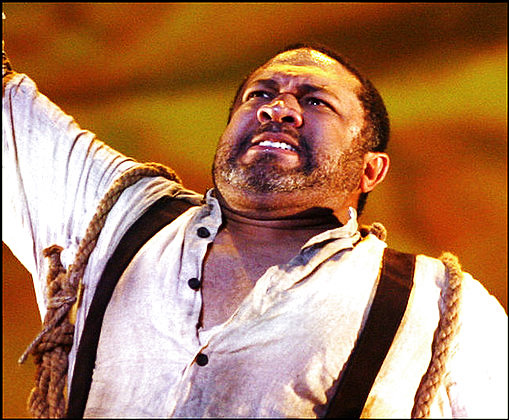
This is the second time that I have heard tenor Ben Heppner's voice crack in the middle of a Wagner opera at the MET. The first time that it happened within a personal earshot was at the matinee broadcast of Die Meistersinger a few years ago, and now he did it again Saturday afternoon, at another matinee broadcast, this time during a performance of Lohengrin. The only difference was that I heard the Meistersinger accident on the radio, but Saturday afternoon I was there. My good friend Marta and her husband Bill, members of The Metropolitan Opera Club, invited me to lunch at the club, and then to the performance. Listening to a tenor crack on the radio is one thing, being there is a truly complex musical experience.

Heppner seemed a bit tight during the first act, but managed to finish it with only minor mishaps, really noticeable only on a secondary hearing. However, during the course of the challenging and long Act II, he cracked in two separate places towards the end of the act. Most noticeably on the A natural on the words "Heil dir, Elsa! Nun lass vor Gott uns geh'n!" I am not sure if I can call it "cracking" on the note, it was more like he was vocally unprepared for delivering the phrase, thus leading to the production of one of the ugliest sounds I have ever heard at the MET. Ironically and sadly for Heppner, that was the last phrase that he had to sing before the end of the Act. On the bright side, he was able to finish the performance, singing a lovely third act, and a very effective "In fernem Land."

I think that Ben Heppner has the goods, and oftentimes, he tends to deliver them. Whether or not his voice is that of a true heldentenor (or whether or not he will be the next Siegfried) belongs in another discussion. However, last time this vocal embarrassment happened to Heppner during a MET broadcast, we started hearing reports that he was suffering all kinds of vocal problems that were leading to the cancellation of recitals up and down the U.S. and Canada. Eventually, he took a break from singing for several months and lost weight, which he has managed to keep off.

I am worried that he is going down the same path again, and I am especially worried that his first Parsifal at the MET might be compromised by whatever vocal problems might be plaguing him at the moment. Let us hope that he gets over this, and that he is able to debut in Parsifal successfully.

Friday, April 21, 2006

Lohengrin: Performance of Thursday April 20, 2006

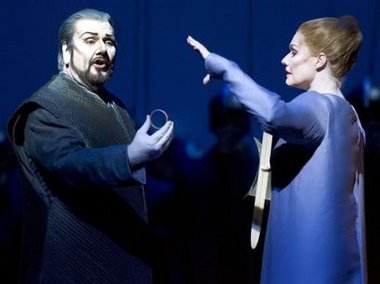
It's wonderful to experience Lohengrin again at the MET, and even more wonderful to have a chance to re-explore Robert Wilson's unusual take on this romantic Wagner opera. I had completely forgotten the off-white curtain with the single blue wing on it that greeets the audience upon arriving in the auditorium (next year, with Peter Gelb introducing so many "new" operas, we may never get to see the Gold Curtain!), and the tremendous impact that this production can have on those willing to take a gamble on it. Back in 1998, I thought that Mr. Wilson's Lohengrin was a totally unique look for the MET. Since then, I have observed that he has pretty much applied a similar formula to his Parsifal in Los Angeles, and his Ring of the Nibelung at the Paris Opera.

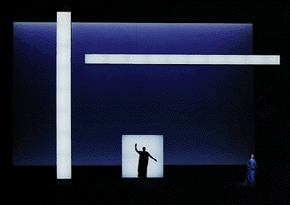
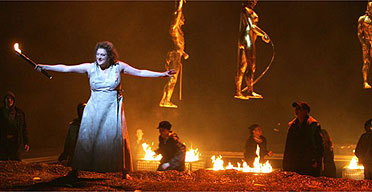
The staging has remained pretty much the same: a backdrop of ever-changing hues of blues, and white neon-like monoliths that occasionally invade the stage in order to signal the beginnings or endings of scenes. Thankfully, the conclusion of Act II, involving the character of Ortrud and a crimson red curtain (to my mind, one of the master strokes of this production), remains intact from the first time I saw it.

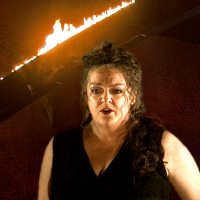
One aspect that has been eliminated from the production is the rhythmic, but awkward hand-movements that everyone: critics, audience and, in particular, performers alike, complained about back when the production was new. Now, the characters move about the scenic space in a glacial pace, which at times is interrupted by poses which remind one of Kabuki theater. Not everyone is cut out to be a Robert Wilson performer. Some like Karita Mattila (Elsa), Eike Wilm Schulte (The Herald), and Luana DeVol (Ortrud) come naturally to it. Others like Ben Heppner (Lohengrin) struggle not to appear self-conscious.

Vocally, it was a strong evening. All the principals rose to the ocassion. The only weak link was Andrew Greenan who was the last-minute King Henry replacement for Stephen West, who was ill. Both Karita Matilla and Ben Heppner were perfect and made some lovely ethereal sounds as the lovers. Meanwhile, Luana DeVol and Richard Paul Fink as Ortrud and Telramund were evil and dastardly in their respective roles.

I must say that Philippe Auguin led a carefully crafted reading of the score -- his baton marking clear metronomic beats during the Act I prelude. Not the most inspiring of conductors, but definitely easy to follow. He also appears to be a jovial fellow, and during his curtain call he even turned to acknowledge the work of the chorus, who sang brilliantly. But I also have to report that when the cat's away, the mice will indeed play: there were some awful sounds coming from the "banda" backstage. Let's hope this gets fixed by the next performances, and especially for the broadcast.

Overall, this Lohengrin is a strong revival of one of the most important productions that the MET has staged in years. Do not, I repeat: do not miss it.

Thursday, April 20, 2006

British Götterdämmerung: Financial Times Review

Here is a review of the new Götterdämmerung production at The Royal Opera, Covent Garden, from the Financial Times of London.

At curtain-down on Monday the Royal Opera passed the virility test of any self-respecting opera ensemble: it completed a new Ring, the first in its renovated Covent Garden home. It was a cause for minor rejoicing, not just because the evening was more successful than the three previous instalments of the Antonio Pappano-Keith Warner production, but because we can now look forward to the first integrated cycle of Wagner’s tetralogy in London for a decade. Unlike English National Opera’s recent attempt, which foundered through lack of funds and willpower, the Royal Opera promises three complete Ring cycles in 18 months’ time, and is already marketing them.

The engineer of Monday’s success was Antonio Pappano, whose Wagner conducting suddenly seems to have found its pulse and shape. There were no traces of the disjointedness that dogged earlier instalments. The Royal Opera’s music director has finally begun to relax. He now listens to the music in longer breaths, communicating a wider sense of its architecture and a more mature grasp of Wagner’s orchestral palette. The Norns scene is a little slow – better that than starting off fast – but from there it is the most singer- friendly Wagner I have heard, generating Italianate lyricism in the Brunnhilde-Siegfried duet and a suitably high-voltage act two.

With the exception of Peter Sidhom’s muffled Alberich, this is also the finest cast since Das Rheingold 18 months ago. Lisa Gasteen’s Brunnhilde gets better and better: there are no exposed notes to trouble her, she looks more feminine (costumes by Marie-Jeanne Lecca) and she has found a way of singing the German words expressively. Just as important, she manages the transition from spunky bride to heroic tragédienne with ease. She deserves better than John Treleaven’s cautiously crowing Siegfried.

John Tomlinson’s Hagen is another of his clever portraits of evil, while Peter Coleman- Wright gives Gunther welcome substance. I particularly liked Mihoko Fujimura’s Waltraute and Marina Poplavskaya’s Third Norn, the latter a Sieglinde in the making.

It may be hard to come to Warner’s staging without prejudices formed by his previous three Ring evenings, but he nearly wipes those memories in the first two acts of Götterdämmerung. Stefanos Lazaridis’s sets have a clear architectural profile, and the Gibichung scenes – a stretch-settee in act one, a mobile platform in act two, both gilded with statues of the gods – tell us that Hagen & Co have as much sincerity as Hollywood royalty. There is a novel solution to the act one finale: Warner assumes his audience is intelligent enough to know that the Gunther who overpowers Brünnhilde is really Siegfried transformed by the magic Tarnhelm. Why then have Siegfried walking about simultaneously?

If the storyline is otherwise clear, the real thrust of Warner’s staging remains intentionally murky. It is not so much an interpretation, more a narrative overlaid with à la carte references to Wagnerian philosophy, which the audience can either ignore or acknowledge, depending on familiarity with the composer’s influences and intentions. Should Wagner’s idea of the imprisoning power of civil society, for example, have any bearing on the Gibichung scenes? And if so, why does the Tarnhelm come from the same cast? Is Hagen the alter ego, the dark side, of Brünnhilde, just as Alberich is of Wotan? What is the significance of the crown of thorns in which Brünnhilde is borne into the hall of the Gibichungs?

For all its philosophical pretensions this staging is fatally short of attitude or irony, and it limps home in act three. Lazaridis falls back on the clutter that has become a leitmotif of his Ring. Warner neuters Siegfried’s demise and Brünnhilde’s swansong, and the only redeeming factor in the finale – an empty fire-spectacle with an innocent boy raised aloft – is the sight of Heather Shipp’s breasts: she and the other two Rhinemaidens exchange their grunge for the full Monty as they reclaim the cursed gold. Does this Ring have nothing deeper or more original to say?

Wednesday, April 19, 2006

Robert Wilson's Lohengrin at the MET

The reviews are in for Monday's premiere of the revival of Wagner's Lohengrin at the MET. I will have my own review of this production in a few days: I will be going to see it Thursday evening.

Here is an excerpt from Anthony Tommasini's review in the New York Times.

It stands to reason that a high-concept new production at the Metropolitan Opera might take time to settle in and refine itself. The best example in recent years is Robert Wilson's staging of Wagner's Lohengrin.

The revival that opened on Monday night, winning huge ovations, especially for the tenor Ben Heppner as the grail knight Lohengrin and the soprano Karita Mattila as the innocent Elsa, is not the same show that earned Mr. Wilson lusty boos when the production was unveiled in March 1998. Back then the abstract scenic designs, a Wilson trademark, made for some haunting, mystical Wagnerian imagery: against a backdrop with shifting hues of blue, gray and green, slowly moving luminous white rectangular beams crisscross the bare stage. Still, the glacial movements of the singers and the highly stylized hand and arm gestures made everyone look terribly uncomfortable.

When the production returned the next season, the stylized movements had been simplified. On Monday the movements of the cast were simpler still, and the scenic designs as beautiful as ever. Finally, the astute concept behind Mr. Wilson's staging came through.

If the singers seemed self-conscious with their movements at times, for the most part Mr. Wilson's direction empowered them to give bold performances, especially Mr. Heppner. Many heldentenors are actually pushed-up baritones. Mr. Heppner is the real thing, a tenor with a clarion top range and a bright ping in his sound. His voice faltered a couple of times in the punishing Act III monologue, in which Lohengrin reveals the secrets of his origin and the reason for his mission. But it hardly mattered. This was a heroic and thrilling performance.

Ms. Mattila's singing unusually combines cool Nordic colorings with visceral emotional intensity. She was in her glory as Elsa. Coming off her winning Met portrayal of Leonore in Beethoven's Fidelio, where she acted with affecting naturalness, she was equally riveting, and stunningly beautiful, working within Mr. Wilson's stylized concept.

Making her Met debut well into her career, the American soprano Luana DeVol sang Ortrud. Though her voice was sometimes tremulous and hard-edged, she sang with fiery abandon and cut through the orchestra with slicing high notes. Despite some hammy Cruella DeVil moments, she bravely embraced the concept and was a wonderfully malevolent presence. Mr. Fink and the baritone Eike Wilm Schulte, as the king's herald, were also strong. Substituting for the bass-baritone Stephen West, who was ill, Andrew Greenan made his Met debut as King Henry, singing with robust sound until his voice tired in the last act.

Though James Levine had been scheduled to conduct this revival, Philippe Auguin proved an exciting substitute who drew a shimmering, surely paced and incisive performance from the orchestra and chorus. Mr. Auguin has a history of saving the day for Mr. Levine. He made his Met debut in 2001, conducting the new production of Busoni's Doktor Faust, after Mr. Levine withdrew.

Over all, the simpler this production becomes, the better it seems. Even Mr. Wilson, who was in the audience, would probably agree.

Tuesday, April 18, 2006

Bangkok, New York, and London

Richard Wagner is very much in the news these days. On Monday, The Metropolitan Opera revived Robert Wilson's controversial Lohengrin, which I will get a chance to see on Thursday evening. There is a new production of Götterdämmerung at the Royal Opera House, Covent Garden, which, regretfully, I have no plans of attending. And, the biggest news so far is that Thailand has become the first Southeast nation to present Wagner's Der Ring des Nibelungen. The Bangkok's Opera's production (which I will definitely will not be attending) seems to be a very interesting vision of the composer's work. Here are extended excepts from the New York Times review of the event.

Bangkok Opera Presents Wagner's "Ring" With a Difference by Robert Turnball

Thailand's decision to be the first Southeast Asian nation to present the work has surprised even the most ardent Wagnerians. The production, by the Bangkok Opera, has the official blessing of the composer's great-grandson Wolfgang, who inaugurated Bangkok's Wagner Society last year. But it is a huge undertaking for a country that has been producing Western opera for only five years. Will Wagner be raising a quizzical eye from beyond the grave?

To be performed over the next four years, this new "Ring" is being called the first to address a regional sensibility. Instead of Nietzsche, substitute Buddha: the cycle of destruction and rebirth is wrought not so much by power but by the Buddhist pitfalls of desire and attachment.

The design too embraces Thai motifs. A work still associated in many minds with horned helmets and mythical castles features gods as bejeweled classical dancers, entering a Valhalla that imitates the Bangkok skyline.

The impresario behind the project is Somtow Papinian Sucharitkul, a British-educated Thai conductor of vaulting ambitions who also dabbles in painting and filmmaking and has written 47 cult novels under the name S. P. Somtow. As a musician he is a refreshing polymath in an age of increasing specialization. Not content to conduct opera, he also produces, designs and directs it; when inspired, he'll also finish it, as he did with the last act of Puccini's uncompleted "Turandot," once the opera was out of copyright.

Monday, April 17, 2006

Götterdämmerung at Covent Garden

A new production of Götterdämmerung opened tonight at Covent Garden, London. While we wait for the reviews to be in, I thought I would re-print this London Times article from July 14.


Wagner, like Marmite, George W. Bush and Manchester United, is a polarising force in our society. You’re either passionately devoted or implacably hostile. And once people have decided which side they’re on, there’s no shifting them.

Few artists, certainly no other composers, inspire the passionate feelings of hatred and revulsion that Wagner can provoke. But, just as the antagonism that Man U inspires among other fans only attests to their durable quality, and the antipathy that George Bush faces only underlines the importance of his challenge to traditional ways of thinking, so the strength of anti-Wagner feeling proves what his detractors cannot deny — the immense power of his music.

And music is where any encounter with Wagner should begin and end. His mature works have a power to move that no opera written before ever had. While previous operas can enchant, divert, charm, make you think, amuse and, at their best, hint at the sublime, Wagner’s work comes bounding off the stage, wrenches at your heart and tries to make a prisoner of your soul.

For many people a music that sets out so powerfully to seduce is just too much to take. When that music is written, as Wagner’s was, by a sexually manipulative and egomaniac anti-Semite, then resisting it seems almost a moral duty. But if you turn away from Wagner you’re turning your back on the chance to experience some of the most complete, and deepest, experiences you can have with your clothes on. Because Wagner’s operas use music to open up a world in which human psychology, our spiritual yearnings and even our political arrangements are all explored in a way that speaks to us, whatever our background.

Wagner’s operas differ in form from everything that went before by being complete music-dramas, in which every aspect of what goes on before us is conceived as a unified whole. Before Wagner the standard opera form was a mixture of nice incidental music, connecting plot-lines (or recitative), and the set-piece highpoints (the arias), after which everyone applauds. There is a sense of staidness, even formality, about the process.

Wagner’s operas were conceived in a wholly different way, with music, poetry, staging and plot fused so that each reinforces the other. Individual chords, or specific melodic phrases (leitmotivs), become, through their precise musical structure, symbols for characters, concepts and forces. These chords and leitmotivs can convey anything from inexpressible longing to scheming wickedness and the serenity of nature.

In the Ring the leitmotivs become one of the most important element in a multilayered experience in which the sung poetry, the performers’ acting skills and the visual cues of staging and direction all interweave to simultaneously advance the plot, reveal the inner emotional state of characters, remind us of their past interactions and suggest to us the broader allegories behind their acts.

The fusion which Wagner brings about makes his operas, and the Ring in particular, a deep intellectual as well as emotional experience. Once you begin to appreciate the depth of it, and I for one am only just beginning, you have the exhilarating feeling of knowing that this is a world to which you can return many times and find an endless amount more to appreciate, enjoy and reflect on.

Some people, of course, are put off even beginning that journey, not because they want to resist being drawn into such a seductive world, nor even because they find Wagner’s personality an obstacle, but because the whole horns and dwarves, dragons and spears palaver seems so terribly teenage. If they want an epic with swords and sorcery they’ll get The Two Towers out on DVD, because after all you can’t get CGI giants at the Royal Opera House.

But the mythic world that Wagner creates is not an adolescent escape from reality. It is a daring attempt to make genuinely universal themes artistically resonant across generations and cultures by locating them outside history. Epic and myth allow us to see our virtues, and temptations, dramatised on such a scale, and in such a way, that they speak direct to our nature. Myth, rather than distancing us from the action, enables it to cut through the specifics of our time and place and engage our souls. Wotan’s struggle between the need to observe the rule of law and his own ambition has a contemporary resonance in the politics of Britain today. But it will also have had subtly different resonances in different politics of past ages, and other nations.

Allowing the myth to breathe allows us to appreciate the universal insights about the battle between law and passion, power and love.
Sunday, April 09, 2006

A Quarter for Weill and Brecht

If your idea of The Threepenny Opera is Bobby Darrin singing "Mack the Knife" or the early 1930's G.W. Pabst German film, then you are in for a shock. This production of this landmark musical is scathing, sexually provocative, and totally Brechtian in its approach and delivery. Not surprisingly, theater goers raised on The Lion King and Cats will leave the theater with a sour taste in their mouth when it is over, and that's exactly what the original creators of this work would have wanted you to feel.

Written in the heyday of the Weimar Republic, when the number of the poor grew to monumental proportions and a chosen few were rolling in it, the present production tries to make a historical connection between that sorry period of Germany's past and our present state of affairs. The show's economic criticism could very well be directed at its own audience: at $111.25 per tickets the only ones who can afford to see The Threepenny Opera might just be the fatcats that the show rages against. When Broadway starts biting the hand that feeds it that is the sure recipe for slow box-office receipts and short runs.

The show certainly has star power: Alan Cumming, Cyndi Lauper, Jim Dale and Ana Gasteyer (she got a big hand in her entrance -- it was obviously a television SNL crowd that packed the theater today) are all good, but it was Brian Charles Rooney who stole the show with his gender-bending take on Lucy Brown. I see a Tony nomination in his future. I found both Mr. Cumming and Ms. Lauper lacking voice-power, although she sang a memorable "Salomon Song," and he commands the stage with that same genuine presence that he had in Cabaret. Unfortunately he was pushing a bit on his vocal chords, and Ms. Lauper's voice is in need of coaching. I do hope that this run does not harm her voice further.

There is a warning outside the theater that the show has full frontal nudity (yes, it does!) and that the language is adult and not recommended for children. This is true, and although most of the adult moments do come straight from the texture of the narrative, there are a few new indiscretions that were not found in the original Brecht script.

The new translation by Wallace Shawn tries to get back to the spirit of the original Brecht, but it tries too hard, in my opinion, to be lewd. My favorite English translation of this work is the one by Ralph Manheim and John Willett for the New York Shakespeare Festival back in 1976. That production brought the work back to a more authentic Brechtian language. The wondrous LP cast album of that production, featuring Raul Julia as Macheath, has never made it to CD, and it is time that it did.

Finally, the wardrobe by designer Isaac Mizrahi is elegant and sleazy, with the right amount of bling to make it tawdry.

I recommend that you see this production if you have never seen The Threepenny Opera live. It is one of the landmarks of the 20th century, and it can be indestructible no matter what you do to it.

Sunday, April 02, 2006

The Reviews are in for Erika Sunnegardh

Here's what Anthony Tommasini had to say about the surprise debut of unknown soprano Erika Sunnegardh in the role of Leonore in Beethoven's Fidelio, in yesterday's MET broadcast.

"Pressure Abounds as Determined Soprano Makes Debut" by Anthony Tommasini

Some extraordinary performing artists have ordinary life stories. Others, like the Swedish-born soprano Erika Sunnegardh, have dramatic life stories that, for better or worse, will tag them for their entire careers.

Ms. Sunnegardh's story is a tale of early promise, years of frustration, waiting tables and, finally at 40, the biggest break of all: a dream-come-true Metropolitan Opera debut yesterday afternoon in the role of Leonore in Beethoven's Fidelio, in a coveted radio broadcast performance.

A fuller assessment will have to await her future appearances. Ms. Sunnegardh was substituting for the magnificent Karita Mattila, who was sick and who excels in this role. Moreover, Ms. Sunnegardh's story, reported yesterday by The New York Times , seems to have already traveled the world. Talk about pressure.

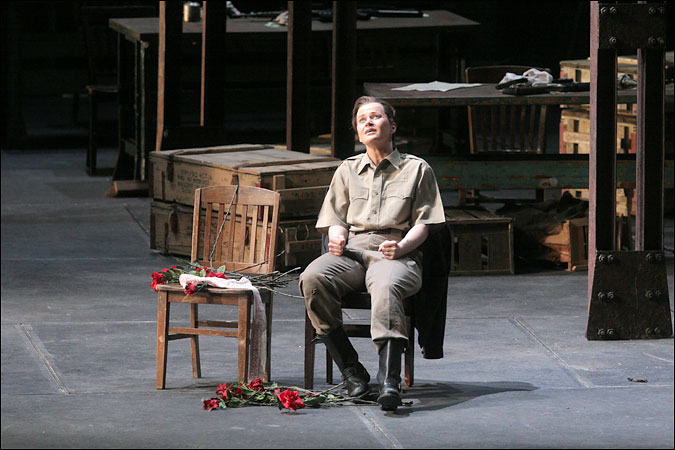
During Act I the pressure got the better of her, it appeared. Small-framed and attractive, she looked suitably boyish as Leonore, a heroic Spanish wife who disguises herself as a young man, Fidelio, and gains a job in a prison where she believes her husband is being unjustly and brutally held. But vocally, Ms. Sunnegardh took a long while to warm up.

Her voice has earthy colorings and warmth. She is especially comfortable in her upper range and has strong, clear top notes. Her midrange singing, though, sounded patchy yesterday.

In Leonore's aria of determination, Ms. Sunnegardh got lost momentarily and dropped a couple of phrases. She and the conductor, Paul Nadler, soon got back in sync. The error must have bothered her more than it bothered her listeners.

But after intermission, in Act II, she seemed more relaxed and took greater chances, especially in the climatic scene when she defies the tyrannical governor of the prison and saves the day. She grew stronger as the opera swept forward to its joyous conclusion.

That said, the difference between Ms. Sunnegardh's tentative performance and the work of the heldentenor, Ben Heppner, who inhabited the role of Florestan, the political prisoner, was hard to ignore. She has lost some time. But she has talent, grit and determination.

She also had the audience at the Met absolutely behind her. I wish I could say that this affecting personal story ended in artistic triumph. Not yet. Opera fans will undoubtedly get a better indication of what Ms. Sunnegardh is capable of when she sings the role again, as previously scheduled, on April 13.

Saturday, April 01, 2006

Erika Sunnegardh: In Good Company

This afternoon the MET got a much needed shot in the arm as it hosted the debut of a rising opera star: Erika Sunnegardh, who assumed the title role in Beethoven's Fidelio, replacing Karita Mattila who is ill. The MET really needed this kind of an event. There has not been so much excitement generated by a debut at the MET since Roberto Alagna debuted here as Rodolfo in La Boheme back in 1996.

It's been a bad year at the MET no matter how you look at it. Sales have been weak, attendance poor, and although there have been some artistic highlights thus far in the season (this production of Fidelio being one of them), and promising productions later on to follow (Lohengrin and Parsifal), it has been a disappointing opera season in New York City. Of course, James Levine's unfortunate injury, which has sidelined him for the rest of the season, was the last straw. Joseph Volpe will never forget his last year at the MET.

But back to Ms. Sunnegardh: her exciting debut, which was sparked by a wonderful article in the New York Times this morning, went well for her, but not without a hitch, as apparently she got lost during during the first act. Her nerves must have been working overtime knowing that potentially millions of picky opera lovers were listening to the broadcast. I am looking forward to listening to a recording of the broadcast next week.

She is in good company, though: the following singers all made their MET debuts in a broadcast: Jan Peerce, Bidú Sayao, Kirsten Flagstad. Gwyneth Jones, Hermann Prey, and Alan Titus.

Tuesday, March 28, 2006

How American is the new Washington Rheingold?

Here is Anthony Tommasini's review from The New York Times:


WASHINGTON, March 26 — If you put on a production of Wagner's monumental "Ring" cycle, you'd better have a novel concept. That's accepted wisdom in the opera world. We have had industrial age "Rings," an environmentally green "Ring," and several cosmic "Rings" with mystical lighting and abstract scenery.

On Saturday night the Washington National Opera introduced its new production of "Das Rheingold," the first installment of its first complete "Ring" cycle (a co-production with the San Francisco Opera), which will unfold over the next three seasons at the Kennedy Center. For months, the director Francesca Zambello's staging had been touted as a provocatively American "Ring" steeped in American mythology and iconography.

There are many fresh and impressive elements to the company's colorful, abstract and well cast "Rheingold." But its success is only partly attributable to overtly American imagery.

It's true, for example, that in the opening scene Ms. Zambello, working with the set designer Michael Yeargan and the costume designer Anita Yavich, portrays Wagner's Alberich, the dwarf who dwells among the lower race of Nibelungs, as a hulking forty-niner, with thick boots and suspenders, panning for gold; the Rhine Maidens are a trio of sassy gals in fleecy dresses who cavort on a mining sluice, a wonderful wood contraption with chutes and ladders.

But the visual imagery that really gives this scene its impact is the depiction of the pristine river. Rushing water is suggested through swirling video projections by Jan Hartley. When the magic gold glows from the river bed, the Rhine Maidens do a celebratory dance with a billowing silken sheet atop this abstract river's sleek, clear plastic surface. Shafts of golden light (courtesy of the lighting designer Mark McCullough) fill the stage. None of this would matter, though, without the powerful singing of the baritone Gordon Hawkins as Alberich, who nearly stole the show all evening.

The giants Fasolt and Fafner (the bass-baritones John Marcus Bindel and Jeffrey Wells), having just finished building Wotan's castle Valhalla, first appear sitting on a steel beam as it is lowered from an unseen crane. They are blue-collar laborers in matching overalls with elongated legs and huge clodhopper feet. If they look a little like Gumby giants, the cartoonish humor seems intentional. Ms. Zambello is refreshingly attentive to the whimsical side of Wagner's mythological tale. The audience, sensing it was O.K. to laugh, did.

Wotan and the gods are portrayed as entitled 1920's characters out of "The Great Gatsby," arrayed in white summer suits and dresses. Loge, the god of fire, is a wily lawyer in a tailored overcoat (the tenor Robin Leggate). Still, there is nothing especially American about his look, which has a hint of Inspector Clouseau. The rich-voiced mezzo-soprano Elizabeth Bishop is excellent as a matronly and prideful Fricka, the long-suffering wife to the inconstant Wotan.

With his goatee and fedora, the sturdy bass-baritone Robert Hale makes an unusually lanky and disdainful Wotan. Still, in the scene when he descends to the lower world to wrest the magic ring from Alberich, he seems too aloof for the job. Mr. Hawkins's booming and husky Alberich looks as if he could take down the surly god — no problem.

The Americanization concept turns political when the all-knowing earth goddess Erda (the tremulous-voiced mezzo-soprano Elena Zaremba) appears with her ominous warning for Wotan. She is costumed as a Native American princess, and looks as if she had wandered in from Buffalo Bill's Wild West Show.

The lingering image of this production comes in the deep, dank and sulfurous mine where Alberich brutally drives his slaves to hew rock and forge gold. The workers are played by a roster of some 50 mostly minority children, large and small, with tattered clothing and sooty faces. Evoking the history of slavery in America is the idea, but the image of child labor, which remains an international outrage, is what came through for me.

With about 65 players, the orchestra is a little undersize for Wagner. But the veteran conductor Heinz Fricke, the company's music director, turns this to advantage and elicits playing of rewarding clarity and, at times, chamber music-like intimacy. Wagner's two-and-a-half-hour score emerges in a calmly paced and shapely arc.

Though there are still three operas, lasting almost 15 hours, to go, the Washington National Opera is off to a good start with "Das Rheingold." But they might want to damp down all the talk about their American spin on Wagner's "Ring."

Monday, March 27, 2006

Rheingold at the Washington Opera

Here is the Washington Post review of the new production of Das Rheingold at the Washington National Opera.

"A Rheingold that Stands on its Principals"
by Tim Page

The best way to approach Washington National Opera's new production of Richard Wagner's Das Rheingold, which opened Saturday night at the Kennedy Center, is as a solid, abstract and sometimes very attractive updating of a classic.

In short, forget most of what you might have read about this being the first installment of an "American 'Ring' " -- that is, a staging of Wagner's four-evening "Ring" cycle based on what WNO calls the "rich history of the United States." It isn't, unless you count as pointed political commentary, dressing up the earth goddess Erda like the lady on the Land O' Lakes box, casting African Americans in the roles of the captive Nibelungs, and having the giants Fafner and Fasolt bop and swagger like wild 'n' crazy guy construction workers.

Perhaps the next three operas in the series -- a new Die Walkure will enter the repertoire next season, with Siegfried and Gotterdammerung promised for later -- will deepen the American subtext. For now, just enjoy Francesca Zambello's "Roaring Twenties" staging for its general usefulness, its evocative projections (mist, sun, water and some creepy snakes), its occasional moments of majesty and whimsy.

I am grateful, I suppose, that none of the characters wear antlers on their heads, but I am less happy that the production, for the most part, lacks the luminous beauty of the best traditional stagings (Otto Schenk's hypnotic rendition at the Met foremost among them) and the sort of genuine directorial vision that would make for a radical new understanding of the piece.

Still, it will suffice, especially when the performances are as good as they were Saturday. Baritone Gordon Hawkins is simply the best Alberich I've encountered. Grasping, haunted, malevolent -- a monster, of course, but strangely sympathetic at times -- Hawkins's Alberich stole the show as surely as any great Mephistopheles will steal a "Faust." His acting was dynamic and multi-dimensional; moreover, despite the inherent grotesquerie of his character, Hawkins never devolved into Disney horror show. He always made sure the notes were sung -- properly and in tune.

Robert Hale's voice is perhaps a size too small for Wotan -- he brought power to the role but not quite the seemingly effortless power one might have hoped for. That said, he sang with intelligence and sensitivity and brought as much gravity to the character as he could in a production that does not exactly extol Wotan's godliness.

Elizabeth Bishop (Fricka) and Jane Ohmes (Freia) were excellent, singing clearly and soulfully, with proper Wagnerian amplitude. Robin Leggate was a dapper, understated and remarkably lyrical Loge.

The three Rhinemaidens -- JiYoung Lee, Frederique Vezina and Jennifer Hines -- were lovely all around, singing with welling, primordial freshness. Elena Zaremba sounded curiously husky and strained as Erda; she might have the cold Washington has been passing back and forth all winter, but no announcement was made. John Marcus Bindel and Jeffrey Wells played skillfully off each other as Fasolt and Fafner, dressed in elongated bell-bottoms that looked as though they had been designed by R. Crumb. There was worthy support from Corey Evan Rotz as Froh, Detlef Roth as Donner and Gary Rideout as Mime.

A huge factor in the success of any "Rheingold" is the performance of the orchestra, and in this production WNO music director Heinz Fricke has surpassed himself. He took the amazing overture -- a four-minute exploration of a single sustained E-flat major chord that effectively defines and perfects musical minimalism 100 years before the name was invented -- at such a slow tempo that one worried whether his forces could sustain it. But they came through, playing with such sweep, precision and prismatic color that one almost forgot that the Kennedy Center Opera House pit holds a considerably smaller orchestra than is usually employed for this music.

The concluding "Entrance of the Gods Into Valhalla" made up for its somewhat prosaic staging (set on what looked like the gangplank to an ocean liner) with a glorious and affirmative peal of sound. We can almost believe, for a moment, that the gods and goddesses are eternal, that nothing can ever harm them. But just wait until "Die Walkure."

There will be six more performances of Das Rheingold : Thursday, Sunday and April 5, 8, 10 and 14.

Saturday, March 25, 2006

March 25: Rheingold Day

Tonight the Washington Opera premieres its much awaited production of Das Rheingold, the work which kicks off the company's first staging of Wagner's Ring of the Nibelung. While we wait for the critical word on what this "American Ring" is like, I thought that I would report on the new DVD from Unitel of the Daniel Barenboim Harry Kupfer Bayreuth production of this opera. The production was filmed in widescreen in 1991, three years after its controversial premiere at the Festspielhaus.

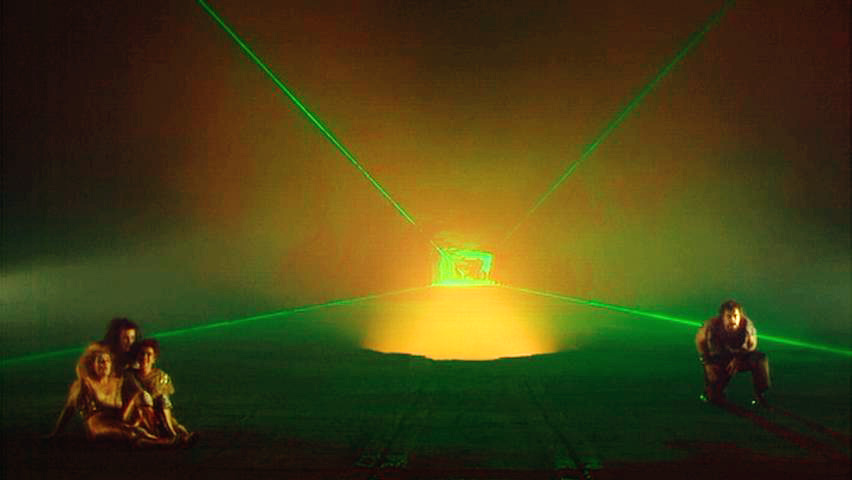
In Kupfer's vision, the Ring is just another tale of greed that we have all seen before but which deserves to be retold over and over again. To this end, the opera begins in silence on a barren, foggy empty road as enigmatic characters wearing trench coats and fedoras are looking at a corpse. An obvious conclusion to some sordid story we may never get to know. As these characters disperse the lights dim to total darkness, and we hear the familiar E flat chord that begins the work. Suddenly the stage fills with green beams of laser lights which will swell and eventually imitate the watery surface of the Rhine. The laser allows for some nifty tricks making the Rhinemaidens and Alberich seem as if they are really under water.

The Gods in the second scene are all dressed in Great Gatsby style, and they all carry empty see-through Plexiglas suitcases (I guess that this newly built Valhalla of the future has plans of becoming a clothes-optional playground). The giants, Fasolt and Fafner, are giant behemoths with microcephalic sized heads. In the Nibelheim scene, Mime, wearing a lab coat, works in a laboratory, and at the end of the opera Wotan and the rest of his gang get onboard a rainbow elevator to go up to their penthouse in the sky.

This production was the target of very harsh criticism back in 1988. When directors tamper with Wagner (as they often do) a sizable part of the audience takes it as an insult: almost as if they thought that the work of the Master was being desecrated. This explains the booing that often occurs at Bayreuth and everywhere else where the management tries to forge new ground despite a decidedly conservative audience.

The DVD is definitely worth getting. The production, despite its eccentricities, is well directed and creates an unforgettable world. The performance by Graham Clark as Loge is delicious; check out the way he does jumping jacks to warm up just before he has to confront the giants. His blond wig and black floor-length leather coat makes him look like Mike Myers' German host Dieter on Saturday Night Life. Not far behind him is the Wotan of John Tomlinson who looks more disreputable than any god in any mythology has a right to be. The rest of the cast is strong, and they all ham it up to the hilt, especially Günter von Kannen as Alberich who appears to have prepared for his part by studying villains in silent films.

Daniel Barenboim's conducting is solid and exciting, and the sound on this DVD is wonderful. You'll enjoy the sound field on the Dolby Digital 5.1 Surround track, but for a cleaner, more exciting experience listen to it on DTS 5.1 Surround, if your equipment can decode it. You'll be blown away by it!

Monday, March 20, 2006

A Wondrous Forza at the MET

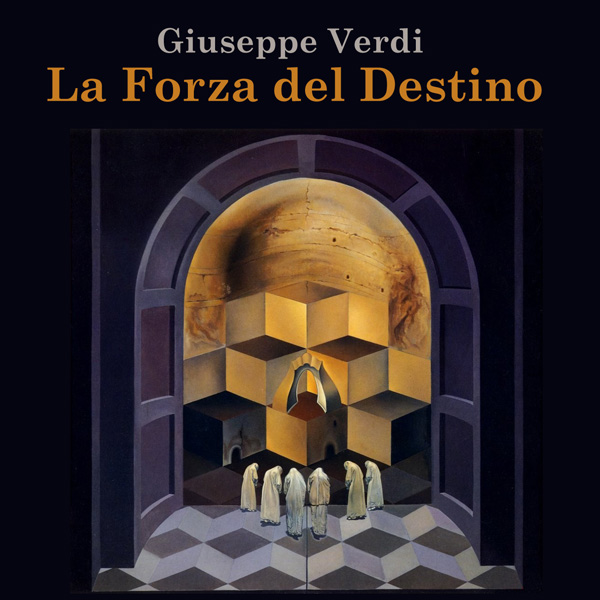
The performance of La Forza del Destino that I attended on March 18 was as good as anything I have seen at the MET in quite a while. It was not like the Forza performances of my childhood (Leontyne Price, Plácido Domingo, Sherrill Milnes) but few things these days are. This one came really close, though, and that was a pleasant surprise. I had recorded last Saturday's broadcast (pictured here is the cover that I designed for it), and I thought that it had turned out to be a very uneven performance. I am sure that when you get down to it, most of us were just happy that Forza was back at the MET. The cast changes on Saturday were excellent decisions: Samuel Ramey's unsteady, wobbly Padre Guardiano was replaced by solid bass Vitalij Kowaljow, and the roles of Don Carlo and Preziosilla were sung by Mark Rucker and Mary Phillips, replacing Mark Delavan and Ildiko Komlosi. Still in the cast were Deborah Voigt as Leonora, Salvatore Licitra as Don Alvaro, and Juan Pons as Fra Melitone. Mr. Licitra sang with greater conviction and more securely than in the broadcast. He was really impressive throughout the evening, producing a true Verdi sound. The same can be said of Mr. Pons who, with his huge but uneven voice these days, should begin exploring the comprimario repertory more often. Deborah Voigt's voice is not ideal for this role, and that's all there is to it. Although her tone is lovely, and she is able to produce some angelic sounds, the role requires a heftier, darker, more mature sound than she can deliver these days. The Metropolitan Opera Orchestra under Gianandrea Noseda sounded like a well-oiled machine, and played beautifully.

This morning the following review of this performance was published in the New York Times.

Being Prepared for a Worst that Never Shows Up
by Anne Midgette

At this point, the Metropolitan Opera production of Verdi's La Forza del Destino, now in the final week of its run, is like a piñata: everyone has taken a swing at it. And while the conventional wisdom about each individual performer has covered the entire spectrum of opinion, the aggregate has shaded toward "disastrous." So it seemed reasonable, on Saturday night, to brace for a train wreck.

But there was none: at most, there was an occasional horrifying screech of wheels at the crossing. This demonstrates two things: second casts may be better than first ones, and opera is an ever-changing art with performances that may vary from one night to the next.

The second cast was notably strong. A happy surprise was the vital, warm bass of Vitalij Kowaljow as the Padre Guardiano. Another was the baritone Mark Rucker, more than respectable as a stout Carlo. Mary Phillips, a mezzo-soprano, made her company debut on Wednesday as Preziosilla; on Saturday, she sounded slightly driven and brittle, despite an appealing instrument. (Mark Delavan and Ildiko Komlosi will resume the roles of Carlo and Preziosilla for the final performance on Thursday, but Mr. Kowaljow will remain.)

Deborah Voigt's Leonora has divided fans. To my ear, the role exposes her voice's lack of sheer heft. Her lovely shimmer — which worked for the final aria, "Pace, pace" — was not enough to carry her big Act II scene, the opera's emotional heart. Here, she came close to parody, breaking up the big arcs of her vocal line, aggressively rolling her r's, singing flat and gesticulating wildly.

Then there's the unpredictable Salvatore Licitra, once hailed as the next big thing in tenors, since castigated for sloppy performances. On Saturday, I thought he sounded great. His upper middle register remains the weakest part of his voice, but that weakness wasn't as glaring as I've heard it, and for the most part he sounded big and warm. His Act III aria, followed by the duet with Mr. Rucker, was some of the more satisfying Verdi singing I've heard in a while. Less satisfying was the conductor Gianandrea Noseda, with fast, driving tempos and heavy balances in the orchestra.

The final performance of "Forza" is on Thursday night at 8 at the Metropolitan Opera.

The Rheingold Cometh -- Part II

Washington Opera to give Wagner's "Ring" a New, American Setting

By Tim Page -- The Washington Post


One test of a masterpiece is its ability to withstand many different interpretations. Who would have imagined that the maverick director Peter Sellars could have set Mozart's "Marriage of Figaro" in a lavish apartment in Trump Tower and still have the opera seem absolutely true to its 18th-century origins? Director Jonathan Miller placed the action of Verdi's "Rigoletto" in New York's Little Italy, and Frank Corsaro had the same composer's Violetta ("La Traviata") expire in an AIDS ward.

And now Washington National Opera will present Richard Wagner's Ring of the Nibelung -- an encyclopedic study of the Norse gods, family politics, greed and the redemptive power of love -- as what the director Francesca Zambello calls an "American Ring."

The first of the four works in the "Ring" cycle -- an evening-length operatic prelude titled Das Rheingold -- will receive its first performance on March 25. Die Walkure (starring WNO General Director Placido Domingo) will follow in March and April 2007. No dates have yet been set for the last two operas, Siegfried and Gotterdammerung.

Although this "Ring" will be a co-production with the San Francisco Opera, each installment will receive its premiere in Washington. When complete, this will be WNO's first "Ring" cycle. The last time the entire 15-hour work was performed here was during a visit by the Deutsche Oper Berlin to the Kennedy Center in June 1989.

"Like any Wagnerian masterpiece, the 'Ring' is always contemporary and speaks to us today," Zambello said in a statement. "We have coined the term 'American Ring,' and the designers and I are using American history, mythology, iconography and landscape to set the operas. We are creating a world in some ways familiar to our audience but also one that will feel very mythic as we look to our country's rich imagery. The great themes of the 'Ring' -- nature, power and corruption -- resound through America's past. In many respects, the politicians and celebrities that are today's superstars perform as if they were the gods of Valhalla. It is especially fitting to undertake an American 'Ring' in Washington, D.C., where the concept of global power is a feature of daily life."

Zambello staged Die Walkure for WNO at DAR Constitution Hall in 2003, but the new, unified production of the complete "Ring" will be nothing like that.

"From the very beginning of Washington National Opera's discussions about the 'Ring,' I wanted it to have an American atmosphere," Domingo said in a statement. "I felt that this is not only an original, but also a proper concept for a 'Ring' in the capital of the United States, and Francesca Zambello, the director, was very receptive to that. Francesca's productions are always beautifully balanced between the intimacy of the characters and the sweep of the epic, and I think that she will use the symbols of America brilliantly."

According to Zambello, the costumes "encompass worlds that are both abstract and realistic." For example, Erda, the Earth Goddess, will be clad in Native American attire. Further details will be forthcoming.

The cast will include Robert Hale as Wotan, Elizabeth Bishop as Fricka, Gordon Hawkins as Alberich and Robin Leggate as Loge. WNO Music Director Heinz Fricke will conduct. The production will include sets by Michael Yeargan, costumes by Anita Yavich and video projections by Jan Hartley. Mark McCullough will be the lighting designer.

"I wanted an American production team," Zambello said. "Many of our artists are American as well, and I felt they could bring a collective experience and personal histories to the piece."

Friday, March 17, 2006

The Rheingold Cometh

Next Saturday, the Washington Opera will unveil its eagerly awaited new production of The Ring of the Nibelung. Das Rheingold, the first opera of Richard Wagner's massive cycle, will debut on March 25 in a production that has already been dubbed the "American Ring." During this week, this blog will feature articles from the New York Times and the Washington Post about this new production. We hope that your curiosity will be sparked, and that you will visit us often for more details about this upcoming cultural event.

An Americanized Version of Wagner's Ring
by Carl Hartman

WASHINGTON -- In the world of Wagnerian opera, Wotan is the king of Germanic gods. In an upcoming American production he'll appear on stage in a natty 1920s suit, a fedora and a black eye patch.

Erda, the earth goddess and mother of Wotan's eight children, the Valkyrie, will look very much like an American Indian.

The fanciful costumes will give a distinctly American twist to the Washington National Opera's production of Richard Wagner's four epic German operas, "The Ring of the Nibelungs," which the company will present over the next four years.

When "Das Rheingold" opens the cycle March 25 at the Kennedy Center, tradition will prevail in one aspect of the production: It will be sung in German. Next season the company will present "Die Walkure," with Placido Domingo in the lead role of Siegmund. Domingo is general director of the Washington Opera.

"When Placido wanted to do it (the Ring) I was very excited to do it here," Francesca Zambello, who is directing "Das Rheingold," told reporters. "So many of the stories in the Ring are also right here _ stories about power, greed, about society, respect for the environment, all hot issues of our time which are in the Ring and also right here, in the seat of American and in some sense global power."

"Das Rheingold" is a story about greed, power and natural resources. Rhine maidens try in vain to protect the gold under the river from the villain Alberich. Wotan, as big a thief as Alberich, wrests from him the ring made from the gold, which gives him absolute power. When Robin Leggate, the British tenor who plays Wotan's tricky adviser Loge, asked the director about the part, she messaged back: "Think corporate lawyer."

Ms. Zambello takes the position that the Ring is a masterpiece, and that masterpieces are always contemporary. Shakespeare, theater manager as well as playwright, clothed his actors in the long stockings and puffed-up shorts that were the modern dress of his own time, not the Roman togas that Julius Caesar and Mark Antony wore.

When a new sketch of Wotan in costume was hung at the Goethe Institute, Germany's cultural arm in Washington, people dubbed it "Gatsby in Valhalla." Jay Gatsby was the rich young New York protagonist of "The Great Gatsby," the F. Scott Fitzgerald novel of 1925.

The singers will use the libretto written by Wagner in a dense romantic poetry that even many Germans find hard to understand. The English translations will appear in surtitles flashed above the stage. The director said the surtitles will not try to translate the German into American slang.

"Wotan doesn't have to say, 'C'mere, babe, I wanna kiss you,'" she said.

Thursday, March 16, 2006

Peter Schneider meets Parsifal

Conductor Peter Schneider has been named James Levine's replacement for the three performance of Wagner's Parsifal which will play during the month of May. He is a native of Vienna, where he began his musical career early in life as a member of the famous Vienna Boys Choir. He has conducted extensively throughout the world, but his home base is the Vienna State Opera where he has conducted since 1984. In 2004 he was awarded the title of honorary conductor at this famed opera house. The 2004-2005 season at the Vienna State Opera was a Wagnerian year for maestro Schneider. He conducted The Ring, Parsifal, and Tristan und Isolde. In the summer of 2005 he conducted all performances of Lohengrin at the Bayreuth Festival. I heard and recorded the premiere performance of this Lohengrin production on July 26. It featured tenor Peter Seiffert in the title role (for a complete cast list of this production, click here) and soprano Petra-Maria Schnitzer.

Regretfully, the reviews for this production were lukewarm at best. Referring to Peter Schneider's conducting, Andrew Clark in the Financial Times wrote that "it was no better than you would find anywhere else in Germany." Although this is not too promising, we have to remember that maestro Schneider is an accomplished musician with loads of experience, and that the stellar cast that the MET has assembled for the May Parsifals will inspire any conductor to greater heights. At least, I hope so.

Now, let's see what tempi he will use for this work. If you have heard Peter Schneider conduct Parsifal elsewhere, feel free to comment.

Sunday, March 12, 2006

Levine Out for the rest of the MET Season

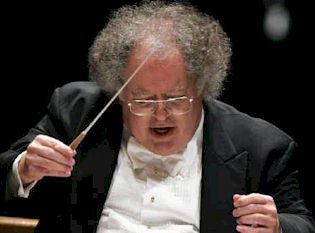
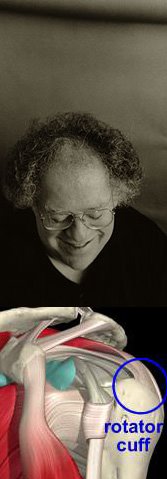
Regretfully, it is now official: his rotator cuff is torn and James Levine requires surgery. This unfortunate event will lead the Maestro to cancel his participation for the rest of the Metropolitan Opera season which included multiple performances of Beethoven's Fidelio, the new production of Donizetti's Don Pasquale, and Wagner's Lohengrin and Parsifal. Maestro Levine will also have to cancel the May 20 Gala Farewell Concert for the MET's general manager Joseph Volpe, as well as the company's summer tour of Japan where he was to have conducted Wagner's Die Walküre and Mozart's Don Giovanni. According to the general manager this type of injury is unprecedented, and it has sent the MET scrambling to fill the conductor positions for the thirty-five performances that Levine has been forced to cancel. This will not be an easy task for the Metropolitan Opera. The management will have to find conductors who are available, who know the scores, and who have the international reputation worthy of one of the largest opera companies in the world. Already Maurizio Benini has been selected to conduct the new Don Pasquale, and the MET expects to make a final decision on Fidelio as early as Monday. This now leaves the Wagner operas temporarily unattended. Parsifal, with its dream cast of Ben Heppner, René Pape, Waltraud Meier, and Thomas Hampson will be a particular loss. In my opinion, this is the strongest ensemble that the MET has put together in years for Parsifal, and Levine's conducting is very much the main character of any performance of this opera, in particular, in terms of tempi. Undoubtedly, if a second-tier assistant conductor takes over, Levine's tempi will remain intact, and the three performances will hopefully not lack the gel that's needed to keep everything together. On the other hand, if the MET is able to find a great conductor (has Pierre Boulez's official retirement after he conducted Parsifal at Bayreuth this summer kick in yet?) then we are in for some interesting surprises in the merry month of May.

Saturday, March 11, 2006

Anna Moffo R.I.P. (1932-2006)

I never got to hear Anna Moffo live. When I started going to the opera in the late 1970's, she had already retired from singing at the MET. All that was left of her, in the early Saturday standing room line where I met other opera fans for the first time, were memories from the old faithful. Record stores loved Anna Moffo's image, though: those wonderful sexy covers on her LP's were always prominently displayed. Her recording of Massenet's Thaïs, which featured a stunning photograph of Ms. Moffo in costume, was a huge best-seller. At that time, I thought that she was the most beautiful opera singer in the history of the genre. And I still do. Physically, I never thought that Maria Callas was a great beauty, although I recognized her visual elegance and grace. But Callas was too European for my tastes in those days. There was something earthy in the way that those pictures made Anna Moffo look. There was something that was closer to home about her. And indeed she was. Born, bred, and educated in the USA. She hailed from Pennsylvania, the daughter of Italian-American parents who loved music. She studied the piano and the viola when she was a voice major at the Curtis Institute of Music in Philadelphia, and was recognized to be an all-around great musician.

So many opera fans that were lucky enough to have heard her live remember her Traviata, her MET debut, and perhaps her signature role. Her stunning high E-flat was legendary because it was secure, memorable and incredibly beautiful.

In his obituary in the New York Times, Anthony Tommasini wrote the following impressions of the late soprano:

"She died of a stroke after grappling with complications of breast cancer for 10 years. Though Ms. Moffo's career began splendidly, her voice had declined by her late 30's. With her radiant appearance, she was drawn early on into television and film, playing host of her own variety show on Italian television for many years. She might not have fulfilled her promise, but for a good dozen years Ms. Moffo enjoyed enormous success and won a devoted following at a time when her competition for roles like Verdi's Violetta, Puccini's Mimi and Donizetti's Lucia included Maria Callas, Renata Tebaldi and Joan Sutherland. Though Ms. Moffo's voice was not large, it was warm and rich, with soft pastel colorings and a velvety lower range. Agile coloratura technique allowed her to sing high soprano bel canto repertory impressively, especially Lucia di Lammermoor. She was a thoroughly trained musician, having studied the piano and viola when she was a voice major on scholarship at the Curtis Institute of Music in Philadelphia. For a brief time, Ms. Moffo was a lovely singer and appealing artist who broke out of the traditional career mode to reach the larger public. 'You may not like what I do,' she said in a 1972 interview, 'but you can't say I'm dull.'"

Monday, March 06, 2006

James Levine's Health

I saw James Levine on a beautiful Sunday afternoon, in the spring of 2004, walking outside the MET. He was walking very gingerly, lagging behind a female companion, and carrying in his hands a folded Playbill to the Christopher Plummer production of King Lear that played at the Vivian Beaumont from February to April of that year. Looking at him, walking like a tired old man, his gaze lowered to the ground, almost afraid of taking the next step, I assumed that he had been overcome by Christopher Plummer's stellar performance. But when he walked passed me, I could see in his face the unmistakable pain of someone deeply suffering from his sciatica. James Levine's journey from young energetic prodigy to infirm middle age came too fast.

This weekend the news broke that he had fallen onstage at Boston's Symphony Hall after a rapturous performance of Beethoven's Ninth Symphony. The preliminary reports are that he fell right on his shoulder and injured his rotator cuff. The fall has now forced Maestro Levine to cancel his participation in the Boston Symphony's upcoming tour and, depending on the extent of his injury, possibly the rest of the performances at the Metropolitan Opera. He was scheduled to undergo an MRI today, and the best that he can hope for is that the rotator cuff is only bruised. Anything more damaging, such as a tear, would require surgery and put him out of commission for many months. His schedule at the MET for the remainder of the season, is quite hectic, with upcoming performances of Fidelio, the return of Robert Wilson's production of Lohengrin and three performances of Parsifal. Also, he is scheduled to conduct the upcoming new production of Donizetti's Don Pasquale.

If James Levine is forced to cancel his Wagner performances during April and May, it will be interesting to see who the MET gets to replace him. Will these performances be led, by default, by Maestro Valery Gergiev (who in April of 2003 conducted a number of memorable performances of Parsifal with Domingo, Pape and Struckmann)? Or will David Robertson or Marek Janowski (both of whom are taking over the Boston Symphony's tour) be hired to fill in for the ailing maestro in New York.

Listen up, Mr, Volpe: desperate times require desperate measures. If Maestro Levine is unable to fulfill his duties for the rest of the season, I recommend Christian Thielemann (an amazing Tannhäuser at Bayreuth this summer), Kent Nagano (his vivid reading of Parsifal from Baden-Baden is now available on DVD) or Esa-Pekka Salonen, whose Tristan Project and Tristan und Isolde last year in Los Angeles and Paris respectively electrified the musical and artistic world.

But make no mistake, what we all really want is for James Levine to get healthy and to conduct the rest of the operas he is scheduled to lead. The A-list of star conductors that I recommended above would be great ringers, but I think it would be better if they just became part of the MET's regular roster of house conductors under the upcoming Peter Gelb tenure.

Saturday, March 04, 2006

Mark Morris Dance Group does Vivaldi

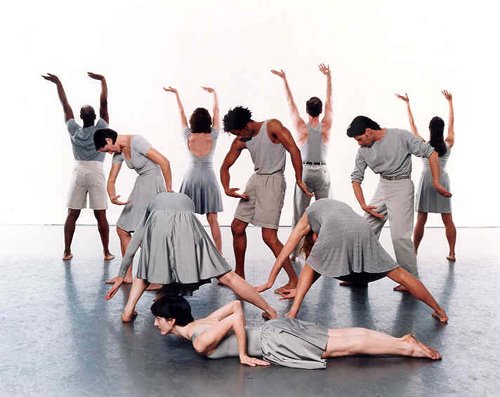
The Juilliard Choral Union, to which I belong, will be performing at BAM with the Mark Morris Dance Group. The ballet is called Gloria, and it features the music of Antonio Vivaldi. This week, Time Out New York published some reflections from the choreographer on the 25th anniversary of the founding of his Dance Group. Here's what Mark Morris had to say about the upcoming performances of Gloria: "Here's the thing: it's one of my first dances, it's very very good, people like to do it and people like to watch it, and I've done everything I can with it. It's not always my favorite thing to watch in rehearsal. I decided to reinvolve myself with the piece, so I'm conducting the motherfucker."