Wednesday, January 25, 2006

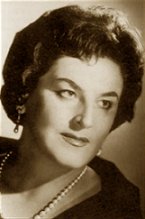
Thomas Hampson / Marilyn Horne

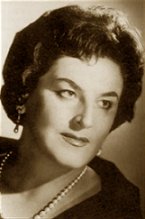
American Song, the Thomas Hampson recital at Carnegie Hall last Thursday was a critical and popular success. It happened on the nineteenth of the month, that is, two days after Marilyn Horne's birthday. Two days after the concert itself, an audio capture of the event appeared posted on a Usenet group. The great baritone performed some of the best songs by Barber, Ives, Rorem, Thompson, and others. It was a carefully selected group of compositions, chosen and presented by Mr. Hampson with a didactic tone that seemed to work most of the time. At the conclusion of the show he offered two encores of incredible beauty: Stephen Foster's well-known "Beautiful Dreamer," and Haydn Wood's poignant "Roses of Picardy." It was towards the end of the program, right before he sang the Stephen Foster song that Mr. Hampson turned to the audience (as he did throughout the concert to explain and complain -- more about that later) and dedicated the Foster song to Marilyn Horne for her birthday. On the subject of American song, all singers owe a debt of gratitude to Marilyn Horne. Her album "Beautiful Dreamer, The Great American Songbook" with the English Chamber Orchestra under the great Carl Davis has done a lot to promote popular, serious American music. The fact that a day before Mr. Hampson's concert it was reported that the legendary mezzo-soprano was diagnosed with localized pancreatic cancer, added to the poignancy of Mr. Hampson's dedication. I'm not sure if Marilyn Horne was present at Carnegie Hall, but a friend who was at the concert told me that Mr. Hampson turned to the side when he dedicated the song, seemingly talking directly to someone.

According to Anne Midgette, in the New York Times, "there was a sense of unruliness in the public from the start, when the first song was delayed by an audience member walking around the auditorium, and it continued with applause in the middle of sets that Mr. Hampson tried to quell, tactfully, repeatedly and unsuccessfully." Perhaps, the fact that Mr. Hampson talked a lot between numbers led to this kind of audience behavior. For instance, after he finished Walter Damrosch's setting of the poem "Danny Deever" in which a soldier is executed, Mr. Hampson said to the audience "That was Teddy Roosevelt's favorite song!" Was that random piece of trivia really necessary? It not only brought on laughter, but a woman in the audience stood up and interrupted Mr. Hampson by asking him why the soldier was executed.

I will end this report about the concert by once again quoting the beginning of Ms. Midgette's review: "A wave of laughter greeted the song's last line, and from the Carnegie Hall stage, the baritone Thomas Hampson looked at the crowd in bemusement. "All over the country they laugh at that!" he said. His perplexity was understandable. The text was Edward Arlington Robinson's poem "Richard Cory," set to music by John Duke. It describes a handsome, wealthy man who is the envy of his community. In the abrupt final line, this favored child of fortune "went home and put a bullet through his head." Wry, bitter, unsettling: yes. But funny?"

Sunday, January 15, 2006

Discovering Ugetsu Monogatari

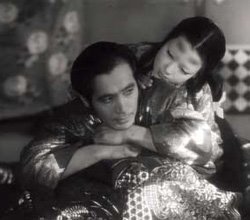
This weekend I discovered one of the masterpieces of the Japanese cinema: Kenji Mizoguchi's Ugetsu Monogatari. I had never seen this film, although I have known of its existence since the summer of 1977 when I first discovered foreign films. Ugetsu, with its contemplative theme of careless love, its fluid structure, and its subtle supernatural story is not the easiest of films, especially when compared to the more dynamic, more "American" cinema of Akira Kurosawa -- the director of The Seven Samurai, Rashomon, and Yojimbo. I'm glad that it took me all these years to get to the movie, since I don't think I would have liked it when I was a teen discovering Kurosawa's masterpieces. I probably would have found Mizoguchi's work vague, and perhaps boring. This is one of those movies that always ends up on the top ten lists of the greatest films ever made from critics from all over the world. I think I agree with these critics. The Criterion Collection has finally issued the film in a wonderful DVD version which, again, makes me glad that I waited to see it. Needless to say, this pressing from an original fine-grain 35mm print looks superb. You will enjoy this DVD release, with its amazing visual, its fine commentary and the well-made documentary about director Mizoguchi. So, if you are ready to step further beyond the films of Akira Kurosawa, you should give Ugetsu a try. I am sure that you will find it mesmerizing and totally unforgettable.

Saturday, January 14, 2006

Requiem for Sweeney Todd

The skeletal remains of Sweeney Todd, The Demon Barber of Fleet Street are on view eight times a week at the Eugene O'Neill theater. Stephen Sondheim's big operatic musical has been re-orchestrated, turned into a chamber work, and removed from traditional Victorian London. The setting of the work is now a room in an insane asylum (filled with Victoriana bric-a-brac) and populated with Michael Cerveris, Patti LuPone and a cast of eight incredibly talented singing actors and musicians. The result is a production that exasperates as often as it delights.

Most of the things that I liked about the original production (with Angela Lansbury and Len Cariou) are gone: the big orchestra, the big sets, and the big climaxes. In 1979, Hal Prince turned Sondheim's work into an unforgettable commentary on the Industrial Revolution's effects on the common man. It was a huge spectacle that catapulted Sondheim's work into the level of opera, took home Tony Awards for its creators and stars, and assured Sondheim's place in the pantheon of immortals. I remember falling in love with the work instantly (right from the first couple of bars from the organ) when I first heard it. My two visits to the original production at the then Uris Theater (now the Gershwin) were simply unforgettable theatrical evenings.

This production is a totally different experience, and if you have seen this work before this production will really challenge you. In fact, in order to appreciate the show's current run one has to be somewhat familiar with the work. If you are, then you will be more accepting of the production's conceits. The staging by British director John Doyle does not help the run-of-the-mill theatergoer or the neophyte to the work. Since everything takes place in one room, the audience is forced to imagine the various settings where the story takes place (streets, tonsorial parlor, bakehouse) and try to piece the story together from the lyrics and dialogue, which are beautifully enunciated by the cast. The short list of props includes a macabre black coffin, a ladder, and a symbolic tiny white baby coffin that Michael Cerveris clutches like the distant memory of his lost wife and child.

The most surprising and effective aspect of this production is the fact that the actors act, sing, and play all the musical instruments. This triple threat tour-de-force is something to behold, and it is quite surprising to hear how good they all are performing their various duties. Many of the actors play more than one instrument throughout the course of the show, and the new orchestrations are intelligent and quite lush. I do wish they would have gotten some older looking, drabier instruments, though. Patti LuPone's tuba is way too shiny, and Michael Cerveris' guitar is way too cheerful, colorful, and modern looking for this production.

Speaking of Michael Cerveris and Patti LuPone: they are very talented performers, and they are quite good in the roles of Sweeney and Mrs. Lovett. With his bald head, leather jacket, and pale make-up, and her Louise Brooks-like hair and torn fishnet stockings, they both look like escapees from a German Expressionist side-show. Overall, the singing is excellent from the leads and from everyone in the cast; likewise, the acting is superb. In the roles of Johanna and Anthony, Lauren Molina and Benjamin Magnuson are both making their Broadway debuts, and they are very memorable in their pivotal parts. Again, the same can be said of all ten members of the cast. This is a very tight ensemble, and I urge you to see the production because of this reason. However, if you don't know the work, make sure that at least you listen to it and get your bearings before you go. It will prove to be a less abstract, more enjoyable experience if you prepare.

I predict many Tonys for this production, so catch it before it closes. Sondheim's works, as a rule, don't last too long on Broadway, and it will be a shame if you miss this unusual version of one of our very own musical treasures.

Friday, January 13, 2006

Astrid Varnay Remembers Birgit Nilsson

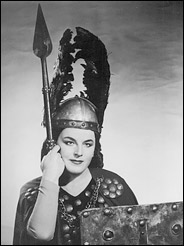
The following letter was posted on the Internet newsgroup rec.music.opera. It is a personal note from soprano Astrid Varnay rememembering her friend and colleague Birgit Nilsson. Astrid Varnay was one of the great Brünnhildes of our time, and a staple at Bayreuth during the post-war Wieland Wagner years. Here at the MET I was fortunate to hear her live in the cast of the MET's premiere of Kurt Weill's The Rise and Fall of the City of Mahagonny. Here is her note:

Birgit Nilsson -- A Remembrance

Even with our helmets on, we never locked horns.

There were simply too many bonds that linked us inseparably: born in the same country - Sweden – under the same sign - Taurus - in the spring of the same year –1918. I got here first, on April 25th as the daughter of visiting Hungarian singers in Stockholm and she showed up on May 17th down the road a piece on her parents’ farm in Västra Karup in Skåne. She never stopped ribbing me about the fact that I arrived a couple of weeks before she did.

Once, after I had moved from Elektra to Klytämnestra, while she continued in the title role, I was on my way to a rehearsal, when behind me on the sidewalk I heard an abrasively cranky child whining incessantly "Mommy, mommy..." When I finally decided I could ignore this no more and turned around in exasperation to beg the parent to pay a little attention to the yammering kid, I realized that the "brat" was my friend Birgit. I did get her back, though. Years later on one of our many phone calls I feigned one of those very formal secretarial voices and inquired if I might speak to Madame Nilsson – when she took the bait and said: "This is she speaking," I switched to my own voice and said "It’s your mother!" It became an identifying mark for our many conversations over the years.

We were colleagues, not rivals. There was never any jealousy, although perhaps occasional, and I hope pardonably small surges of envy emerged on both sides. I coveted those effortless clarion high C’s, and she confessed that she would have enjoyed having some of my dramatic skills, although hers could be fairly incendiary. Actually we didn’t share that many roles. Apart from three or four pillars of both careers: Brünnhilde, Isolde, Fidelio and the aforementioned Elektra, our repertoires pretty much went their own ways. She never sang Ortrud, and I wouldn’t have touched Turandot with a Yang-Tse barge pole. And we loved singing together: Those performances and the joy of our collaboration forged a friendship that will remain affixed in my heart forever.

A talent like Birgit’s comes along – if you’re lucky – perhaps once in a lifetime. How fortunately we are that it happened in our lifetime. A friend and colleague like that is even rarer, and it was a blessing for me to have worked with her.

I’ll miss her greatly.

Astrid Varnay

Thursday, January 12, 2006

Birgit Nilsson: NY Times Bernard Holland Article


The New York Times

January 12, 2006
Birgit Nilsson, Soprano Legend Who Tamed Wagner, Dies at 87
By BERNARD HOLLAND

Birgit Nilsson, the Swedish soprano with a voice of impeccable trueness and impregnable stamina, died on Dec. 25 in Vastra Karup, the village where she was born, the Stockholm newspaper Svenska Dagbladet reported yesterday. She was 87.

A funeral was held yesterday at a church in her town, the presiding vicar, Fredrik Westerlund, told The Associated Press.

Ms. Nilsson made so strong an imprint on a number of roles that her name came to be identified with a repertory, the "Nilsson repertory," and it was a broad one. She sang the operas of Richard Strauss and made a specialty of Puccini's "Turandot," but it was Wagner who served her career and whom she served as no other soprano since the days of Kirsten Flagstad.

A big, blunt woman with a wicked sense of humor, Ms. Nilsson brooked no interference from Wagner's powerful and eventful orchestra writing. When she sang Isolde or Brünnhilde, her voice pierced through and climbed above it. Her performances took on more pathos as the years went by, but one remembers her sound more for its muscularity, accuracy and sheer joy of singing under the most trying circumstances.

Her long career at the Bayreuth Festival and her immersion in Wagner in general, began in the mid-1950's. No dramatic soprano truly approached her stature thereafter, and in the roles of Isolde, Brünnhilde and Sieglinde, she began her stately 30-year procession around the opera houses of the world. Her United States debut was in San Francisco in 1956. Three years later she made her debut at the Metropolitan Opera, singing Isolde under Karl Böhm, and some listeners treasure the memory of that performance as much as they do her live recording of the role from Bayreuth in 1966, also under Böhm. The exuberant review of her first Met performance appeared on the front page of The New York Times on Dec. 19, 1959, under the headline, "Birgit Nilsson as Isolde Flashes Like New Star in 'Met' Heavens."

Playing opposite Karl Liebl as Tristan, Howard Taubman wrote, "she dominated the stage and the performance."

When she appeared at the end of the first act to take a solo bow, he wrote, the audience "roared like the Stadium fans when Conerly throws a winning touchdown pass."

Like so many distinctive artists, Ms. Nilsson considered herself self-taught. "The best teacher is the stage," she told an interviewer in 1981. "You walk out onto it, and you have to learn to project." She deplored her early instruction and attributed her survival to native talent. "My first voice teacher almost killed me," she said. "The second was almost as bad."

Birgit Nilsson was born in 1918. Her mother, evidently a talented singer, began Ms. Nilsson's musical education at 3, buying her a toy piano. She began picking out melodies on it.

She once told an interviewer that she could sing before she could walk. "I even sang in my dreams," she added. A choirmaster near her home heard her sing and advised her to study. She entered the Royal Academy of Music in Stockholm in 1941.

Ms. Nilsson made her debut at the Royal Opera in Stockholm in 1946, replacing the scheduled Agathe in Weber's "Freischütz," who was too ill to go on. The next year she claimed attention there as Verdi's Lady Macbeth under Fritz Busch. A wealth of parts followed, from Strauss and Verdi to Wagner, Puccini and Tchaikovsky.

Her first splash abroad was 1951, as Elettra in Mozart's "Idomeneo" at the Glyndebourne Festival in England. From there, it was a short hop to the Vienna State Opera and then to Bayreuth. She took the title role of "Turandot," which is brief but in need of an unusually big sound, to Milan in 1958 and then to the rest of Italy.

Ms. Nilsson was suspicious of opera's recent youth culture and often remarked on the premature destruction of young voices brought on by overambitious career planning. "Directors and managers don't care about their futures," she once said. "They will just get another young person when this one goes bad."

In today's opera culture, the best managed voices tend to mature in the singer's 40's and begin to deteriorate during the 50's. (Singers like Plácido Domingo, flourishing in his 60's, might dispute such generalizations.) Yet at 66, when most singers hang onto whatever career remains through less taxing recitals with piano and discreet downward transpositions of key, Ms. Nilsson sang a New York concert performance of Strauss and Wagner that met both composers head-on.

"Ms. Nilsson did not sound young," Will Crutchfield wrote in The Times. "Soft and low notes were often precarious; sustained tones were not always steady." He continued: "The wonderful thing is that she doesn't let this bother her. There was never a sense of distress or worry."

The conductor Erich Leinsdorf thought that her longevity, like Flagstad's, had something to do with her Scandinavian heritage, remarking that Wagner required "thoughtful, patient and methodical people." Ms. Nilsson attributed her long career to no particular lifestyle or regimen. "I do nothing special," she once said. "I don't smoke. I drink a little wine and beer. I was born with the right set of parents."

In sheer power, Ms. Nilsson's high notes were sometimes compared to those of the Broadway belter Ethel Merman. One high C rendered in a "Turandot" performance in the outdoor Arena di Verona in Italy led citizenry beyond the walls to think that a fire alarm had been set off. Once urged to follow Ms. Nilsson in the same role at the Met, the eminent soprano Leonie Rysanek refused.

Ms. Nilsson was known for her one-liner humor. The secret to singing Isolde, she said, was "comfortable shoes." After a disagreement with the Australian soprano Joan Sutherland, Ms. Nilsson was asked if she thought Ms. Sutherland's famous bouffant hairdo was real. She answered: "I don't know. I haven't pulled it yet." After the tenor Franco Corelli was said to have bitten her neck in an onstage quarrel over held notes, Ms. Nilsson canceled performances complaining that she had rabies.

Ms. Nilsson was also a shrewd businesswoman and negotiated much of her own career. She never ranted or engaged in tantrums. She was also too proud to make outright demands. She would begin contract talks by refusing every offer and being evasive about her availability in general. This tack would continue until the impresario offered something she wanted. Ms. Nilsson's reply would be "maybe." Now in control, she would be begged to accept what she desired in the first place.

She could stand up to intensely wired conductors like Georg Solti as well. When Solti, in "Tristan und Isolde," insisted on tempos too slow for her taste, she made the first performance even slower, inducing a conductorial change of heart.

Partly because Ms. Nilsson was on the scene, Decca Records undertook the audacious and mammothly expensive project of making the first studio recording of Wagner's four-opera "Ring" cycle conducted by Solti and produced by John Culshaw. The effort took seven years, from 1958 to 1965. A film of the proceedings made her a familiar image for arts-conscious television viewers.

Ms. Nilsson's American career was derailed in the mid-70's by a squabble with the Internal Revenue Service, which had filed claims for back taxes. Several years later, cooler heads intervened: a schedule of payments was worked out, and Ms. Nilsson's ill-tempered hiatus from the United States ended. When she returned, Donal Henahan wrote in The Times, "The famous shining trumpet of a voice is still far from sounding like a cornet."

Ms. Nilsson appeared at the Met 223 times in 16 roles. She sang two complete "Ring" cycles in the 1961-62 season, and another in 1974-75. She was Isolde 33 times, and Turandot 52. The big soprano parts were all hers: Aida, Tosca, the Dyer's Wife in Strauss's "Frau Ohne Schatten," Salome, Elektra, Lady Macbeth, Leonore in Beethoven's "Fidelio," and both Venus and Elisabeth in Wagner's "Tannhäuser." For much of this time, the Met's general manager was Rudolf Bing. Ms. Nilsson, when signing a contract, was asked to name a dependent. She wrote in Bing's name.

James Levine, who conducted her in Wagner and Strauss at the Met, said yesterday: "Birgit was unique. Her voice, the dedication of her artistry, her wonderfully wicked sense of humor and her loyal friendship were in a class by themselves. I miss her already, as does the entire Met family." At Mr. Levine's 25th-anniversary gala at the Met in 1996, she spoke briefly and wittily, throwing in a brief and wholly professional Valkyrie hoot at the end.

Ms. Nilsson had by then retired to her childhood home in the Skane province of southern Sweden. Here her father had been a sixth-generation farmer, and here she had worked to grow beets and potatoes until she was 23. A decade ago an interviewer for The Times found her there: happy, serene and as unpretentious as ever. "I've always tried to remember what my mother used to tell me," she said. "Stay close to the earth. Then when you fall down, it won't hurt so much."

Wednesday, January 11, 2006

Birgit Nilsson Dies

The great Swedish soprano Birgit Nilsson died on Christmas Day in her native Sweden. It was only today that her death was reported in America. She was one of the greatest stars of our times, memorable in the roles of Turandot, Tosca, and Aida. It was in the works of Richard Wagner, however, that she will be remembered as one of the immortals. During the late 1950's and '60's she was the world's leading Brünnhilde and Isolde, and her recording of The Ring, conducted by Sir Georg Solti, (the first complete Ring to be recorded in stereo) was a memorable landmark event.

I was very lucky to hear her live in Richard Strauss' Elektra and Die Frau ohne Schatten at the Metropolitan Opera when she made her triumphal return to America in the early 1980's. Although past her prime, those performances had an unforgettable electricity, and those of us who were lucky enough to get tickets for these performances will never forget them. You can read more about Birgit Nilsson career by visiting the Wagnerian Sopranos section of Wagner Operas.

The following is the New York Times obituary:

STOCKHOLM, Sweden (AP) -- Birgit Nilsson, the farmer's daughter who became renowned in the world's great opera houses for her dazzling voice and among colleagues for her playful sense of humor, has died at age 87.

She died on Christmas Day, the Stockholm daily Svenska Dagbladet reported.

As word spread of her death two decades after she retired, the Swedish singer was remembered as one of the world's top Wagnerian sopranos.

''With Birgit Nilsson's passing, Sweden has lost one of its greatest artists,'' King Carl XVI Gustaf said in a rare statement.

''She was one of the greatest singers of the 20th century,'' said Menno Feenstra, artistic director at Stockholm's Royal Opera, who developed a close friendship with Nilsson after her retirement.

Feenstra called her vocal skills ''so solid and so 100 percent that you can hardly find a singer nowadays that has a technique like that.''

A funeral was held Wednesday at a church in her native town Vastra Karup in southern Sweden, with only her closest relatives attending, said Fredrik Westerlund, the church's vicar. He did not know when she died or the cause of death, but Nilsson was said to have had heart trouble in recent years.

Born on a farm, Nilsson reigned supreme at the world's opera houses during her career, which began in 1946 at the Stockholm Royal Opera as Agathe in Weber's ''Der Freischutz'' and continued until 1984.

She sang a wide variety of dramatic roles, but her reputation was based especially on her mastery of the most punishing in the repertory. Chief among these was Isolde in Wagner's ''Tristan und Isolde,'' which she sang for her sensational debut at New York's Metropolitan Opera on Dec. 18, 1959.

She was immediately hailed as a worthy successor to her fellow Scandinavian, Kirsten Flagstad, the Norwegian who owned the Wagner repertory at the Met during the years before World War II.

Other parts Nilsson made her own included Bruennhilde, the warrior maiden of Wagner's ''Ring'' cycle, the title role of Elektra in Richard Strauss' opera, and the heroine of Puccini's ''Turandot.''

''Birgit was unique!'' Met music director James Levine said in a statement. ''Her voice, her artistry, her sense of humor and her friendship were in a class of their own. I was so fortunate to hear her sing many times over the years, and eventually to work with her on several memorable occasions with Wagner and Strauss.''

''The thing that was remarkably wonderful about her was that she had no conceit. She was completely modest,'' Jon Vickers, her frequent Tristan, said in a telephone interview from his home in Bermuda.

At her peak, Nilsson astounded audiences in live performance with the unforced power of her voice, which easily cut through the thickest orchestrations, and with her remarkable breath control, which allowed her to hold onto the highest note for seemingly endless amounts of time. Her interpretive powers grew as her career developed, and she became a moving artist as well as a vocal phenomenon.

Her reputation in operatic lore was enhanced on Dec. 28, 1959, when she sang a performance of ''Tristan'' opposite three different tenors. Her scheduled co-star, Karl Liebel was ill, and so were his two ''covers,'' Ramon Vinay and Albert DaCosta. Met general manager Rudolf Bing perusaded each of them to go one for a single act so the performance wouldn't have to be canceled.

Nilsson also was renowned for her playful sense of humor. Once asked what was the chief requirement for singing Isolde, she replied: ''Comfortable shoes.''

Johanna Fiedler, in her book about the Met, ''Molto Agitato,'' tells the story of Nilsson's unhappiness with the gloomy lighting on which Herbert von Karajan insisted for his production of the ''Ring.'' To register her objections, she appeared on stage during a 1967 rehearsal of ''Die Walkuere'' wearing a coal miner's helmet with searchlight and wings.

''Karajan just looked at her, put his head down and conducted,'' Vickers recalled. ''He wouldn't look at her.''

Another legendary moment came after one of her frequent battle-of-the-high-note contests with tenor Franco Corelli during the second act duet from ''Turandot.'' Enraged that no matter how he tried she could hold onto the climactic high C longer than he could, Corelli apparently got his revenge during their third-act love scene by biting her on the neck instead of kissing her. Nilsson is said to have telephoned Bing to cancel her next performance with the explanation, ''I have rabies.''

Nilsson recalled the episode in an Oct. 30, 2003, phone interview with the AP following Corelli's death.

''He neither bit nor kissed me. It all ended appropriately in any case,'' she said.

Nilsson sang with the Met 222 times in 16 roles, making her finale at the October 1983 centennial gala. Her last appearance on the Met stage came more than a decade later, when she took part in an April 1996 gala celebrating Levine's 25th anniversary with the company. After some gracious remarks, she launched into Bruennhilde's ''ho-yo-to-ho'' battle cry from ''Walkuere,'' delivering -- at age 77 -- a performance that would have been the envy of any younger soprano.

Nilsson made her American debut at the San Francisco Opera on Oct. 5, 1956, as Bruennhilde, and sang at the Lyric Opera of Chicago from 1956-74. She sang Bruennhilde in the 1960s recording of Wagner's Ring Cycle with Sir Georg Solti and the Vienna Philharmonic, considered by many the definitive rendition.

She appeared 232 times at the Vienna State Opera from 1954-82, and the Vienna Philharmonic, the company's orchestra, made her an honorary member in 1999.

''If there ever was someone that one can call a real star today and a world-famous opera singer during her time then that was Frau Nilsson,'' said Ioan Holender, director of the Vienna State Opera.

Her music education started at age 3, when her mother, an accomplished amateur singer, bought Birgit a toy piano, on which she learned to pick out melodies.

''I sang before I could walk. I even sang in my dreams,'' she told reporters soon after her opera debut.

After retirement, she continued to teach master's level courses in singing.

Although she studied at Sweden's Royal Academy of Music, Nilsson said she learned most of her musical skills on her own.

''I'm mostly self-educated. I discovered early how wonderfully easy it was to sing in big localities. In small rooms my voice got tired,'' she told a Swedish reporter once.

Despite her worldwide recognition, Nilsson said she was nervous before every major performance.

''Before a premiere, on the way to the opera, I'd hope for just a small, small accident, it didn't need to be much, but just so I would not have to sing,'' she said in a 1977 interview on Swedish TV.

Nilsson married Swedish restaurateur Bertil Niklasson in 1949. The couple had no children.

------

Associated Press writers Mike Silverman and Ronald Blum in New York, Mattias Karen in Stockholm and George Jahn in Vienna, Austria, contributed to this report.

Tuesday, November 08, 2005

Robert Wilson's new Ring in Paris


Here is the New York Times Review of Robert Wilson's new Ring in Paris.

November 2, 2005

Audiences Love a Minimalist 'Ring' Cycle; Critics Aren't Sure

PARIS, Nov. 1 - Productions of Wagner's "Ring des Nibelungen" have one thing in common: rarely do director, designer, conductor, orchestra and singers all emerge unscathed. The reason is simple. Audiences and critics often embark on this four-opera cycle with firm views on how its immense musical and mythical universe should look and sound.

Still, with Robert Wilson's "Ring," first presented at the Zurich Opera from 2000 to 2002 and now at the Théâtre du Châtelet here, Parisians at least know what to expect. Over the last three decades, in both opera and theater, they have grown used to Mr. Wilson's signature stagecraft of dramatic lighting, costumes in solid colors, minimalist décor and stylized acting. (Forget about naked Rhinemaidens, burning castles and helmeted Valkyries.) The question was how this abstract approach would serve Wagner's monumental work.

So far, opinions are divided or, rather, fragmented. Audiences have responded with great enthusiasm to "Das Rheingold" and "Die Walküre," the first two works in the "Ring." In contrast, French critics have dissected the productions to identify what they liked and disliked, with their sharpest criticism aimed at Christoph Eschenbach, who is conducting the Orchestre de Paris.

But the final verdict must await the new year. The last chapters, "Siegfried" and "Götterdämmerung," will be presented in January and February, followed by two complete cycles from March 30 to April 15. And in April, Plácido Domingo will replace Peter Seiffert as Siegmund in "Die Walküre."

Of course, the basic "look" of Mr. Wilson's "Ring," with its strong echoes of Japanese Noh theater, is unlikely to change. Indeed, as Mr. Wilson has done before in, say, "Parsifal" and Debussy's "Pelléas et Mélisande," rejecting what he calls "decorative" illustration of the narrative, he uses austerity and self-control to create a space in which music and libretto can breathe freely.

Here his lighting is the star: innumerable shades of color reflect the changing mood of the plot, while spotlights isolate the face or hands of silhouetted figures. The gods, including the one-eyed Wotan, seem no less otherworldly. Wearing Frida Parmeggiani's single-color, neo-Cubist costumes, they move with almost robotic gestures. But even the "human" lovers, Siegmund and Sieglinde, avoid any physical contact.

"Above all, I try not to impose my interpretation on the work in order to leave room for interrogation," Mr. Wilson explained in an interview in the Châtelet's program book. "Theater is often too dictatorial. A writer, director or designer has an idea and insists on it. This leaves no room for exchanges, for other ideas."

Defending the sobriety of his approach to the "Ring," he added: "In my view, with a work that is already full of overwhelming emotions, a production that is equally moving and emotional makes no sense."

What this means in practice is that it is left largely to the orchestra and voices to convey the drama. In "Das Rheingold," for instance, the giants Fasolt and Fafner, who want to ransom Freia for gold, tower over the set, but they are menacing only in the words they sing. Somewhat more sinister is Alberich, who takes the gold of the Rhinemaidens in exchange for renouncing love.

In both "Das Rheingold" and "Die Walküre," the cast pleased the audience more than it did the critics. Jukka Rasilainen's Wotan, Mr. Seiffert's Siegmund, Petra-Maria Schnitzer's Sieglinde and Linda Watson's Brünnhilde were all warmly applauded, but French critics felt that the singers were somewhat miscast. In contrast, there was unanimous praise for both the timbre and stage presence of Mihoko Fujimura's Fricka, the guardian of marriage.

Mr. Eschenbach, never much loved by French music critics since taking over the Orchestre de Paris in 2000, fares less well. Writing in Le Figaro, Christian Merlin said he had "nothing of an opera conductor," adding that he failed to control the "thunder" of the orchestra's brass. In Le Monde, Marie-Aude Roux wrote that his conducting was "heavy, despite some often enigmatic and disturbing tempo changes."

Yet every "Ring" audience is also crowded with Wagner experts, and they, at least, went overboard with cheers for Mr. Seiffert and Ms. Schnitzer's long love duet, which dominates Act I of "Die Walküre." Even Mr. Eschenbach was heartily applauded - if only to drown out some boos - at the final curtain of this opera.

Nonetheless, the program interviews illustrate how the director and conductor of the same production can have different views of Wagner's 15-hour masterpiece.

"The Ring is a family saga," said Mr. Wilson, a Texas-born American. "It is a children's story. It has a god, dwarves, giants and bad guys. I would not want to make my 'Ring' too heavy, too intellectual. All true theater people I know have a little child hidden inside them."

But for Mr. Eschenbach, who shares Wagner's German nationality and culture, the composer was inspired by the "very pessimistic" philosophy of Feuerbach and Schopenhauer. " 'Der Ring des Nibelungen' is a dark work," he noted, "full of uneasiness, about capitalism and the obsession for power and money."

That said, whatever the interpretation, the "Ring" is always an occasion, above all in Paris, where it was last staged at the Châtelet in 1994, but where the Paris National Opera has not taken it on since the mid-1950's.

And Wagner lovers can look forward to 2006. After completion of the Châtelet's cycle, the Bayreuth festival is planning a new production of the "Ring." For Parisians, the Aix-en-Provence festival may be more convenient. Starting next summer, with Sir Simon Rattle conducting the Berlin Philharmonic in a production by Stéphane Braunschweig, the four operas of the "Ring" will be presented in successive years through 2009.

Thursday, August 25, 2005

The Pillowman Nears the End of its Run

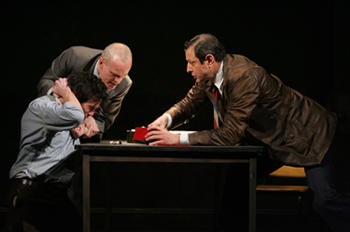
The Pillowman, Martin McDonagh's macabre play, is closing in a few weeks after a successful, but short run on Broadway's Booth theater. I saw it twice this summer, and read the work after my first visit. My reaction to the play was one of wonder and awe both times I saw it. Pretty much the same reaction I had when years ago I saw the original Broadway run of Amadeus with Ian McKellen, a play I was also fortunate to see twice. Although The Pillowman does not possess a performance of the grandeur of the young McKellen's, it is an amazingly written work, and it ranks with Peter Schaffer's play as one of the most memorable nights one could have in the theater. The cast of The Pillowman is spectacular, with Jeff Goldblum and Billy Crudup giving memorable performances, Zeljko Ivanek giving a puzzling reading of his character, and the amazing young actor Michael Stuhlbarg giving one of the most satisfyingly poignant performances now on Broadway as a mentally retarded innocent, who proves to be not as innocent as he first appears.

Part of the fun of going to see this play was waiting after the performance for autographs. This is a very generous cast with the fans, and Jeff Goldblum stays night after night until the bitter end signing autographs and taking pictures with everyone -- especially with the ladies. The talk of the town is that everyone wants to work with him because he is such a class act. It was fun, for instance, to have Mr. Goldblum sign my script of the play, ask me where I bought it and have him comment on the fact that he had not seen this version of it. (The current orange-covered version of the play, published by Faber & Faber, lists both the British National Theater cast as well as the American Booth Theater cast).

Although, structurally, the American version of the play (in two acts) works better, in my opinion than the three-act format as published, the British cast must have been something to behold. I would have loved to have seen Jim Broadbent in the role of Tupolski. Ever since I saw this fine actor playing Sir W.S. Gilbert in Mike Leigh's film Topsy Turvy, I have come to respect him as one of the finest character actors of his generation. He was even very good in the movie Moulin Rouge, which must have taken a lot of effort to pull-off. The British cast also included David Tennant in the role of Katurian K. Katurian. I didn't know who this actor was until I got into the British Sci-Fi series Dr. Who this summer and realized that he will be playing the Doctor next season.

Personally, I will miss The Pillowman once it finishes its run in a few weeks. It is rare that a play can provide an audience with chills and thrills, while at the same time offering them beautifully crafted performances, and a script of Kafkaesque beauty and complexity. I don't think that I will have a chance to see The Pillowman again before it closes, and I don't think that I really want to. I would like the memory of those two performances to linger on. Along with Doubt, and the revival of Who's Afraid of Virginia Woolf?, The Pillowman was responsible for a great season for drama on Broadway. Let's hope that next season proves to be of the same high caliber.

Friday, August 12, 2005

Bayreuth, Salzburg and the BBC Proms

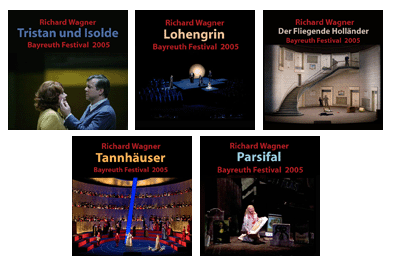
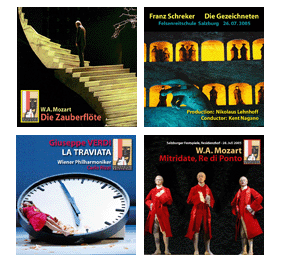
It has been a fun summer of listening, recording and designing CD covers for the Internet webcasts of the European summer festivals that started in late July with the premiere of the new production of Tristan und Isolde at Bayreuth, and which continued with the Salzburg festival and the BBC Proms at the Royal Albert Hall in London.
I recorded all five operas from Bayreuth this season, and also designed front and back CD covers for these recordings. Pictured here are the front covers to the five operas that Bayreuth presented this summer.
The Salzburg festival has presented thus far many exciting productions of well-known as well as rare works. This year's productions of Mozart's Die Zauberflöte and Mitridate, Re di Ponto are previews of next year's celebration of the 250th anniversary of the birth of Mozart. This landmark event will be celebrated at Salzburg (the city of Mozart's birth) with productions of all the composer's operas. This year the festival also featured productions of Verdi's La Traviata with Anna Netrebko, Rolando Villazón and Thomas Hampson, as well as Nikolaus Lehnhoff's production of the rarely performed Die Gezeichneten, an opera by Austrian composer Franz Schreker. I also recorded these works and designed the CD covers that you see on this page.
One of the highlights of the BBC Proms this year was the reprise of the season's Royal Opera production of Wagner's Die Walküre. Not only did this prom feature Plácido Domingo, Waltraud Meier and Lisa Gasteen as Siegmund, Sieglinde, and Brünnhilde respectively, but it marked the debut of Bryn Terfel in the role of Wotan. The fact that these performances are now broadcast over the Internet is truly wonderful. The thunderous ovation that can be heard in my recording from the oversized crowd at the Royal Albert Hall at the end of each act tells the whole story. For the CD cover to this recording I decided to start with the official logo from this year's BBC Proms. Unlike the covers for Bayreuth and Salzburg, I avoided all photographs of the artists and the production, and simply listed the date of the performance and the cast.

Saturday, August 06, 2005

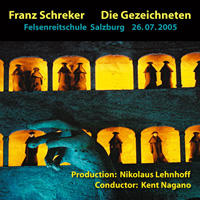
"Die Gezeichneten" at Salzburg

It has been quite an exciting Salzburg Festival this summer. As I reported earlier, Mozart's Die Zauberflöte with Riccardo Muti at the helm is an enticing prelude to the upcoming celebration of Mozart's birthday next year. Now, a nearly forgotten work by an almost forgotten composer is being performed at the Felsenreitschule to great acclaim. The work is Die Gezeichneten (The Marked Ones) by Austrian composer Franz Schreker. The production is by Nikolaus Lehnhoff and the musical direction by Kent Nagano. Readers of this blog and visitors to my Wagner site will recognize this to be the creative team of the marvelous production of Wagner's Parsifal from Baden-Baden that was captured on DVD and released this year.

I heard the live broadcast of Die Gezeichneten last week, recorded it, and designed the cover that you see above. What is immediately striking when you hear Schreker's work is his great lyricism and his adept abilities as orchestrator. Listeners will immediately call it "Strauss-like" when they first hear it. Indeed, for many music critics of his day, it was Schreker and not Richard Strauss who was the heir to Wagner. Unfortunately, the tide of political events that led to World War II virtually erased Schreker's name and his works from memory. As a half-Jew, Shreker saw his works banned in his native Austria and he was unable to secure any commissions or adquire any teaching posts. He died in 1934 from complications brought on by a stroke.

Here is Jeremy Eichler's review from the New York Times:

SALZBURG FESTIVAL REVIEW; With a Disturbing Vision of Utopia Lost, a Forgotten Modernist Is Remembered

By JEREMY EICHLER

The Austrian composer Franz Schreker was one of the great dreamers of early-20th-century music, a cartographer of distant sonic utopias and a prophet of their demise. His fame reached its height in German-speaking Europe around 1920, when his operas rivaled Strauss's in popularity, and he was hailed by some as the true heir to Wagner. But he was crushed by the double blow of shifting Weimar fashion and then the Third Reich.

As a progressive composer of half-Jewish descent, he was dismissed from prominent teaching posts, his music later banned. He died of a stroke in 1934 and his reputation lay in tatters for decades after the war. He was surely the most successful composer of his generation to simply vanish from music history.

But Schreker's return may finally be drawing near. His works are once again being performed in Austria and Germany, and Tuesday night a new staging of his apocalyptic opera, ''Die Gezeichneten,'' was unveiled here as the opening production of the prestigious Salzburg Festival. Directed by Nikolaus Lehnhoff, with Kent Nagano leading his Deutsches Symphonie-Orchester Berlin, it was an engrossing evening that conveyed not only the vertiginous beauty of Schreker's music, but also the composer's theatrical gifts, his penchant for probing the unconscious drives and boundless yearnings of his characters in a world that is crumbling around them.

''Die Gezeichneten'' (''The Branded'') was completed in 1915, and though the action is set in a mythical 16th-century Genoa, it is a product of tumultuous fin-de-siècle Vienna and the heady last days of the Austro-Hungarian Empire. It tells the story of a wealthy hunchback, Alviano Salvago, who detests his appearance and is filled with such hunger for beauty that he creates an island paradise, an Elysium of art and natural wonders. But Alviano soon learns that corrupt noblemen have discovered a secret grotto on the island and, spurred on by their leader, Tamare, they have been abducting the daughters of the city to indulge in violent orgies there.

Alviano tries to avert disaster and donates Elysium to the citizens of Genoa, but before the transfer occurs, he is seduced by Carlotta, a painter of hands and souls who has been secretly observing him and persuades him to sit for a portrait. He falls desperately in love and they are engaged to marry, but she loses interest after her painting is complete and soon becomes prey to the rapacious Tamare. The final scene takes place in the grotto, where Alviano discovers Carlotta's betrayal, shoots Tamare dead and staggers off, a broken shell of a man.

Schreker wrote the steamy libretto himself, and it is a prescient meditation on the limits of aesthetic refuge; on 19th-century notions of beauty that were premised on repression, be it social, psychological or sexual; and on the quick free-fall of any utopia to its opposite extreme.

These were bread-and-butter themes for the Vienna moderns, and writers like Hofmannsthal and Schnitzler charted this terrain with far more subtlety and complexity. But Schreker had at his command a tool he could wield like no one else: the orchestra.

He was an unsurpassed master of timbre who possessed an almost mystical relationship with the very idea of sound. But unlike his fellow Viennese composers, Schreker never expelled himself from the garden of tonality. His lush and sensuous musical language was built on extensions of a late-Romantic grammar. He was, in other words, the rarest of musical creatures: a modernist who never got the memo on grim austerity, a progressive composer who forgot that ornament was crime. Instead, he found ways to push boundaries from within a tonal universe, stacking chords on top of one another, stretching chromaticism to its outer limits and swaddling his expressionist musical dramas in intoxicating swirls of color.

''Die Gezeichneten'' was one of his most popular operas, and Mr. Lehnhoff has created a staging that is sometimes fuzzy on the details but true to its dark heart. Seeking to universalize Alviano's plight, he has made the character's deformity purely psychological. (His self-loathing drives him to secret cross-dressing, a cliché of German ''director's theater'' but it somehow works here.) More harmful to Schreker's concept is Mr. Lehnhoff's decision to stage all three acts on the ruins of the destroyed Elysium, rendered as the rubble of a giant godlike statue, thereby visually anticipating the opera's end and eliminating the suspense that might have been built from guarding the secret of the distant paradise.

But the director's most striking revision is to the murderous orgies of the third act. He challenged himself to convey the shock of Schreker's original, but how do you do that when modern viewers have been so anesthetized by television and film, not to mention Stanley Kubrick's ''Eyes Wide Shut,'' which was based on a roughly contemporary novella by Schnitzler? Mr. Lehnhoff's answer is pedophilia. At the work's final climax, it is revealed that the ''daughters of Genoa'' who had been abducted to the grotto are in fact quivering little girls who look scarcely 10 years old. The stomach turns; the shock is achieved.

Without previous exposure to Mr. Lehnhoff's work, one might chalk this up to more German directorial scandal-mongering. But his riveting ''Makropulos Case'' at the Brooklyn Academy of Music of 2001 suggests a deeper mind at work. I left feeling duly disturbed but also skeptical about how well this solution integrated with Schreker's original vision.

The cast struggled valiantly with Schreker's demanding vocal writing. Robert Brubaker was affecting and sympathetic if also underpowered as Alviano, Michael Volle was a suitably muscular Tamare, and Robert Hale sang with ample depth in the supporting role of the Duke Adorno. As Carlotta, the soprano Anne Schwanewilms was the standout, with an icy radiance to her voice and a mesmerizing stage presence.

Mr. Nagano led his ensemble in a masterfully paced reading of the score, showing an intuitive feel for Schreker's palette with all its blends and subtle shading. At the opera's most riveting moments, the sound had a way of billowing out from the orchestra, like a soft wind blowing from a place unseen.

Tuesday, August 02, 2005

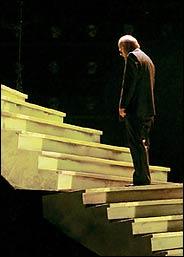
Magic Mozart at Salzburg

While the magic continues at Bayreuth through the month of August, over in Austria, the Salzburg Festival has begun. As the classical music world gets ready for the 250th anniversary of the birth of Wolfgang Amadeus Mozart, the Salzburg festival presented two of Mozart's works, one written when the composer was barely fourteen years old, and the other being his last theater work. The following is the New York Times review of these two events.

Mozart Resounds in a City He Hated

SALZBURG, Austria, July 31 - If only Mozart could see his hometown now. His letters are full of disdain for Salzburg, which he saw as hopelessly narrow-minded and parochial. As he wrote to his father, he felt constantly undervalued by his employer here, the Archbishop Colloredo, whom he despised "to the point of madness." He finally ended his service to the court on "that happy day" in 1781 and described to his father being booted out the door by Colloredo's deputy, with what is surely the most famous such kick in music history.

As Salzburg gears up for the 2006 celebrations of the 250th anniversary of Mozart's birth, people don't talk very much about that kick. These days, when it comes to Mozart, the streets of this fastidiously groomed Baroque city are spilling over with pride - or at least, business acumen. You can hardly walk one block without bumping into Mozart's image plastered on, well, just about anything you could conceivably buy: T-shirts, candlesticks, perfume, umbrellas, napkin rings, beer mugs, shot glasses, and on and on, not to mention the ubiquitous chocolate-pistachio-marzipan treats called Mozartkugeln. What would Wolfgang think? Imagine one of those irreverent peals of laughter that Tom Hulce kept uncorking when he played the composer in the film version of "Amadeus."

The Salzburg Festival itself goes easy on the marzipan, but it is still deeply committed to making 2006 a banner Mozart year. A brand-new 29 million-euro (about $35 million) concert hall, the House for Mozart, is being built to open just in time for next year's summer festival, which will feature a rare cycle of all 22 of Mozart's stage works. Among these, 10 will be brand new productions, with a starry assortment of conductors, orchestras and directors. Others will be revivals, including two new productions that had their premieres last week at the festival: "Mitridate, Re di Ponto" and "Die Zauberflöte."

The festival's artistic director, Peter Ruzicka, sensibly suggests that to demythologize Mozart's genius, one needs exposure not just to the late great works but also to the entire course of his growth, juvenilia and all. On Thursday night, the festival gave this year's guests an early introduction to that lesser-known Mozart with Günther Krämer's new production of "Mitridate," staged in the courtyard of the city's grand 17th-century Residenz.

Written for a Milanese audience when the composer was only 14, "Mitridate" is first-rate early Mozart, an opera seria that is astounding for someone that age, and yet provides only a glimpse of what was to come. Its plot, adapted from Racine, centers on the great warrior Mitridate, who is to marry Aspasia when his sons, Sifare and Farnace, learn that he has died in battle with the Romans. They compete for Aspasia's hand, but their hopes are shattered and their lives endangered when their father returns alive. Much groveling and chaos ensue, interspersed with beautiful arias in which the characters pour their inner torment into fantastically ornate vocal lines. The writing was in fact demanding enough to keep the work off the stage for most of the last century.

The opera is also dramatically underdeveloped, and therefore ripe for some insightful direction. Mr. Krämer has instead given it a flashy modern look full of visual interest, but not enough beyond that. The crux of the interpretation is a brilliant two-tiered set designed by Jürgen Bäckmann, who makes ingenious use of mirrors; during the opera's opening few minutes, for example, a phalanx of Mozart-doppelgängers appear to be running up the walls. The same extras later slide down a slope coated with thick black sand and return to perform a strangely stylized yogalike dance.

It all proved too distracting, though fortunately the second half was more focused and character-driven. Over all, one wished Mr. Krämer had probed deeper inside the work rather than making mischief at its edges. Still, this was rather tame director's theater, and the conservative - and very glittery - Salzburg audience cheered the production team on opening night.

The first-rate cast also won well-deserved applause, including Richard Croft in the title role, Bejun Mehta as Farnace, Miah Persson as Sifare, Netta Or as Aspasia and Ingela Bohlin as Ismene, a princess in love with Farnace. Marc Minkowski led his Musiciens du Louvre-Grenoble in a superbly lithe and buoyant reading of the score. Opera on period instruments is still rare at the Salzburg Festival, but this performance should set the standard.

A more familiar and altogether not-too-shabby band was in the pit of the Large Festival Hall two nights later: the Vienna Philharmonic under Riccardo Muti. The occasion was Graham Vick's "Zauberflöte," another near miss. It offered a provocative take on Mozart's most famous opera but got lost somewhere in the onstage field of giant sunflowers.

That is where Zarastro's secret lair is located, and this interpretation seeks to reverse the usual symbols and upend the ennobling message typically found in the work's Masonic-inspired libretto. Rather than a source of light and moral wisdom, Zarastro's order is shown to be a dark place of shadows and stagnation. The Queen of the Night, sung with solid top notes by Anna-Kristiina Kaappola, is dressed all in white, and Zarastro, sung with great resonance and depth by René Pape, carries a double-barreled shotgun. The priests are old and emaciated; a giant staircase, presumably leading to higher spiritual ground, sits broken in two. Clearly, Mr. Vick is getting at a vision of Enlightenment run afoul, the language of universal freedom abused as a mere cover for power politics.

This is a sharp-edged and arguably timely reading, but unfortunately, Mr. Vick seems to lack the courage of his convictions. Zarastro is not sinister enough. His lair, rather than merely shadowy, should have been a place of real darkness. Tamino, sung respectably by Michael Schade, also loses his redemptive potential by being portrayed here as a suburban teenager who runs around in a rugby shirt, sneakers and an aw-shucks attitude.

Papageno, dressed in colorful 1970's grunge, was sung to fine comic effect by Markus Werba; Genia Kühmeier was an affecting Pamina. There were also some wry comic touches in the opening scenes, as when the Queen of the Night makes her grand entrance by showing up in Tamino's bed. Mr. Vick also nods amusingly to C. S. Lewis with a Narnia-esque use of wardrobe closets as gateways to various magical worlds.

Mr. Muti kept the Enlightenment satire a safe distance from the score, leading the overture with broad-gestured dignity. And what a pleasure to hear the Vienna Philharmonic in an opera pit, catching the unsuspecting ear by surprise with its nimble sweet-toned woodwinds and lush velvety strings.

Even if neither production ultimately took flight, both gave an enticing taste of what should be in store for next year: little-known Mozart given real attention, and the most famous Mozart reconceived. After 2006, Jürgen Flimm will take over as the artistic director of the festival. Here's a suggestion for his first season of programming in 2007: give Mozart the summer off. The poor man will have earned it, and it would do a tremendous service by refreshing his music here, maybe even engendering some critical debate about the use and abuse of his myth. O.K., admittedly, in this town, it's a long shot.

"Mitridate, Re di Ponto" continues for seven more performances at the festival, Friday through Aug. 25; "The Magic Flute," for eight performances, tonight through Aug. 28.

Thursday, July 28, 2005

New York Times article: "Boos at Bayreuth"

The following article appeared in the New York Times. It gives a brief impression of opening night of the 2005 Bayreuth Festival.

Boos at Bayreuth

Boos, jeers and whistles greeted the 94th Bayreuth Festival's new production of Wagner's Tristan und Isolde, Agence France-Presse reported yesterday. Described as a cold and clinically intellectual interpretation, the performance, which opened the festival in Germany on Monday, starred Robert Dean Smith and Nina Stemme as Tristan and Isolde. It was staged by the Swiss director Christoph Marthaler in his Bayreuth debut and conducted by Eiji Oue, the first Asian to conduct in the Festspielhaus, the Bayreuth Festival Theater. At the end, Mr. Oue kissed the floorboards in a gesture of reverence to Wagner, who conceived the event. To be performed through Aug. 28, all 30 performances of five Wagner operas, including Lohengrin, The Flying Dutchman, Tannhäuser and Parsifal, are sold out.

Monday, July 25, 2005

The 2005 Bayreuth Festival Opens

The annual Bayreuth Festival opened today with a performance of Tristan und Isolde. The unusual new production (see pictures below) was conceived by Swiss director Christoph Marthaler, with sets and costumes by Anna Viebrock. The Bayreuth Orchestra was under the direction of Eiji Oue. Here are some scenes from this production.

Sunday, July 17, 2005

The New Harry Potter

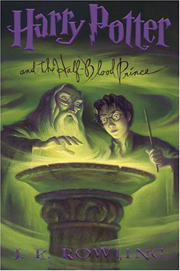
It's now been a little over 24 hours since the publication of Harry Potter and the Half-Blood Prince, J.K. Rowling's latest trip to Hogwarts, and I also know that many of you have already ripped through the 600-plus page novel as if they were giving free magic wands away at the end to the early-finishers.

Why do people read a Harry Potter novel so fast? I am not Mr. Speedy when it comes to reading, but neither do I go at Cecil Turtle pace either, especially when the book is as enjoyable as this latest Potter installment. Every two or three years when a Harry Potter book is published, I marvel at the breakneck speed that certain people devour the whole thing. Kids as well as adults stay up all night, and appear the next morning, bleary-eyed, with a zombie-like but satisfied stare, and announce to the world that they've done it!

Since I like to savor novels and an author's words, a book like Harry Potter and the Half-Blood Prince will be my constant companion for a few days. This is the leisurely summer pace that I like to devote to Rowling's works. Following a tradition that goes back to a number of previous Harry Potter installments, this one was published on a Saturday in the middle of the summer, and an early morning run to the bookstore is one of the de rigeur moments of a Harry Potter publication summer. If you live in a city like New York what you do is you roll out of bed and buy the book, and then start reading it on the subway on the way back home, unless you start your reading in the store, waiting on line to pay. The Barnes & Noble near Rockefeller Center where I picked up my copy (I can't say I bought my copy, I still had $25.oo left in a gift card from Christmas) did not even give you the pleasure of in-store reading. All copies were kept stacked securely behind the cash registers, I suspect as anti-theft prevention. If you live in a small town, you probably pre-ordered the book from Amazon months ago, and hopefully your mailman remembered to deliver it on time.

The early morning hours of Saturday were busy in many, many ways. The die-hards lined up all over the world and earned their right to be the first ones to purchase the novel. Kids dressed up as witches and warlocks, donned Hogwarts robes, and mums and dads shelled out loads of "Galleons" -- albeit at 40% off just about everywhere in the civilized world. Boosktores from London to Buenos Aires to New York had become friendlier than usual places to engage in honest-to-goodness capitalist consumerism.

Meanwhile, in the lower recesses of the Internet ...

By the time that midnight Eastern Standard Time hit and millions of readers in the East Coast of the United States started their long night journey into day, the book had already been published in London for hours. When I visited the Internet Relay Channel "pottermania" to see what was going on, already five chapters of the book had been scanned, proofread by the various regulars of the channel, and posted on a newly-minted website just built for the ocassion. People on the East Coast were now joining the channel and offering their help to finish putting the whole thing up before dawn. Among the people in the channel, there was some banter about the differences between the American and the British version. But if truth be told, there was not too much chatter in the channel and, at the speed that the entire book made it online, one thing was certain: these people were definitely not reading! Over on Usenet, the Internet's favorite place to post, I marveled at the fact that the entire audiobook, as read by Jim Dale, was posted as 30 MP3 files -- one per chapter -- within hours of its publication by some guy who went by the name of "Eggnog." Cheers, buddy! Christmas came early this year!

This is why you read a new Harry Potter book as fast as you can. Within hours, or maybe minutes, all the secrets are out, and when the secrets are out, Harry Potter is no longer fun.

Two years ago, when Harry Potter and the Order of the Phoenix was published I remember that I was not the only one in the subway car returning home trying to read and balance "Big Blue" with its imposing 870 pages. This Saturday, I did not see anyone else reading the new green novel when I sat down on the subway and opened my copy to page one. I think I know why: Everybody had already read it!

Wednesday, June 22, 2005

Nikolaus Lehnhoff's Parsifal on DVD

Wagner's concept of "total art work" was not something that he liked to share. Mozart and Verdi were fortunate to have had Lorenzo Da Ponte and Arrigo Boito respectively writing their lyrics. Wagner, whose abilities as poet and dramatist were not equal to his prodigious gift for composing, aimed to achieve his Gesamtkunstwerk by writing his own ponderous libretti that were mired in 19th century dramatic forms. The conventionality of his dramaturgy also extended to his conservative views on scenic design. His stage concept for Parsifal, his last opera, came to be regarded as his sacred legacy, and the sets of the original production were not replaced until the 1930's.

The 1951 production of Parsifal at Bayreuth was an economic and socio-political necessity, and it radically changed the course of Wagnerian staging. Wieland Wagner needed to rid his grandfather's works of the Nazi legacy that they had acquired and, in the harsh economic reality of post-World War II Germany, the operas needed to be mounted as cheaply as possible: the true reason for the simple sets, plain costumes, and the inventive use of lighting of the so-called "New Bayreuth" style.

It was the 1976 Bayreuth Centenary Ring, brilliantly conceived by Patrice Chéreau, that brought us to a new era in Wagnerian staging: the age of the director. That landmark production, gave carte blanche to stage directors and scenic designers to take liberties with Wagner's works, and offer the public concept productions. This is where we find ourselves in 2005. A few of these experiments have achieved a certain amount of brilliance, while the large majority of them have been downright silly, ridiculous, and even offensive. The 2004 Parsifal at Bayreuth might have been a new low in Wagnerian staging.

The new Parsifal DVD from Opus Arte captures for posterity the Nikolaus Lehnhoff, Kent Nagano production from the stage of the Festspielhaus in Baden-Baden, Germany. It was recorded live in 2004. This DVD was put together from the three performances that the opera received at the Festival in the month of August, last summer.

This production, which was originally conceived by Mr. Lehnhoff for the English National Opera was also performed in San Francisco as well as in Lyric Opera of Chicago, before arriving last year at Baden-Baden. The cast for this DVD is superb with Christopher Ventris as Parsifal, Waltraud Meier as Kundry, Matti Salminen as Gurnemanz, Thomas Hampson as Amfortas, and Tom Fox as Klingsor. The Deutsches Symphonie-Orchester Berlin under conductor Kent Nagano plays the work with flair and precision, in what I would call a swift reading of this Wagner work.


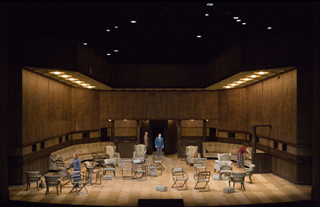
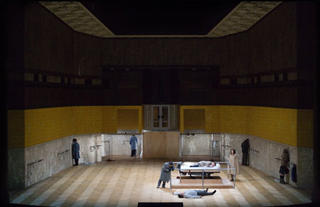
If you like your visual representation of Parsifal to be as the composer intended, then stay far away from this production. It is abstract, unconventional, "Euro-trashy" to some, and totally fascinating to any lover of contemporary Wagnerian staging. The curtain rises on a post-apocalyptic world, strewn with debris and painted in submarine grey. The set is an unwelcoming steel platform which curves up at the back showing suspended chairs that seem to defy all sense of gravity. To add to the clutter, a giant meteor is lodged on the wall. Gurnemanz's young knights are dressed like the statues of the famous terracotta army in Xian, and Kundry wears the kind of "roadkill" fashion that makes her look like one of the less fortunate felines in the musical Cats. The first time we meet Parsifal he makes his entrance wearing a headband and war-paint. Amfortas is a feverishly tormented character, plagued with self doubts and wrapped like a mummy. Even Titurel makes a rare appearance in this production, looking like a medieval George Romero flesh-eating zombie.


Act II opens with a gigantic projection of an X-ray of a human pelvis, Klingsor, dressed like one of the evil characters from a Kabuki work, appears floating in a kind of bubble, hovering between the sacrum and the symphysis pubis bones. Kundry, in her Act II role as the seductress, shows up with the kind of hair and dress that would make the Versace runways at the annual spring show come to life. Visually, Act II does not leave too much of an impact on the viewer, and it is one of the weakest aspects of this production. Particularly disappointing is the way by which Parsifal obtains the spear from Klingsor. Those familiar with the old MET production of this opera will remember how Klingsor would hurl the spear at Parsifal and he would catch it in midair -- a clever and effective bit of stagecraft that would leave audiences gasping and wondering how it was accomplished.


While Act II is a bit disappointing, the concept of Act III is inspired. The same wall that we saw in Act I now opens into a dark tunnel with railroad tracks leading out of it. Where these tracks might be going or where they come from is never answered. To one side, stuffed in a hole, we see the bodies (or are they statues) of dead knights. Once Parsifal brings back the spear Amfortas dies but not before passing down his crown to Parsifal, who rather than accepting it, carries it to the dead body of Titurel and places it on the head of the dead king. Kundry, whose wrappings from head to toe make her look like a mummy, gets up and slowly heads back to the tunnel via the train tracks. From the depths of the darkness now a powerful light shines and drives her forward. Parsifal follows her, and little by little so do a number of knights. It seems as if the brotherhood is desolving itself as the knights, one by one, decide to go somewhere else. Gurnemanz holds the spear with reverential respect, but as the curtain slowly closes, it seems that very soon he will be the only one left, as more and more knights get up to follow the others down the tracks.

The most powerful images and concepts of this production are found in the second scene of Act I. Particularly superb is Lehnhoff's interpretation of the Holy Grail as a radiant blinding light on the other side of the steel wall. Is this powerful glow the aftermath of some recent spectacular nuclear holocaust that has now been accepted as a new god, or is it the light of some older established deity shining on humanity once more in times of trouble? Equally superb is the sequence when the knights meekly exit through the two side doors only to come back through the center glowing opening marching, wearing helmets and carrying spears. The Grail has miraculously metamorphosed them into warriors. This scene, which comments on the link that has historically always exhisted between religion and war, is one of the most memorable statements of this unforgettable production.

Wednesday, June 15, 2005

Dirty, Rotten... / Piazza

Over the years, the Broadway musical has developed into two stylistic entities. At the risk of offending the buffs, one of these camps is occupied by the serious musical, and the other, well, ... shall we say, the not so serious musical. Always a risky thing to call a musical creation not serious, especially since these creations have been more popular and more profitable than the so-called serious ones; and when it comes to money, seriousness is everyone's middle name.

Stephen Sondheim's musicals, brilliant in their execution and thought-provoking in their ideas, are the pinnacle of the genre of our time. The audiences to these works, however, are limited and as a result the shows themselves have always suffered disappointing runs. The recent revival of Pacific Overtures, one of Sondheim's most interesting shows, closed prematurely despite favorable reviews and positive audience reaction.

It's been the mind versus the heart when it comes to Broadway musicals. In 1939 the incredibly popular show Hellzapoppin opened, and so did Marc Blitzstein's The Cradle Will Rock; the year 1954 saw the Broadway premiere of the sardonic The Threepenny Opera as well as The Pajama Game. More recently, Cats and Little Shop of Horrors opened the same year as Maury Yeston's Nine; and to the great delight of Broadway audiences, who normally relish the great variety that a rich theater seasons can bring, at one point you could see Annie, Sweeney Todd, Sugar Babies, and a nifty revival of Oklahoma! all running simultaneously. Many times, in shows such as A Chorus Line, My Fair Lady, West Side Story, and almost everything by Rodgers and Hammerstein, and Lerner and Loewe the mind and the heart meet, and masterpieces are born.

Two shows this season, Dirty Rotten Scoundrels and The Light in the Piazza are representative of this stylistic split down the middle between the heart and mind that we have come to know (and love) about Broadway.


Dirty Rotten Scoundrels at the Imperial Theater is tacky, loud and filled to the brim with fun. It is a funky romp where the best thing for the audience to do is just let it all hang out and go for the ride. There is an inherent slyness to the show, as well as an inherent crudeness, and all of it is cleverly sugar coated by the wonderful performances of the five talented principals. David Yazbek's music is a hodgepodge of styles, all with a decidedly agreeable Broadway swagger. The songs are loaded down with lowbrow humor and range from the unforgettably delish to the instantly forgettable. Norbert Leo Butz steals the show. His Tony Award was well-deserved. I dare anyone not to laugh out loud when he performs the number "Great Big Stuff," which at this point of the run flows out of him so effortlessly that it will be hard to see anyone else doing it. It's like he owns it! It is an early showstopper that gets the audience going, and it alone is worth the exorbitant price of admission. "All About Ruprecht," another number also prominently featuring Mr. Butz, is what Dirty Rotten Scoundrels is all about: sheer zaniness translated as popular entertainment. It is the kind of show that can run for years if properly taken care of.

The Light in the Piazza is as ephemeral as Dirty Rotten Scoundrels is brassy. Currently running at the Vivian Beaumont Theater at Lincoln Center, this musical is based on a novella that first appeared in the pages of The New Yorker magazine. The show has the radiance of summertime in Florence, and it flows with a calculated delicacy that not even the Arno river can equal. The show is all about restraint, both musically and dramatically. Adam Guettel's music and lyrics are rooted in operetta, which is to say that the musical language is post-Sondheim with a backward glance to Gian-Carlo Menotti. The result is music that Guettel's grandfather, the great Richard Rodgers, would have never written for a Broadway show, but could have written any time he wanted. The music is subtle, intelligent, at times extremely complex, expertly written and orchestrated and, like the worst moments of Dirty Rotten Scoundrels, utterly forgettable as well. (Just to be fair, though, did audiences come out humming the music of Maurice Ravel when they first heard it at the beginning of the 20th century? Of course they didn't!) The music to this show is not really pretentious -- it just sounds that way! In this regard, The Light in the Piazza is the "serious" show of the season. It is the one that intelligent critics will discuss intelligently; it is the one that won the Tony award for best score, and of course, it is the one that will give its final performances at the same time that the producers of Dirty Rotten Scoundrels will be busy trying to find a replacement cast.

Sunday, June 05, 2005

The Light in the Piazza is the Big Winner!

The Light in the Piazza was the big winner at the Tony Awards this evening. The elegant, subtle musical about a Southern mother and daughter vacationing in Florence in the 1950's won six well-deserved Tonys, including the award for Best Actress in a Musical for the wonderful Victoria Clark, and best Score to composer Adam Guettel.

I didn't do that badly in my Tony predictions, and actually some people that I was secretly rooting for won. Here are the winners of the big categories. The ones in red are the ones I called correctly.

Best Musical: Monty Python's Spamalot
Best Play: Doubt
Best Musical Revival: La Cage aux Folles
Best Play Revival: Glengarry Glen Ross
Best Actress in a Musical: Victoria Clark (The Light in the Piazza)
Best Actress in a Play: Cherry Jones (Doubt)
Best Actor in a Musical: Norbert Leo Butz (Dirty Rotten Scoundrels)
Best Actor in a Play: Bill Erwin (Edward Albee's Who's Afraid of Virginia Woolf?)
Best Featured Actress in a Musical: Sara Ramirez (Monty Python's Spamalot)
Best Featured Actress in a Play: Adriane Lenox (Doubt)
Best Featured Actor in a Musical: Dan Fogler (Spelling Bee)
Best Featured Actor in a Play: Liev Schreiber (Glengarry Glenn Ross)
Best Director of a Musical: Mike Nichols (Monty Python's Spamalot)
Best Director of a Play: Doug Hughes (Doubt)
Best Musical Score: Adam Guettel (the Light in the Piazza)

So, out of fifteen categories I called nine of them correctly. And although I didn't think they were going to give it to him, I was very happy that Bill Erwin received his Tony for his wonderful performance as George in Who's Afraid of Virginia Woolf?

Congratulations to John Patrick Shanley

The day after I saw the play Doubt, I wrote to its author, John Patrick Shanley. (He includes his e-mail address in the Playbill, and urges theater-goers to write to him.) In my e-mail I basically congratulated him on his play and on his Pulitzer prize, and wished him luck at the Tony Awards. I also sent him the address of this blog which has my impressions about his play as well as some thoughts about education and the role that nuns played in it. He wrote back yesterday. This is what he had to say:


"Thank you Vincent! The nuns are still out there, but few and old and invisible. My best, Shanley."

Antoinette Perry Awards Predictions


The Tony Awards are being presented tonight at Radio City Music Hall, and will be telecast by CBS. This season I got to see three of the nominated musicals (Chitty Chitty Bang Bang, The Light in the Piazza, and Monty Python's Spamalot) and three of the new or revived plays (Democracy, Doubt, and Edward Albee's Who's Afraid of Virgina Woolf?)

Based on my own excursions to Broadway this year, and totally relying on news articles, reviews, hearsay, and gossip, here are my predictions for some of the big awards being presented tonight:

Best Musical: Monty Python's Spamalot
Best Play: Doubt
Best Musical Revival: Sweet Charity
Best Play Revival: Edward Albee's Who's Afraid of Virginia Woolf?
Best Actress in a Musical: Victoria Clark (The Light in the Piazza)
Best Actress in a Play: Cherry Jones (Doubt)
Best Actor in a Musical: Norbert Leo Butz (Dirty Rotten Scoundrels)
Best Actor in a Play: Brí­an F. O'Byrne (Doubt)
Best Featured Actress in a Musical: Kelli O'Hara (The Light in the Piazza)
Best Featured Actress in a Play: Heather Goldenhersh (Doubt)
Best Featured Actor in a Musical: Dan Fogler (Spelling Bee)
Best Featured Actor in a Play: Liev Schreiber (Glengarry Glenn Ross)
Best Director of a Musical: James Lapine (Spelling Bee)
Best Director of a Play: Doug Hughes (Doubt)
Best Musical Score: Adam Guettel (the Light in the Piazza)

Saturday, May 28, 2005

To Live is to Doubt

Last Saturday afternoon I tried, without much success, to get tickets to see Doubt. Unfortunately, all they had left were partial-view seats. I decided instead to go across the street to the Longacre and attend the matinee of Who's Afraid of Virginia Woolf? from a full-view seat. On the strength of its multiple Tony nominations Doubt has been doing bang-up business at the box office. These days, arriving at the box office a few hours before curtain will not guarantee that you will get in. (It might be a first that on the same street, right across from one another, two plays are running where the entire cast of each production is nominated for the Tonys). Doubt is a hit, and I decided to go back to the Martin Beck after work yesterday and try my luck and see what tickets they had available for the next day. Wouldn't you know it: they had front row center seats for the Saturday matinee. I scooped up that ticket up so fast! I've never gotten a front row seat to a show before. At my first Broadway show I came pretty close -- fourth row on the aisle to see Christopher Plummer's Tony award performance in the musical Cyrano. No wonder I've been hooked on theater ever since.

Watching Doubt from the front row is an experience that absorbs you even closer inside the actor's playing area. You can't get over the incredible proximity and all that goes with it: cinematic closeups, pores, wrinkles, lint on black costumes, flying saliva that could spray you, the natural tones of the unmiked voice, and, because of the lack of an audience in front of you, the incredibly privileged certainty that this play is being performed only for you. And, of course, there are the magical moments that can only happen when you sit this close. I don't think that I will ever forget the scene between Father Flynn and Sister James as they sat on a bench, their emotions exposed and raw. Heather Goldenhersh, giving the performance of a lifetime in the role of Sister James, breaks down and cries, her hand going up to cover her face. When she lowers her hand again, a single solitary real tear slowly rolled down her right check, followed by another from her left eye. It was one of the most magical moments I have ever experienced in the theater. It left me with much admiration for this new star, (this play marks her Broadway debut) and I hope that next Sunday Tony puts out the welcome mat for her.


Cherry Jones is currently giving the best performance by a woman on Broadway. As the tough-as-nails Sister Aloysius, the principal of the St. Nicholas School in the Bronx, she wears her inscrutable Sisters of Charity habit as an armor for the fight that will follow as she intends to bring down the jockish parish priest Father Flynn, whom she fears might be molesting the school's first black student. Brí­an F. O'Byrne's Father Flynn is an unforgettable creation: enlightened by Vatican Council II, but possibly racked by private demons brought on by a new freedom, this priest wants to be relevant and bring this Bronx parish into the twentieth century. He can coach the basketball team after school, while delivering sermons on Sundays based on jottings from a little notebook he always keeps with him. If he represents the uncertain future of the Catholic Church, then Sister Aloysius is the institution's anchor, always advising the young Sister James to stay true to ideals that could probably be traced back to Elizabeth Ann Seton, the founder of the Sisters of Charity.


One of my colleagues at work, who as a child was taught by nuns in the fifties, has nothing but admiration for these wonderful creatures who commanded respect and attention, and who could control an overcrowded classroom with their mere presence. My friend is fond of saying that the cure for today's education woes is "a five-foot nun with a six inch ruler." Doubt's author John Patrick Shanley seems to be of the same opinion. The playwright dedicates Doubt to "the many orders of Catholic nuns who devoted their lives to serving others..." He then adds: "Though they have been much maligned and ridiculed, who among us has been so generous?"

After the play I met two of its stars, Adriane Lenox, who is nominated for the Tony for her fine work as the boy's mother, and Mr. O'Byrne. As Ms. Lenox was signing my playbill, I told her that I was rooting for her next Sunday at the Tonys. She seemed genuinely pleased to hear this. She smiled, patted me on the arm and said "Thank-you, its really tight!" I agreed with her. The category of Best Featured Actress includes great performances from Dana Ivey (The Rivals), Mireille Enos (Who's Afraid of Virginia Woolf?), Amy Ryan (A Streetcar Named Desire) and her own colleague, Ms. Goldenhersh. It was also a pleasure to shake hands with Mr. O'Byrne, congratulate him on a job well done, and wish him luck on his own nomination for Best Actor.

Doubt is one of the finest American plays in years. That generosity that Mr. Shanley writes about seems to be present on and off the stage at the Martin Beck Theater. You should go and experience it for yourself.